



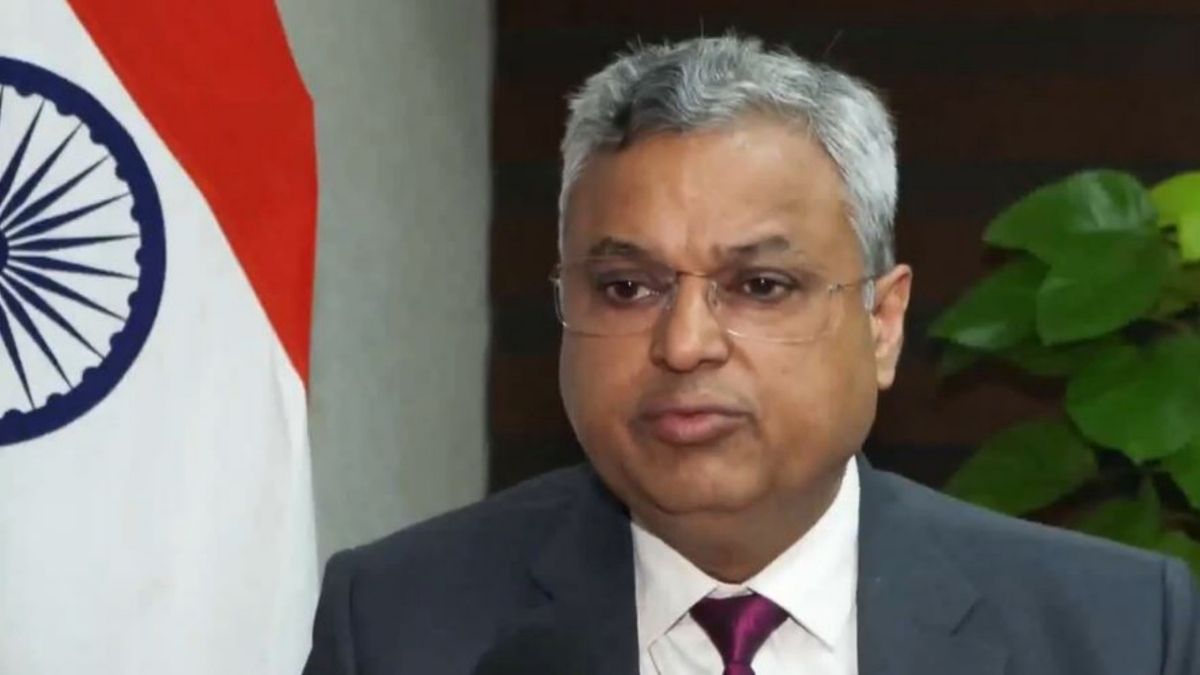
The first-ever comprehensive National Household Income Survey (NHIS) is progressing as planned and its results are expected by mid-2027, Saurabh Garg, secretary, Ministry of Statistics and Programme Implementation (MoSPI) said. The NHIS, which began in Apil and is expected to continue till March 2027, is first-ever pan-India survey focused on measuring household income and living conditions. It is expected to fill a long-standing data gap in India’s socio-economic statistics system, and the results are to be used to revise CPI and GDP series in the future.
Garg, in an interview with Shubham Rana of Financial Express, said the ministry is also undertaking surveys on the Incorporated Services Sector Enterprises (ASISSE), results for which are also expected by mid-2027. According to him, there is a distinct improvement in the estimation of the household and quasi-corporate sectors.
Edited excerpts:
Q. As regards the first National Household Income Survey (NHIS) that is under way, is the ministry facing any difficulties in data collection from respondents?
A. The response to the survey has been encouraging so far. As with any large-scale household survey of this nature, field-level issues can arise during implementation. We have put in place appropriate mechanisms to provide guidance and address any issues promptly as they emerge. Overall, the survey is progressing as planned, and we appreciate the cooperation of respondents in this regard.
Q. When can we expect MoSPI to release the results of this survey?
A. The NHIS was launched in April, 2026. The survey is expected to be continued till March 2027. We can expect the results to come by mid-2027.
Q. With the updated GDP, CPI, and Index of Industrial Production (IIP) series, do you expect the IMF to upgrade the ‘C’ rating on India’s national account statistics?
A. The revised National Accounts series with base year 2022–23 incorporates significant methodological improvements that address the observations made by the IMF in its previous assessment. These include improved estimation of the household sector, wider use of double deflation (or single extrapolation, where appropriate), and better balancing of production and expenditure estimates through Supply and Use Tables. The revised series will, of course, be available for assessment by international agencies as part of their regular review processes.
Q. At the release of the trial Index of Services Production (ISP), you talked about having a retail consumption tracker. Could you please share more details about this retail sales tracker?
A. Retail trade services are one of the 19 sub-sectors for which the Trial Index of Services Production has been compiled and released. This index has been compiled on the basis of outwards supplies reported by the retail traders under Goods and Services Tax. Hence, the ISP of Retail Trade serves the purpose of tracking both retail sales as well as retail consumption.
Q. Will MoSPI use ISP to compile the GDP estimates for April-June quarter and ahead?
A. Although the ISP is a high frequency indicator for output, and not for Gross Value Added (GVA), the feasibility of using ISP in the estimation of quarterly GVA of the services sector will be explored.
Q. Some experts have flagged that the over-estimation of the informal sector performance in the extraplotaion method might be inflating GDP growth estimates in India. What are some of the challenges the ministry faces in data collection in the informal sector and what can be done to improve this?
A. In the 2011-12 series, for the base year, GVA for the household and quasi-corporation sectors was estimated through Survey on Unincorporated Sector Enterprises (conducted in 2010-11) and Employment Survey (conducted in 2011-12). In subsequent years, GVA in these sectors was estimated either through inter-survey growth or through some relevant proxy indicators by extrapolating the estimates of the base year.
In the new series, however, the level estimates of these sectors are compiled through an annual regular survey being conducted each year. GVA estimates are done by using GVA per worker from the Annual Survey of Unincorporated Sector Enterprise and workforce adjusted population estimates from Periodic Labour Force Survey. With the availability of survey results each year, there is a distinct improvement in the estimation of the sectors. While the official estimates under the new methodology have addressed many of these concerns, the corrections in official estimates due to revision in methodology do not support claims of massive overstatement of GDP as flagged by many experts asmentioned in the question.
It’s also important to remember that the methods used in the earlier base revision reflected the best available data at the time. India’s economy has a large informal sector, unlike many advanced economies, and in such a context, in absence of regular survey data on informal sector, indirect estimation of informal economy was a reasonable and necessary approach rather than a methodological flaw.
Q. The ministry is also conducting surveys on the incorporated services sector and one on migration. When can we expects the results of these surveys?
A. The Annual Survey of Incorporated Services Sector Enterprises (ASISSE) was launched in April, 2026, using GSTN (GST Network) database as sampling frame for the first time in NSS survey eco-system. The survey is expected to be continued till March 2027 and we can expect the results to come by the mid-year 2027. Migration Particulars Survey has been launched in July 2026 and will continue till June, 2027. We can expect survey results by the end of 2027.
Q. MoSPI has completed the base year revisions of all key macroeconomic indicators. Apart from the ongoing work on the trial ISP and the surveys, what is in the pipeline?
A. Building on the successful revision of the base years for CPI, GDP and IIP, the Ministry’s forward-looking agenda will focus on consolidating key learnings from these exercises to further strengthen the statistical system. The focus will inter alia be on advancing the integration of alternative and non-traditional data sources and progressing towards the implementation of the upcoming System of National Accounts (SNA) 2025 framework in the next base revision.
The Ministry is in the process of finalising the methodological document, “Sources and Methods”, which will provide a comprehensive description of the concepts, classifications, data sources, compilation procedures and estimation methodologies underlying the new GDP series. This document will be published shortly to promote transparency and facilitate a better understanding among users.
We are also in close coordination with States and Union Territories for facilitating them to compile estimates of Gross State Domestic Products (GSDP) as per the new base year. States are expected to finalise their estimates by August/September 2026. Another expected milestone is the release of the GDP back series based on the new base year and methodology. The back series will ensure temporal comparability of economic growth and other macroeconomic aggregates since 1950-51. The release of back series is expected by the end of this year.
Besides these, integration of AI, machine learning and big data into official statistics will be an important area. Efforts have already started, including the establishment of a Data Innovation Lab and collaboration with multiple stakeholders to develop practical use cases, though there is still room for further advancement. Harmonisation of Administrative datasets represents another focus area. The wealth of data held by ministries, departments, and state/UT governments has potential to be harmonized further. Information from harmonized datasets will enable generation of novel insights for evidence-based policymaking.
MoSPI has recently released its Vision Document for 2026-2031 that articulates the strategic direction over the next few years with focus areas such as modernisation of statistical processes, strengthening of data governance frameworks, and harnessing the potential for new and emerging data sources.
Q. The ministry has been working on seasonally-adjusted GDP data. When can we expect this to be released?
A. The Ministry has currently released the quarterly GDP estimates based on the new base year from Q1 of 2022–23 onwards. The compilation of seasonally adjusted GDP estimates requires availability of a sufficiently long time series of quarterly estimates as a prerequisite.
Once such long time series of quarterly GDP estimates under the new base year becomes available, compilation of seasonally adjusted GDP estimates will be explored.
Q. Is the ministry working on estimating GVA and employment for cooperatives?
A. GVA estimates for cooperatives are already included in the overall GVA estimates. The Ministry is also undertaking a first ever exclusive survey for the cooperative sector from April 2026 which aims to generate estimates of Gross Value Added /Gross Value of Output and employment indicators for the sector. The field work would be completed by Sept-Oct this year and survey results are likely to be available by the end of this calendar year.
Q. Is MoSPI working on conducting the 8th Economic Census once the population census is completed?
A. The proposal for the 8th Economic Census (EC) is under submission for approval, for its conduct during the 16th Finance Commission cycle (2026–31). At present the preparatory activities for the 8th EC are underway. Subject to approval, the Ministry plans to undertake the fieldwork of the 8th EC in 2027–28.