



The Centre has accelerated the process of determining a new national floor wage rate, taking into account the different wage levels across different states, the National Capital Region (NCR), and the impact of rising inflation triggered by the ongoing Iran conflict.
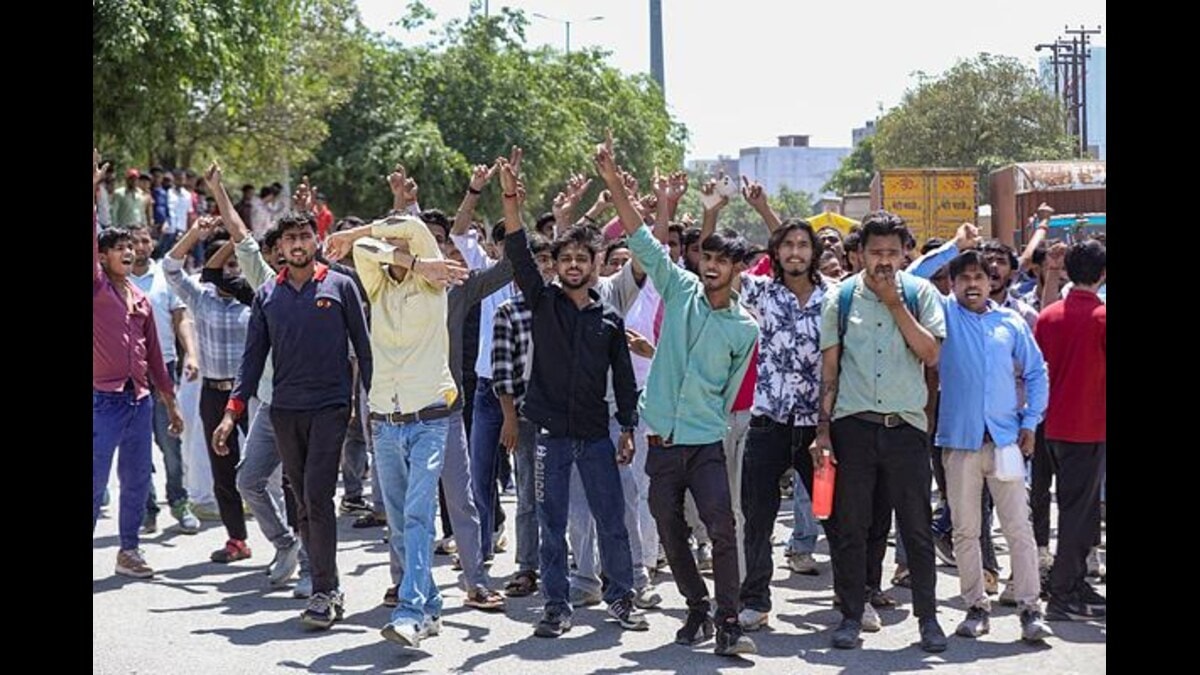
This development comes amid recent labour unrest in the NCR, where factory workers have been demanding higher wages following the rollout of the new labour codes.
A senior government official, speaking on condition of anonymity, told The Economic Times that the authorities are currently reviewing prevailing wage rates and inflation trends across various states. The government aims to finalise region-specific floor wage rates in the near future.
Why has the Centre accelerated determining the national floor wage rate?
Officials told The Economic Times that the exercise is underway to examine prevailing wage structures across states, as well as inflation data, before arriving at a floor wage for different geographies. The Centre is keen to ensure that the national floor wage is not perceived as a punitive burden on states or small‑scale employers, especially in poorer or hilly regions that have historically paid lower wages compared with industrial powerhouses in the north and west.
Instead, the goal is to calibrate the floor so that it is commensurate with the rising cost of living in each state, including transport, food, fuel and housing, while still allowing markets to pay above the floor where demand and productivity justify it.
The central govt is considering a sharp increase in the national daily minimum wage to Rs 350–450, as worker protests in industrial hubs such as Noida and across the National Capital Region push states to revise wages. A Mint report notes that the Union labour ministry is finalising a revised national floor wage covering skilled, semi‑skilled and unskilled workers, against which all states will have to align their own wage notifications since no state can legally set wages below the central benchmark.
The current floor of Rs 176 per day, fixed in 2017, would be effectively more than doubled, with monthly wages calculated at 26 times the final daily rate. Discussions are reportedly in the last leg, with consultations on the new wage structure largely complete among states, industries and other stakeholders.
Impact of protests and state‑level hikes
Recent wage agitations in Uttar Pradesh and Haryana have already forced significant hikes, with Uttar Pradesh raising minimum wages for unskilled workers in Noida and Ghaziabad from Rs 11,313 to Rs 13,690 per month, and similar increases for semi‑skilled and skilled workers. Haryana has boosted minimum wages by about 35 per cent, pushing unskilled monthly pay to nearly Rs 15,200. Several larger states like Maharashtra, Karnataka, Gujarat and Tamil Nadu are already close to or above the proposed Rs 350–450 daily floor and may review wages further if needed, while Bihar and Punjab are moving in the same direction.
Experts and former officials stress that wages should be revised annually using local cost‑of‑living indices to avoid sudden, disruptive increases; they argue that linking wages to inflation and narrowing interstate disparities will help prevent labour unrest and ensure that workers can meet rising daily expenses without unduly burdening industry, given that labour costs are a relatively small share of total production cost.
The determination of the national floor wage is also being influenced by a sharp uptick in inflation catalysed by the ongoing war in Iran and broader West Asia crisis. Retail inflation, which had stood at 3.2 per cent year‑on‑year in February, rose to 3.4 per cent in March and is projected to hover around 4 per cent as spillover prices from higher fuel and food costs feed into household budgets.
At the same time, India’s wholesale inflation hit a 38‑month high of 3.9 per cent in March, up from 2.1 per cent in February, driven by pricier crude oil, energy and manufactured goods. Officials say these inflationary pressures are being factored into the wage exercise, so that the floor wage is not just a nominal figure but one that meaningfully reflects the real increase in workers’ living expenses.
Implications for businesses, states and workers
Once notified, the national floor wage will obligate states to ensure that their notified minimum wages do not fall below the Centre’s benchmark, though they will remain free to fix higher rates. For businesses in industrial places like Noida, this could mean adjustments in wage structures, especially for contract and casual workers who have historically been paid near the statutory minimum. States that have so far maintained lower wage bands may need to revisit notifications, while richer, more industrialised states are likely to already be above the floor.
Workers’ groups, on the other hand, welcome the move as a step toward standardising and stabilising pay, but they are also demanding that the notification process be transparent and consultations with unions and employers be included before the final figure is announced.
The government has signalled that the national floor wage framework will be rolled out soon, with different regional bands to reflect economic disparities. The ongoing wage review is being closely watched not just by industry and labour federations, but also by political parties, some of which have used the Noida stir to highlight what they see as a gap between labour‑code rhetoric and ground‑level wage reality.
As the Centre moves toward a statutory floor wage, the key challenge will be balancing the demands of cost‑efficient manufacturing and export competitiveness with the growing pressure from workers’ protests and the undeniable rise in inflation driven by global shocks.