



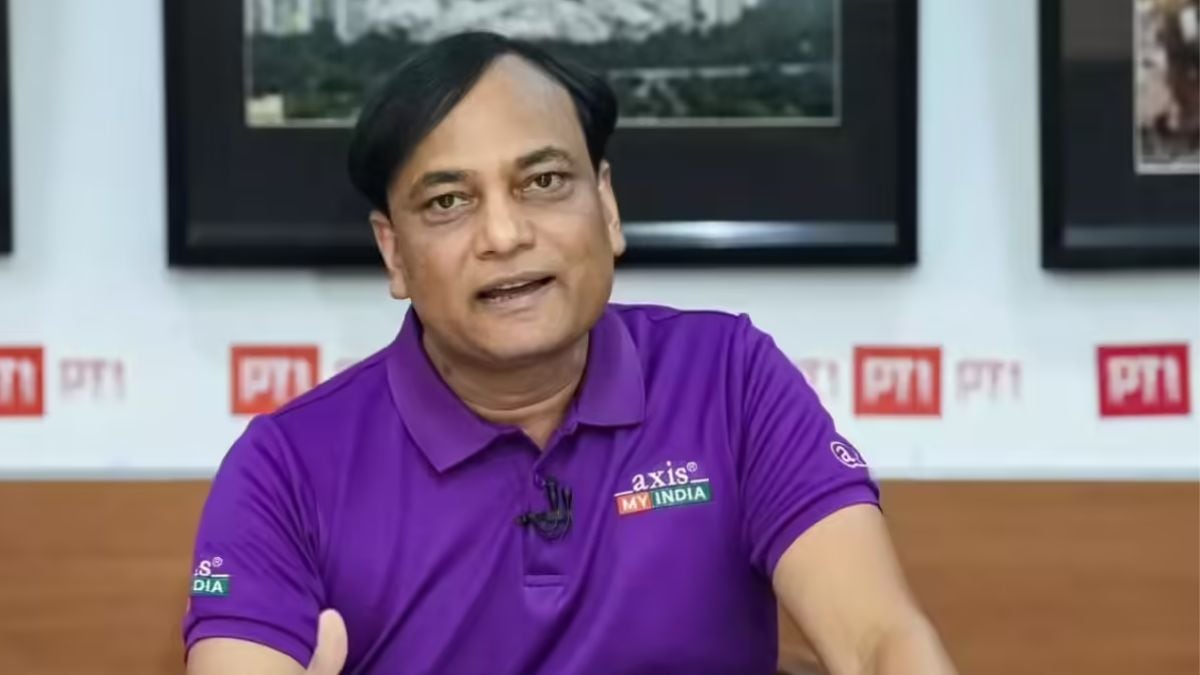
India’s pollster Pradeep Gupta says BJP’s rise in West Bengal was driven by anti-incumbency, Prime Minister Narendra Modi’s leadership appeal, and the organisational strength of Amit Shah and the RSS. He rejected the idea that Hindu vote consolidation decided the result.
In an interview with PTI, Gupta said years of what he described as “misrule” and a “climate of fear” under the Trinamool Congress shaped voter sentiment in the state, ultimately influencing electoral behaviour.
He also stressed that Indian voters are increasingly mature and issue-driven, arguing that they are not primarily swayed by promises, freebies or religious polarisation.
‘No single factor decides elections,’ says pollster
“Hindu and Muslim issues do not determine victory or losses. When you attribute BJP’s win to Hindu vote consolidation, you undermine the good development and the good work done in those states,” Gupta said.
Focusing on West Bengal, he said the TMC’s governance environment created fear among voters and even affected the willingness of people to speak to survey teams during fieldwork.
He claimed that after the first phase of polling on April 23, many respondents refused to interact with Axis My India surveyors, which he interpreted as a sign of shifting voter sentiment.
Survey challenges and claims of intimidation
Gupta also alleged that Axis My India teams faced obstacles during fieldwork in the state, including instances where surveyors were detained and later released by courts.
“Even during this election in Bengal, six of our people were jailed. They were released only after the courts reprimanded the state government,” he said, adding that police stations were reportedly alerted to monitor survey teams.
He further explained that Axis My India had chosen not to publish exit poll estimates for West Bengal due to what he described as an “exceptionally high” non-response rate of around 70 percent.
Insights from Tamil Nadu and youth voting trends
Gupta also pointed to Axis My India’s performance in predicting results in states like Tamil Nadu, Assam, Kerala and Puducherry, saying its accuracy came from sustained ground-level research.
He highlighted the rise of actor-politician C. Joseph Vijay in Tamil Nadu, noting that his support base had steadily grown ahead of elections.
“TVK’s vote share was around 25 per cent around six months before the polls. It rose to 28 per cent three months ago, then to about 30 per cent about a month ago. And by the polling day, it had risen to 35 per cent. This was the trajectory,” he said.
Gupta said Vijay’s popularity reflected a broader shift among younger voters seeking alternatives beyond established Dravidian parties.
Voter behaviour and consolidation debate
Rejecting the idea that caste or religious consolidation alone determines results, Gupta argued that electoral outcomes often defy simple arithmetic.
“Puja se zyada mahatva pait ka hai, aur pait se bada mahatva jaan ka hai (For people, food in the stomach is more important than worship. And even more important than food in the stomach is life),” he said.
He also cited the 2021 West Bengal assembly elections, where the BJP secured 38.15 percent of the vote and 77 seats, to support his argument that vote share does not always translate directly into seat share.
Gupta added that similar patterns have been observed in other states such as Uttar Pradesh and Bihar, where multiple social and political factors shape outcomes rather than a single voting bloc.