



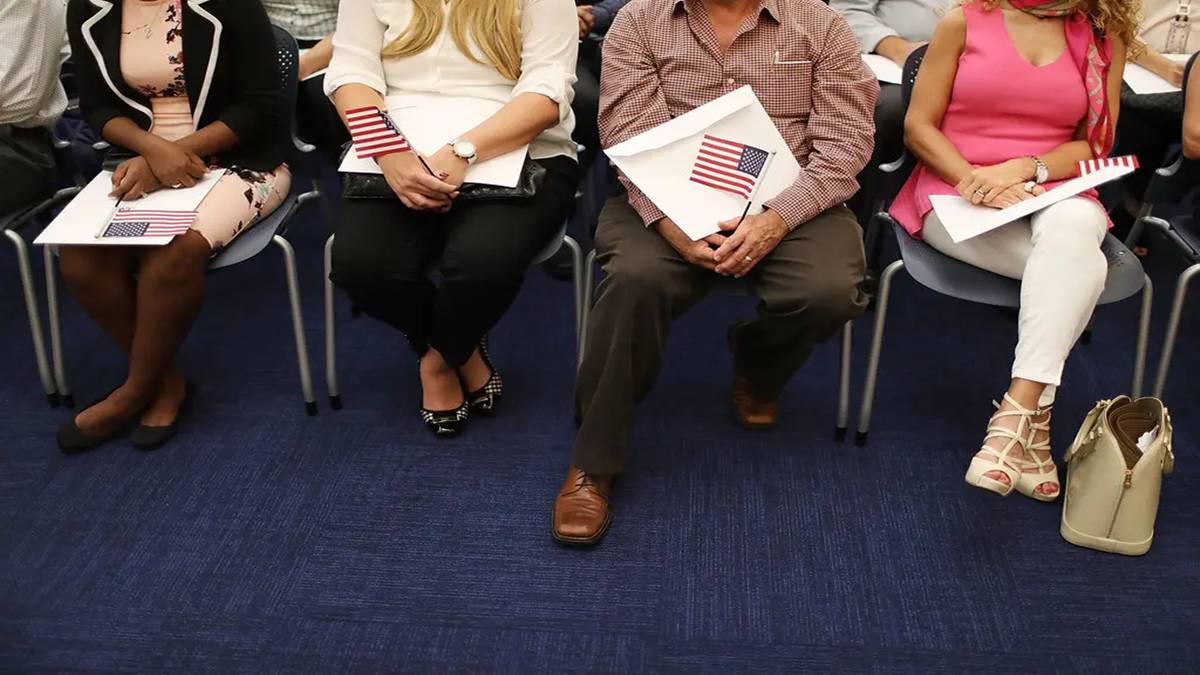
The US green card application process is lengthy, especially for Indian applicants. Although getting a green card has always been a long and complicated process, in 2025 and 2026, it has become significantly harder and more uncertain for applicants across the board, Newsweek reports.
As of October 2025, the green card backlog with USCIS is massive. At the end of fiscal year 2025, there were approximately 11.65 million pending applications and petitions. Of those, around 6.28 million cases had exceeded USCIS’s own target processing times, meaning they were officially classified as backlogged. Another 250,000 cases are still waiting to enter the processing system.
The US visa bulletin for May has been published, indicating when immigrant visa applicants should be notified to assemble and submit required documentation to the National Visa Center. “For Indian applicants, the current backlog remains challenging in the main employment-based categories. In the May 2026 Visa Bulletin, EB-1 India is at December 1, 2023, while EB-2 India and EB-3 India are both at January 15, 2015, on the Dates for Filing chart, highlighting how severe the queue remains in the traditional employment-based system,” says Shilpa Menon, Managing Director, Commercial at LCR Capital.
In the May US visa bulletin, USCIS has issued a warning specifically for Indian applicants in the EB-5 category. Nicholas A. Mastroianni III, President & CMO, USIF, says, “Section E of the bulletin contains a specific warning for Indian applicants. The State Department has stated that demand from India in EB-5 Unreserved may require retrogressing the final action date or making the category unavailable within fiscal year 2026. The warning applies to Unreserved. It does not extend to the Reserved categories.”
Hiccups in the Green Card Process
Speaking to Newsweek, Ricky Murray, a former senior USCIS official, noted that despite no major changes to the adjustment-of-status process, current enforcement practices have rendered filing for a green card increasingly tedious.
Murray said USCIS has increasingly been rejecting applications for administrative reasons — such as incorrect fees, missing signatures, or outdated form versions. Applicants are increasingly seeing outright rejections rather than requests for evidence to correct errors.
One major reason behind the slowdown identified by Murray was the staffing crisis at USCIS. The agency, like almost all federal agencies, faced a mass exodus of employees in 2025. This has slowed adjudications significantly, meaning it is taking much longer to get a green card than it has in the past.
Further, several new immigration restrictions, as well as rigorous vetting and screening for national security and fraud concerns, have slowed the green card issuance process.
Delays in Work Permits
The US ended the ‘automatic extension of Employment Authorization Documents’ for certain foreign workers in October 2025. Having an Employment Authorization Document (Form I-766/EAD) proves your authorization to work in the United States for a specific duration. The delay in getting extensions for EAD likely resulted in increased risk of work interruptions for individuals with pending green card applications.
Interview Location
In 2025, the US Department of State changed its policy regarding interview locations for immigrant visa applicants, requiring them to interview in the consular district of their residence or their country of nationality, with some exceptions allowed.
Tougher Screening and Vetting
Even in their country of residence or country of nationality, the stricter screening and vetting
process has made life tough for applicants. As part of the ‘online presence review’, starting December 15, all H-1B applicants were required to change the privacy settings on all their social media platforms to “public”.
High Risk Countries
In a further blow to the dreams of green card applicants worldwide, the Trump administration paused the issuance of immigrant visas and made nationals from 75 specific countries ineligible for US green cards effective January 21, 2026. The Department of State is undergoing a full review of all policies, regulations, and guidance to ensure that immigrants from these high-risk 75 countries do not utilize welfare in the United States or become a public charge.
Family Members for Immigration
Green card holders intending to sponsor family members for immigration to the United States must now adhere to new regulations, as August 2025 updates to the US immigration policy clarified family-based green card petition procedures.
The changes were made to enhance reviews and clarify the legality of family relationships, especially marriages, by offering clearer explanations on qualifications, filing requirements, and proof documents, in addition to reorganizing or removing certain sections.
What This Means for Applicants
The cumulative effect of these changes, such as staffing shortfalls, stricter vetting, administrative rejections, shorter work permit validity, and visa pauses, has made the road to a green card longer and far less predictable than it was just a few years ago. For Indian applicants already facing some of the longest backlogs in the employment-based category, these additional hurdles make an already difficult wait even more daunting.
Disclaimer: This article is for general informational purposes only and does not constitute legal, immigration, or tax advice. Immigration laws and government policies are subject to frequent change without notice. While we strive to provide accurate updates, readers are strongly advised to verify the latest requirements with the official embassy, consulate, or government portal of the respective country.