



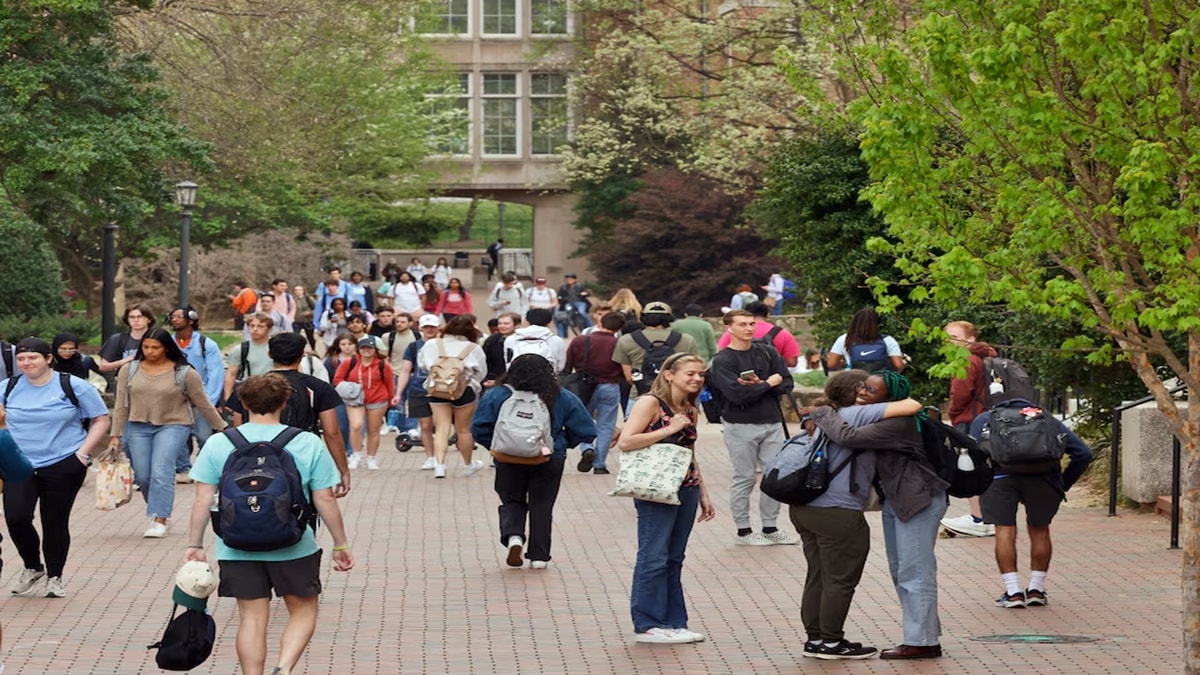
The Trump administration has brought in one of the biggest changes to the US visa system in decades by ending the long-standing “duration of status” rule for international students, exchange visitors and foreign journalists.
Under the new rule issued by the Department of Homeland Security (DHS), people on F, J and I visas will no longer be allowed to stay in the US for as long as their studies, exchange programme or job continues. Instead, they will be given a fixed period of stay, with a maximum limit of four years.
The rule is set to take effect on September 15, 60 days after it was finalised, although it is still subject to congressional review.
What changes under the new rule?
For decades, international students and exchange visitors could remain in the US under a system known as “duration of status.” As long as they continued their approved course, exchange programme or employment, they did not have to apply for a fresh immigration approval.
That system has now been scrapped. Students on F visas and exchange visitors on J visas will be allowed to stay only for the length of their approved programme, with a maximum stay of four years.
The same limit will also apply to I visas issued to foreign journalists and media professionals. Earlier, these visas remained valid for the duration of employment in the US.
NEW: The Trump admin finalized a regulation which makes the largest changes to the student visa process in 50 years, along with changes to rules for exchange visitors and international journalists.
— Aaron Reichlin-Melnick (@ReichlinMelnick) July 16, 2026
🧵on some of the most consequential changes set to go into effect in September. https://t.co/7Q986HmNx4
Visa extensions now require direct USCIS approval
Anyone who needs more time to complete their studies or work will now have to formally apply for an Extension of Stay through the US Citizenship and Immigration Services (USCIS).
Unlike the earlier process, where universities handled most of the paperwork, applicants will now deal directly with federal authorities. They will also have to go through biometric checks, background verification and fraud screening before an extension is approved.
Why Indian students could be affected
The new rules could especially affect Indian students because they now form the biggest international student community in the US.
Students enrolled in courses that last longer than four years may have to seek an extension from DHS to complete their studies. If the extension is not granted in time, they may have to leave the US and return later to finish their degree.
Indian journalists working in the US will also see shorter visa validity under the new system.
Students face stricter rules
The new regulation also shortens the time students have after completing their studies.
Earlier, F-1 students had 60 days to prepare to leave the US, transfer to another school or change their immigration status. That grace period has now been cut to 30 days.
The rule also places tighter restrictions on changing academic programmes.
Students will no longer be able to freely switch educational goals or move between institutions without official approval.
Current visa holders will also be affected
The changes will not apply only to new arrivals.
People who are already living in the United States under the old “duration of status” system will automatically move to the new framework. Their authorised stay will also be capped at a maximum of four years from the date the rule comes into effect.
PhD students and doctors could face the biggest impact
Universities and hospitals have warned that the rule could create problems for many students and professionals.
During the public consultation process, several universities pointed out that most PhD programmes take more than four years to complete. This means many doctoral students will have to apply for extensions while they are still studying.
Hospital leaders also raised concerns because many foreign doctors working in US hospitals are on J-1 visas and often stay for longer training programmes.
Why DHS says the rule is needed
The Department of Homeland Security says the old system made it difficult to keep track of people staying in the country for long periods.
Homeland Security Secretary Markwayne Mullin said the decades-old policy had become a security concern. “For nearly half a century, the outdated ‘duration of status’ system has compromised national security and created an environment ripe for immigration fraud.”
The department said the growing number of international students, exchange visitors and media professionals has made monitoring much more difficult. According to DHS, the increase in these visitors “poses a challenge to DHS’s ability to monitor and oversee these non-immigrants while they are in the United States.”
The department also said it had found several cases where students and exchange visitors remained in the US for decades under the existing system.
DHS described some of these cases as “forever students,” people who stayed enrolled in educational programmes simply to continue living in the United States.
Under the new system, once a person’s authorised stay ends, they will either have to apply for an extension before their status expires or leave the US and apply for a new visa before returning.
A second attempt to end the policy
This is not the first time the Trump administration has tried to remove the “duration of status” rule.
The policy has been in place since 1979. It was originally introduced to make it easier for international students to study in the US without having to renew their immigration status every year. Before that, students had to reapply annually.
During Trump’s first term, the administration proposed ending the system, but the plan was dropped after President Joe Biden took office.
According to the department, there were more than 1.8 million student visa admissions in 2024, an increase of over 11% from the previous year. The US also issued visas to more than 500,000 exchange visitors and 37,300 foreign media members during the 2024 fiscal year, which began on October 1, 2023.
The idea returned in August 2025, when DHS proposed the rule again. It received nearly 22,000 public comments, with most people opposing the change.
DHS formally published the final rule in the Federal Register on July 17, 2026.
Critics fear fewer students will choose the US
The new policy has faced strong criticism from universities, hospitals and exchange organisations.
Many argue that a four-year limit does not match the actual length of many PhD programmes, medical residencies and other specialised courses. Critics also fear the rule could discourage talented international students from choosing the United States for higher education.
Doug Rand, a former DHS official, said the new rule moves in the wrong direction. “Most Americans understand the value of welcoming international students and getting rid of needless red tape. This rule would do the opposite.”
David J. Bier, director of immigration studies at the Cato Institute, questioned the legal basis for restricting students from changing schools or study plans.
“International students, many of whom will have spent years in the USA, will now have just 30 days to find an employer to sponsor them or immediately be turned into illegal immigrants. Have these people no understanding of how life works?”
Part of Trump’s bigger immigration policy
The visa changes are part of the Trump administration’s effort to tighten immigration rules since returning to office in 2025.
The administration has increased scrutiny of international students, especially after campus protests, and has also stepped up checks on other visa categories, including H-1B work visas.
Officials say the goal is to strengthen security, improve oversight and close what they describe as long-standing loopholes in the US non-immigrant visa system.
Note: While the final rule has been published, some regulatory details may differ slightly from the earlier proposal. The Department of Homeland Security (DHS), US Citizenship and Immigration Services (USCIS) and Immigration and Customs Enforcement (ICE) are expected to issue further guidance on how the new rules, including the extension process, will be implemented. As noted in the rule, the changes are also subject to congressional review and could face legal challenges.
Disclaimer: This article is for general informational purposes only and does not constitute legal, immigration, or tax advice. Immigration laws and government policies are subject to frequent change without notice. While we strive to provide accurate updates, readers are strongly advised to verify the latest requirements with the official embassy, consulate, or government portal of the respective country. Financial Express is not responsible for any decisions made based on this information. For personalized guidance, please consult a qualified immigration attorney or a certified professional advisor.