



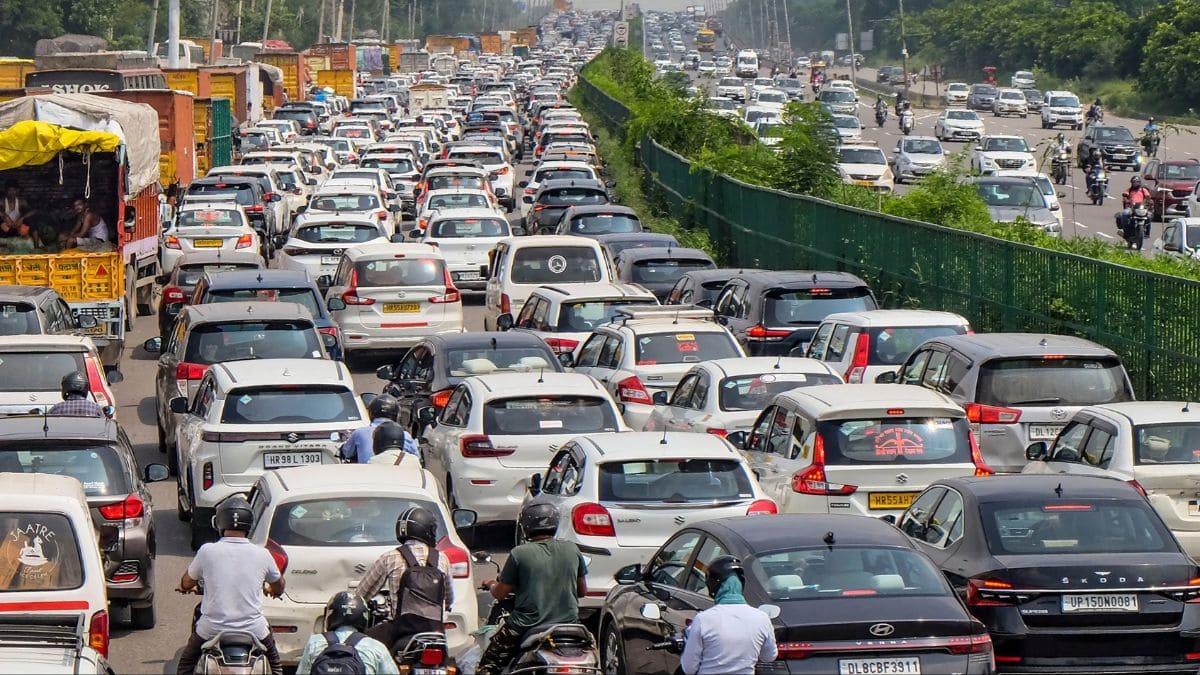
Gurugram‘s daily commuters have learned to budget extra time for stretches that, on paper, should take minutes. The crawl from NH-48 toward Vatika Chowk. The standstill near IFFCO Chowk. The Gurugram Metropolitan Development Authority (GMDA) has laid out an ambitious infrastructure roadmap that includes signal-free corridors, elevated roads, flyovers, and underpasses across some of the city’s most choked arteries.
The plan was presented on Tuesday by GMDA’s Chief Executive Officer, P.C. Meena, during a meeting with city councillors and senior GMDA officers convened to review ongoing and upcoming development works across the city.
Gurugram traffic: What’s on the roads plan
At the core of the announcement is a package of 51 major road infrastructure projects carrying a combined administrative approval of approximately Rs 386 crore. Of these, 12 works have already been allotted to contractors, while the remaining 39 are currently in the process of allotment.
The more significant interventions are in the pipeline: GMDA has plans for five elevated corridors and seven flyovers and underpasses to be built along key mobility routes across the city. The stated objective is to create signal-free corridors that cut down travel time for daily commuters.
The projects that will matter most to commuters are five elevated corridors and seven flyovers and underpasses, designed to eliminate signal stops on key routes. These include the NH-48 to Vatika Chowk stretch, Rajiv Chowk to Atul Kataria Chowk, Mahavir Chowk to IFFCO Chowk, Atul Kataria Chowk to Dwarka Expressway, and the IFFCO Chowk to Southern Peripheral Road (SPR) corridor.
Beyond these mobility projects, GMDA is also undertaking special repair works on master roads, development of service roads alongside arterial routes, and green belt improvement works.
“GMDA is pursuing a comprehensive development roadmap for Gurugram with major investments in roads, mobility, drainage, green infrastructure and social amenities. Through closer collaboration with public representatives, we aim to ensure that developmental works are aligned with on-ground requirements and implemented with greater effectiveness and accountability,” Meena said.
Gurugram Rains: Drains, waterlogging, and the monsoon problem
For residents who have watched their streets flood every July, Tuesday’s meeting had a more immediate set of announcements.
For residents who have watched their streets flood every July, Tuesday’s meeting had a more immediate set of announcements. GMDA officers briefed councillors on desilting and drainage strengthening works currently underway across the city, with more than 200 personnel deployed for the operations.
Specific projects discussed include the construction of Leg-4 Drain, the Narsinghpur Drain, and the Tau Devi Lal Stadium Drain. Drainage infrastructure projects in Sectors 68–75, 76–80 and 112–115 were also reviewed.
Councillors raised the recurring problem of waterlogging at critical locations, a complaint that has dogged the city during every monsoon season. In response, Meena proposed the development of 20 to 25 retention ponds across Gurugram as a long-term solution for stormwater management.
The authority also discussed the redesign of several existing green belts into what GMDA is calling “green drains”, lowered and reconfigured green areas that would channel stormwater more effectively during heavy rainfall.