



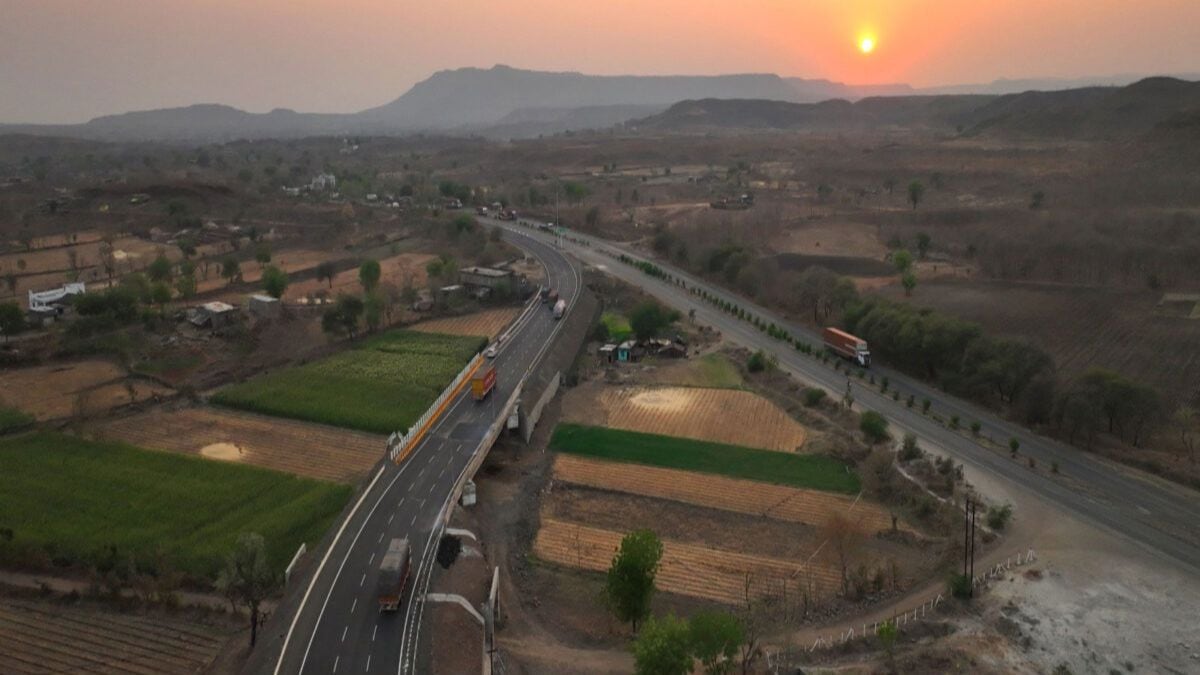
The National Highways Authority of India has begun work on a detailed project report to widen a 160-kilometre stretch of National Highway 52, from Indore to the Maharashtra border via Khalghat and Sendhwa, from four lanes to six. The move comes as traffic on this section of the Agra-Mumbai corridor has grown steadily, putting pressure on a route that carries heavy freight movement between central and western India every day, as per an ANI report.
The DPR is currently being prepared, and construction is expected to be taken up in phases once the report is finalised.
Why this stretch matters
NH-52 connects Indore to Mumbai and serves as one of the primary overland routes linking northern India with the west and south. Around 40,000 vehicles use this corridor daily, a significant share of which is commercial traffic, trucks and container vehicles moving goods between Indore, the Pithampur industrial belt and ports and markets further west.
According to the ANI report, for ordinary commuters and transporters alike, delays on this route have a direct cost. Longer travel times mean higher fuel bills, tighter delivery schedules and more wear on vehicles navigating a corridor that was built for a different volume of traffic, the ANI report added.
What the upgrade will actually include
Beyond simply adding lanes, the project, as outlined, includes several components that address specific pain points on the route.
The three ghat sections, Bheru Ghat, Bakaner Ghat and Bijasan Ghat, will be upgraded to six lanes. The ANI report noted that these stretches have historically been among the more difficult parts of the highway, combining steep gradients with heavy vehicle movement. Some improvements, including road realignment and slope work, were carried out during earlier four-laning works. The six-lane project is intended to build on those.
A new parallel bridge over the Narmada River near Khalghat is also proposed. The existing bridge handles all traffic across that crossing, and a second structure would reduce that load and maintain lane continuity across the river, as per ANI.
In towns along the route where the highway passes through built-up areas, bypasses and service roads are planned to separate local movement from highway traffic. Flyovers and underpasses are proposed at major junctions for the same reason.
Focus on road safety
Accident-prone stretches, particularly around Bijasan Ghat, are getting specific attention in the project design. The proposals include redesigning sharp curves, improving drainage to prevent water accumulation on the road surface, upgrading road furniture such as signage and crash barriers, and installing modern traffic management systems, the ANI report added.
What it means for commuters and businesses
For daily users of the route, the immediate benefit of this expansion will be a reduction in the travel time between Indore and the Maharashtra border. Smoother traffic flow through the ghat sections and at junctions would make the journey more predictable, the ANI report noted.
For the Pithampur industrial area, which is one of central India’s larger manufacturing clusters, lower logistics costs are the primary gain. Faster and more reliable movement of goods reduces the cost per trip and improves supply chain planning.
Where things stand
The DPR work is ongoing. NHAI has not announced a construction start date or a project cost estimate in the public domain yet. Construction is expected in phases, which on projects of this scale typically means priority sections, likely the ghat areas and the Narmada bridge, move first, with the rest following over subsequent years.