



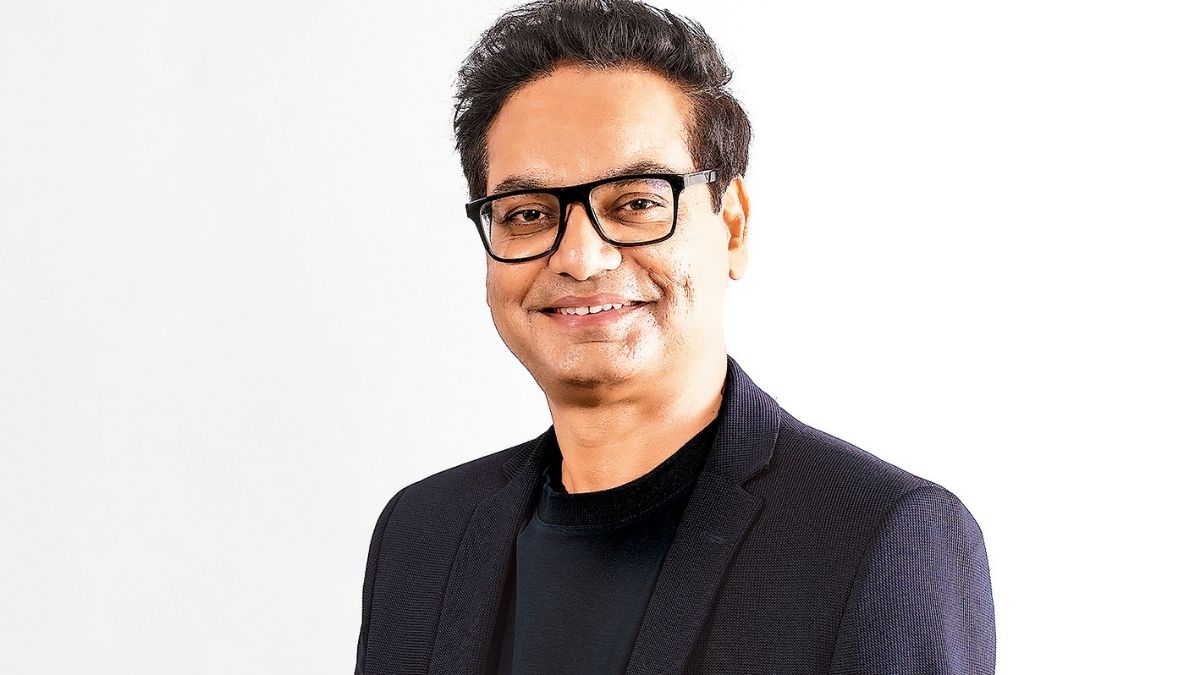
When Gaurav Singh Kushwaha started Bluestone in 2011, he had never bought a piece of jewellery. He had never visited a jewellery store either. That lack of familiarity, however, became an advantage. Today, Bluestone is among India’s largest new-age jewellery retailers, operating more than 340 stores across over 140 cities. But the idea began with an outsider trying to understand a category that many insiders took for granted.
Kushwaha grew up in Kota, Rajasthan, the son of a bank employee and a homemaker. A strong student, he secured an all-India rank of 59 in the IIT entrance examination and joined IIT Delhi in 1997 to study computer science. After graduating in 2001, he joined Tavant Technologies and later became one of the early employees at Amazon India in 2004, where he worked on infrastructure projects that eventually became part of AWS.
By 2007, as the startup ecosystem was beginning to take shape, he and a batchmate launched chakpak.com, a Bollywood-focused social networking platform. The company raised $2.5 million from Accel and Canon Partners and at its peak attracted around 200,000 daily active users. The business, however, struggled to monetise. After four years, the founders shut it down, sold part of the business to Flipkart and returned about 85% of investor capital. “In hindsight, it was a good decision to come out of the content game,” Kushwaha says.
The experience shaped his thinking about what to build next. Chakpak had succeeded in attracting users but had struggled to turn engagement into a sustainable business. As he evaluated what to build next, three sectors stood out: grocery, furniture and jewellery. He chose jewellery because it combined a large market with characteristics that would make it difficult for horizontal e-commerce players to dominate. “Jewellery in India is much more than an engagement ring,” he says. “There is so much more.”
Solving the Sparkle
Bluestone was founded in 2011 and launched the following year with about 350 designs and no inventory. The idea was simple: sell first and manufacture later. One of the earliest challenges was photography. Gold reflects light and diamonds refract it, making jewellery difficult to capture accurately. Drawing on experience from his earlier venture, Kushwaha digitally modelled every product and generated rendered images instead of relying on conventional photography.
The capability enabled customers to browse a much wider range of designs online and remains one of the company’s core strengths. Manufacturing posed an even bigger challenge. Traditional jewellers could accommodate variations in weight because products were priced after production. Bluestone’s model required precision because customers purchased a specific design before it was made. To solve the problem, the company built its own factory in 2014. Manufacturing timelines fell from three to four weeks to as little as three to five days, while product specifications became far more predictable.
The combination of digital design and controlled manufacturing allowed Bluestone to scale its catalogue rapidly. Because products did not need to be stocked before sale, the company could introduce a far wider variety of designs than traditional retailers. By 2015-16, Bluestone had reached annual revenue of Rs 50-60 crore and was offering thousands of designs. Yet growth had begun to plateau.
Omnichannel Epiphany
Customer research revealed the problem. Large numbers of consumers were browsing products online but hesitating to complete purchases. They liked the designs but were reluctant to spend significant amounts on something they could not physically examine. The finding challenged one of the central assumptions behind online retail. Jewellery buyers wanted convenience and choice, but they also wanted reassurance.
The answer, surprisingly, was stores. Bluestone opened its first outlet at Pacific Mall in Delhi in July 2018. Within weeks, online sales from nearby catchment areas increased sharply. The same pattern emerged wherever the company opened stores. Physical outlets were not replacing e-commerce; they were helping customers trust it. That insight reshaped the business. What began as an online-first jewellery company evolved into an omnichannel retailer built around both discovery and trust.
The strategy also accelerated growth. The company listed in August last year. In the March quarter, revenue from operations rose nearly 48% year-on-year to Rs 681.5 crore, while it reported a net profit of Rs 32 crore against a loss of Rs 51 crore a year earlier. Over the past three years, Bluestone has recorded a CAGR of 47%.
More than a decade after entering a category he knew little about, Kushwaha has become deeply immersed in it. Looking back, he sees little connection between the IIT student who set out to build a career in technology and the entrepreneur who now runs one of India’s largest jewellery retailers