



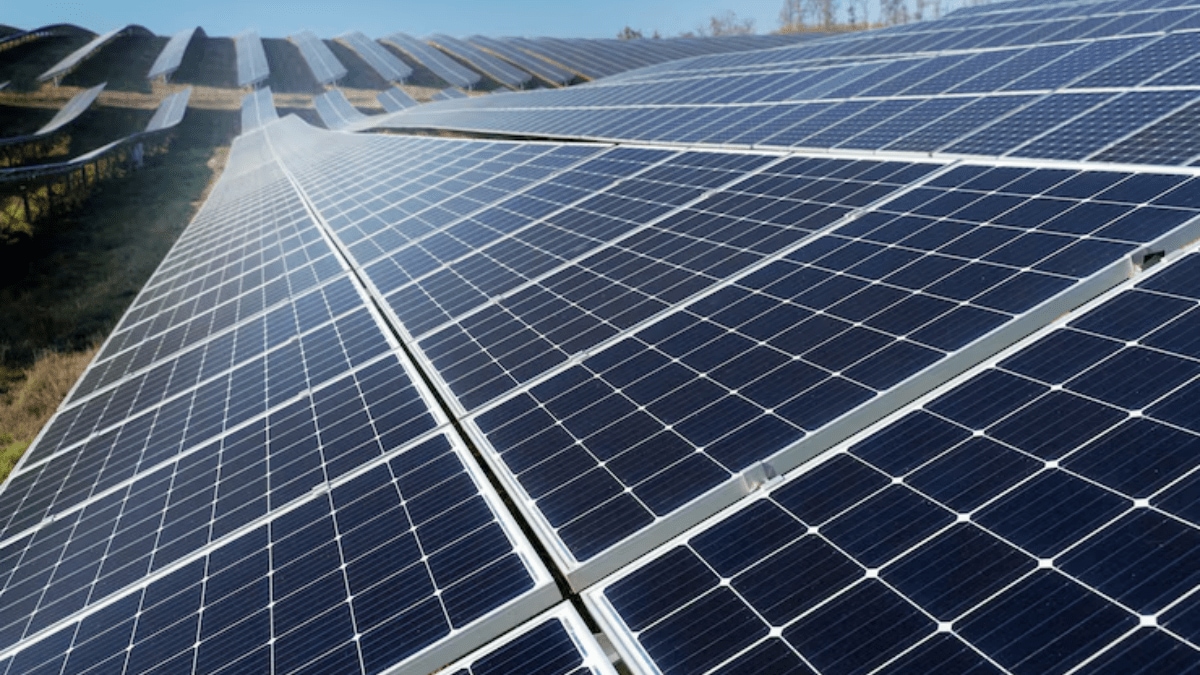
Solar power backed by battery storage can now meet up to 90% of India’s electricity demand at a cost of ₹5.06 per unit, lower than the average power procurement cost across most states, marking a structural shift in the country’s energy economics amid rising demand and volatile fossil fuel prices.
The findings underline how rapid declines in storage costs are enabling round-the-clock renewable power, with solar-plus-battery systems already cheaper than coal-based generation in several states, according to global energy think tank Ember.
“Solar and batteries could supply 90% of India’s electricity demand at a competitive LCOE of around INR 5.06/kWh,” the report said, highlighting the growing cost advantage of renewables over conventional sources.
India’s energy demand
The development comes as India’s electricity demand continues to expand, crossing over 2,000 terawatt-hours (TWh) in 2024, increasing pressure on conventional generation and fuel imports.
A key driver behind this shift is the sharp fall in battery costs. Global turnkey battery prices declined around 40% in 2024 and a further 31% in 2025, significantly improving the viability of storing solar energy for use beyond daylight hours.
“Battery economics have improved sharply in the last two years,” the report noted, adding that storage is no longer a barrier to delivering firm, dispatchable renewable power.
According to the analysis, meeting 90% of India’s electricity demand would require about 930 GW of solar capacity and 2,560 GWh of battery storage, translating to roughly 4.9 GW of solar and 13.5 GWh of storage per 1 GW of average demand load.
This requirement remains well within India’s estimated 3,343 GW ground-mounted solar potential, indicating that resource availability is not a constraint to scaling renewables.
State level economics
At the state level, the economics are already favourable. The report finds that seven of India’s ten largest electricity-consuming states can meet at least 83% of their demand through solar-plus-storage systems at costs lower than current procurement levels.
Across these states, solar-plus-battery power is around 15% cheaper on average than existing tariffs, with states such as Gujarat and Karnataka already seeing cost advantages over conventional power sources.
The findings also challenge coal’s competitiveness. Recent coal-based tariffs range between ₹5 and ₹6.3 per unit, while solar-plus-storage offers fixed pricing insulated from fuel price volatility.
“Solar and batteries are already delivering power below the prevailing power purchase costs in many states, while rivalling coal in terms of reliability,” said Duttatreya Das, Energy Analyst – Asia at Ember.
“The dramatic improvement in battery economics over the past two years has delivered the missing piece that turns sunshine into reliable electricity day and night,” said Kostantsa Rangelova, Global Electricity Analyst at Ember. “The question is no longer whether solar can power India’s electricity system, but how quickly it can scale.”
The report also highlights strong alignment between solar generation and peak electricity demand, particularly during high-radiation months, improving system efficiency and reducing reliance on peaking power.
However, it flagged seasonal variability as a key challenge. “The main challenge is extended periods of low solar output, especially during the monsoon,” the report said, pointing to the need for complementary sources such as wind and hydro.
India’s solar capacity has already expanded to 143 GW in FY26, contributing around 9.4% of total electricity generation, nearly doubling from 2022 levels.
With falling costs, improving reliability and vast untapped potential, the report signals a structural shift in India’s power mix, positioning solar-plus-storage as a central pillar of future electricity supply.