



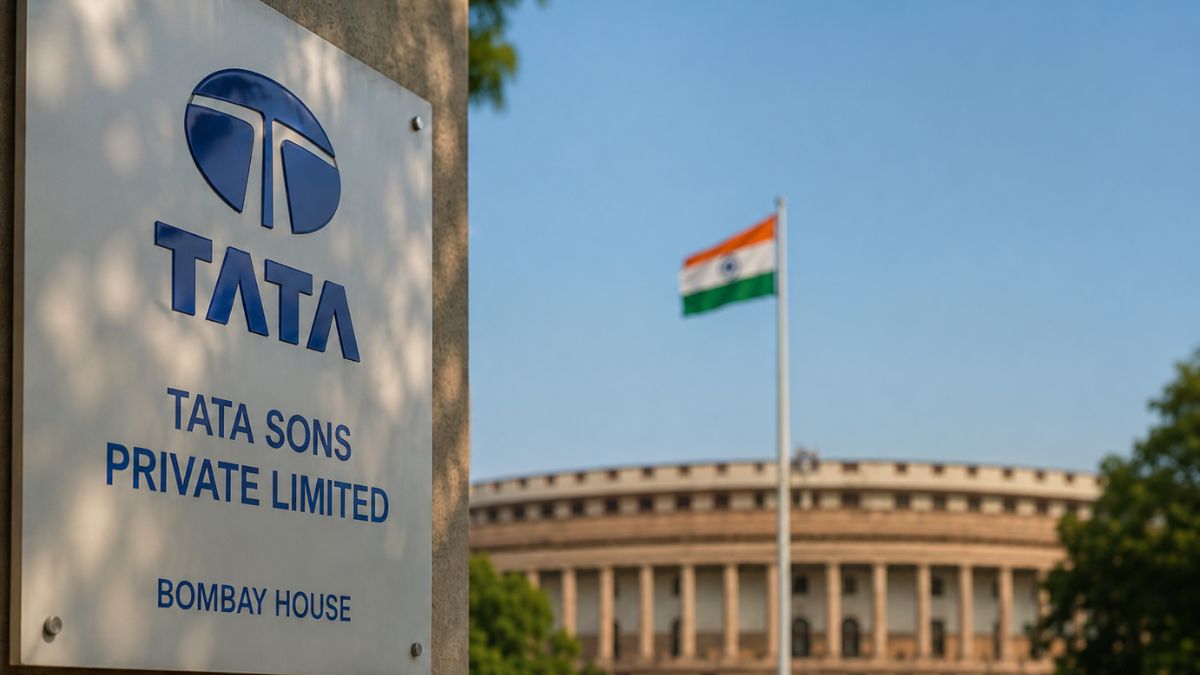
With all eyes on the crucial Tata Trusts meeting scheduled for June 8 and the Tata Sons board meeting on June 12, the Centre is quietly nudging the leadership of the Tata Group to resolve internal differences and avoid the ongoing uncertainty at the top of India’s largest conglomerate.
The government’s concern stems from growing tensions within Tata Trusts and Tata Sons over governance, succession planning and the future direction of the group. While the Tata Trusts continue to wield decisive influence over Tata Sons and its operating companies, the Centre believes the issues should be handled “professionally and discreetly”, given the group’s importance to investor confidence and the broader corporate sector.
“There should be no place for personal agenda and ego in a conglomerate as systematically important as the Tata Group,” a senior government functionary tracking the developments told FE, adding the parties should engage, sort out issues internally and focus on operations.
In any case, “there were no major operational concerns across the group companies at present,” he said. The latest message is in continuation of the government’s earlier informal intervention in October last year, urging Tata Trusts Chairman Noel Tata and Tata Sons Chairman N Chandrasekaran to restore stability amid concerns that escalating boardroom disagreements could affect the functioning of the group.
At the time, divisions had emerged among trustees over board appointments and governance-related issues. Some of the group’s top officials had met Home Minister Amit Shah at that time.
“Uncertainty at the top is never a good thing. It does not send out the right signal,” the person added.
A special Tata Sons board meeting held on Tuesday at Bombay House lasted more than five hours. Convened by Chandrasekaran ahead of the June 12 board meeting, it featured detailed presentations by chief executives of five Tata Group companies on turnaround strategies, capital allocation and long-term business plans.
The review assumes significance because Tata Sons — the holding company of the Tata Group — oversees more than 100 companies globally, including listed giants such as Tata Consultancy Services, Tata Steel and Tata Motors. Tata Trusts owns nearly 66% of Tata Sons, giving the charitable institution effective control over the conglomerate.
The group is also central to India’s semiconductor ambitions and has become a key player in civil aviation following its acquisition of Air India from the Centre.
The June 8 Tata Trusts meeting is expected to review the performance of Tata Group companies managed by Tata Sons and deliberate on broader governance concerns.
Focus on strategic issues: Tata sons listing and succession plans likely on agenda
The subsequent Tata Sons board meeting on June 12 is likely to focus on strategic issues, including the long-debated possibility of listing Tata Sons and succession planning ahead of Chandrasekaran’s term ending in February 2027. A third term for Chandrasekaran was agreed to by Tata Trusts earlier but has not been ratified due to board-level differences.
The listing debate has emerged as a key fault line within the Trusts. Pressure has mounted following RBI regulations applicable to large investment companies, prompting discussions on whether Tata Sons should eventually go public.
At least two of the six Tata trustees — Venu Srinivasan and Vijay Singh — have supported the listing of Tata Sons in media interviews, saying expansion, especially into new areas like semiconductors, will require large capital that cannot be generated internally.
The SP Group, which holds 18% stake in Tata Sons, wants a listing so it can monetise or exit its holding, which is not freely transferable in the current structure. But the SP Group is not represented among the trustees. The key pressure is regulatory, stemming from RBI rules requiring large non-bank lenders above certain asset thresholds or with public funds to list.
The 108-year-old salt-to-steel conglomerate is uniquely structured, where a combine of philanthropic organisations broadly known as the Tata Trusts hold controlling stake, while the debt-ridden construction and infrastructure conglomerate SP Group holds 18.4%.
The Tata Trusts comprise 13 entities, seven of which directly hold shares in Tata Sons. The board of Tata Trusts consists of six trustees drawn from these entities.
The ongoing tensions under Noel Tata are increasingly being seen as part of a broader institutional transition in the post-Ratan Tata era rather than merely a personality clash. Unlike Ratan Tata, whose authority within the group was rarely questioned, Noel Tata has inherited a more fragmented and politically sensitive environment.
He now faces the difficult task of preserving the philanthropic character of Tata Trusts while retaining authority over Tata Sons, balancing influential trustees, managing succession expectations and overseeing a rapidly expanding global conglomerate spanning steel, automobiles, software, aviation and retail.