



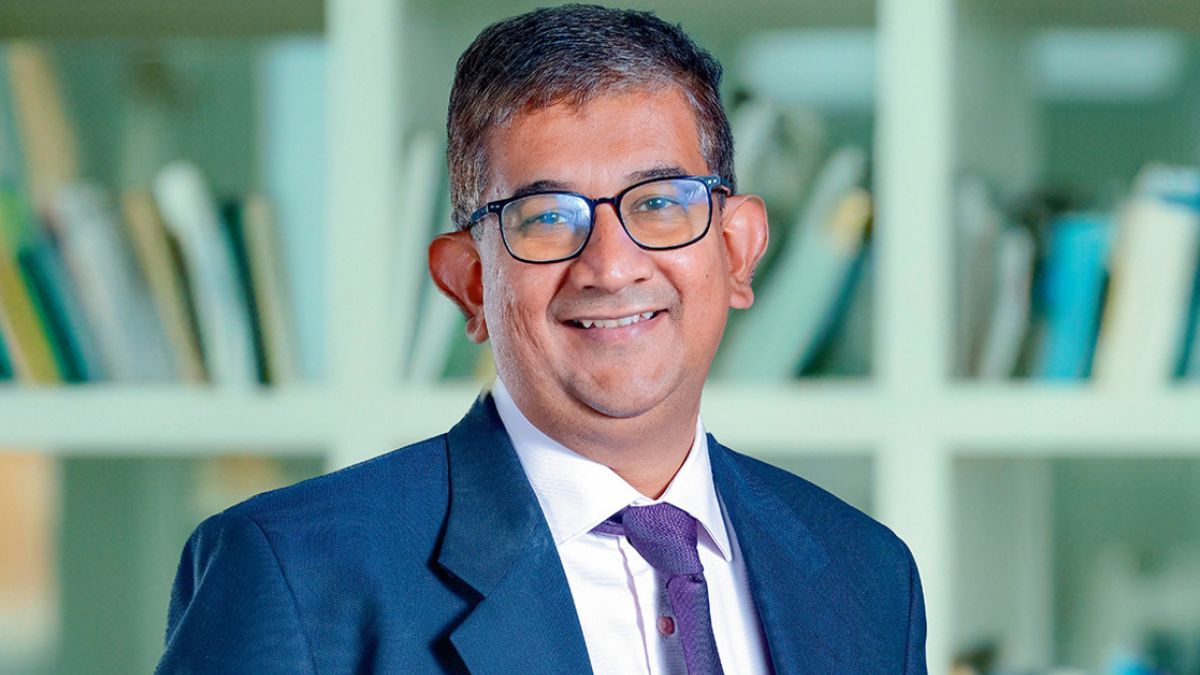
Sudhir Sitapati, MD & CEO, Godrej Consumer (GCPL) believes there is cautious optimism among FMCG players, driven by GST 2.0 price reductions, rural demand and a gradual urban recovery. Sitapati, who is also the chairman of the CII National Committee on FMCG, spoke to Viveat Susan Pinto at the sidelines of the CII FMCG Summit on the company’s premiumisation agenda, acquisitions and big bets. Excerpts:
1) How do you read the current environment three months after the GST 2.0 reforms were introduced? What explains for the mixed urban demand trends despite price cuts?
It has actually been about two months since the GST price reductions kicked in, so it is still early to draw definitive conclusions. Pipeline movements can distort short-term performance, and September was a weak month for most FMCG companies. That said, in principle, GST cuts should support consumption. We saw a similar impact in 2017 after GST was first introduced, and we are hopeful of a repeat now. As far as urban demand goes, it was slower even prior to the GST price reductions. And yes, it does remain mixed, although certain segments such as quick commerce are growing rapidly. Overall, we expect urban demand to gradually strengthen over the next few quarters. Rural demand, of course, remains robust.
2) What are the building blocks for GCPL now that the FMCG market is on the growth path?
Our near-term objective is to deliver consistent high single-digit volume growth in India and then build toward double-digit growth. This will be driven by a combination of organic growth in core categories, new category launches, and selective acquisitions. At the same time, we are ensuring that our international businesses remain profitable, with some of our Indian innovations taken abroad selectively. This is a long-term journey rather than a short-term sprint. Our priorities are also aligned with this philosophy of building a strong India business, with capital allocated primarily here.
Sudhir on balancing premiumisation with mass-market growth
3) How are you balancing premiumisation with the need for mass-market growth?
A lot of growth energy is coming from the top 15–20% of consumers. Categories like laundry liquids and pet care are premium relative to traditional alternatives. That said, premiumisation does not mean exclusion—we also focus on making these products accessible through appropriate price points. There is also a growing segment of higher-income rural consumers who aspire to be a part of these categories. The strategy is to ensure availability, affordability through smaller packs, and strong distribution reach.
4) You mentioned about doing selective acquisitions. You wrapped up one recently in male grooming called Muuchstac for Rs 450 crore. Will there be more such in the future?
The acquisition was strategically about facial cleansing (for men) rather than male grooming per se. It represented an upgrade from soap to face wash, had a strong P&L, and added capabilities. Those were the factors that drove the acquisition. And these parameters will guide our future M&A decisions too. We are clear that acquiring businesses has to make strategic sense, otherwise it could be a drag.
Sudhir reveals his big bets
5) What are your big bets from a portfolio perspective?
Our core categories—household insecticides, hair colour, and air fresheners—remain central. Alongside these, we are building newer categories like laundry and pet care. In October, we entered the toilet cleaner category, which is close to Rs 3,000-crore in size and growing in double digits. We did this with a new brand called Godrej Spic. It marks an important step for us in expanding our home care portfolio. As far as soaps are concerned, its a large category, but slower in terms of growth rates, where the strategy for us would be to upgrade consumers to liquid formats.
6)Your media strategy has evolved where you are taking advertising in-house and betting on connected TV. What explains for this shift?
Advertising is the lifeblood of FMCG. We need to be present wherever people are consuming media and do it efficiently. In-housing creative work improves efficiency, that was one reason for taking this approach. Secondly, traditional media and general trade still matter for most of India. Some consumers are moving to connected TV and modern trade, while a smaller but fast-growing segment is turning to social media influencers and quick commerce. You need different teams focused on different channels to address these diverse needs. We are doing that.