



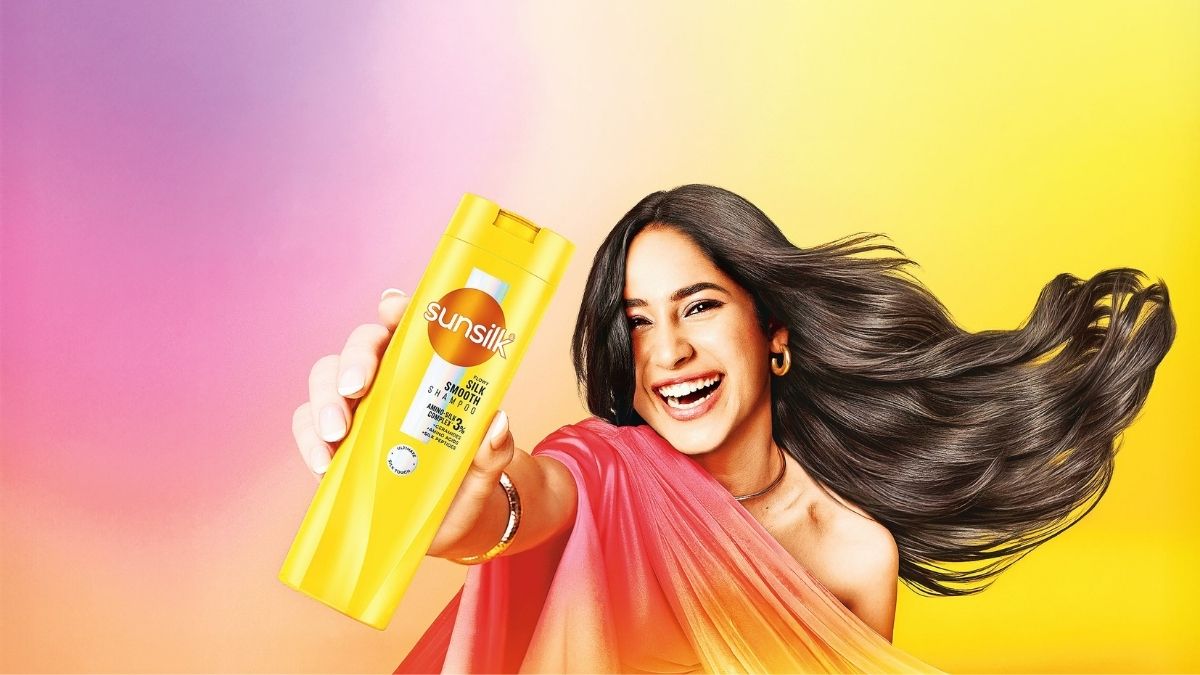
Hindustan Unilever’s (HUL) legacy hair care brand Sunsilk recently entered the Rs 1,000 crore club — nearly 65 years after its launch in the Indian market. With this, the brand joins the ranks of the company’s other major hair care brands such as Clinic Plus and Dove, that crossed the Rs 1,000 crore mark years ago. HUL credits the brand’s growth in India to its unremitting effort to modernise the brand, strong consumer trust and deep penetration across rural and urban markets.
Sunsilk now reaches one in two Indian households, says Sairam Subramanian, VP, hair care at HUL. He notes that the brand saw its most ambitious refresh in over a decade in 2025. “Packaging was redesigned with brighter, more contemporary visuals and premium cues like holographic foiling and core formulations were upgraded with science-driven ingredient complexes,” he says, noting that the brand’s key objective with the refresh was to retain the trust of existing consumers while elevating Sunsilk to reach modern beauty expectations.
Subramanian explains that the brand has, over the years, democratised beauty and haircare by attempting to bring the newest trends to masses across the country at affordable prices. “From the iconic Re 1 sachet to newer launches like Silk Smooth Yellow and Sunsilk Super Shine Serum, the brand playbook has stayed consistent,” he says adding, explaining that its pricing doesn’t compel consumers to choose between aspiration and access.
The Indian hair care market is valued to be around $4 to $4.3 billion and is expected to cross the $6 billion mark by 2030, driven largely by premium, natural and targeted hair care solutions. Experts believe that the core shampoo market growth is still slower — especially in urban markets — than the overall haircare segment, as consumers seek specialised products such as serums, hair fall treatments, masks and creams. Non-urban markets have greater headroom for penetration and growth, compared with urban markets which have seen over 90% penetration.
Non-urban India is central to the Sunsilk growth strategy, contributing a significant and faster-growing share of the business than urban. “Two things do the heavy lifting here – access and trust. We offer access at every price point. The Re 1 sachet continues to be one of the strongest enablers of category access. It allows consumers across India to experience the same product quality as larger packs, while enabling seamless trade-up through formats ranging from 80ml to 1 litre,” he says.
Riding on legacy
At a time when consumers are seeking specialised hair care products and solutions, a legacy brand like Sunsilk faces challenges from new-age, D2C haircare products, which are popular especially among urban, Gen Z consumers. According to Chetna Israni, co-founder and director, Morning Star BrandCom, though Sunsilk has reinvented itself over the decades, its main challenge now is “cultural sharpness”.
“The brand needs to keep showing younger consumers that it understands how beauty, identity and self-expression are evolving. Where new brands are winning is in cultural intimacy. They are quicker, more niche, more conversational and often better at making consumers feel individually seen,” she observes. However, she adds that Sunsilk continues to score over new brands because of inherited trust built over the decades.
HUL also has far greater scale than any D2C brand, say experts. Its retail network reportedly spans over 9 million retail outlets and over 3,500 distributors. Moreover, its haircare portfolio already commands over 60% of India’s shampoo market, with its three brands – Clinic Plus, Dove and Sunsilk. The advantage is decidedly HUL’s and Sunsilk’s.
Even when D2C players may pose threats in certain urban pockets, they pose no major risk to legacy brands at a national level, says Santosh Sreedhar, partner, Avalon Consulting. He argues that legacy brands should look to leverage the consumer trust they have built already, while also cultivate relevance with younger consumers through new product variants, packaging, etc. and extend into new adjacent categories like serums and hair gels.
“The legacy brand’s focus should be to ensure that new generations connect with them in the same way that their parents did. This is also because the hair care category tends to have high brand loyalty with low involvement, and hence people tend to continue using a brand once they have a good experience,” says Sreedhar.
Subramanian says Sunsilk’s global presence allows it to benefit from international strengths, while also filtering every decision through the lens of an Indian consumer. The brand no offers conditioners designed to match the shampoo lines; hair serums, designed to combat frizz, and protect against heat styling damage; hair mists and perfumes as part of its new Gen Z-focused lines.
“India was the first market to launch a Sunsilk serum, rooted in the need for frizz-free hair post-wash in hot and humid conditions,” points out Subramanian. Sunsilk also has built a naturals range around ingredients that resonate with the Indian consumers and climate, whether it is coconut and aloe vera or onion and jojoba. All of these address certain hair care issues that affect Indian consumers, such as humidity-related frizz and hair fall.