



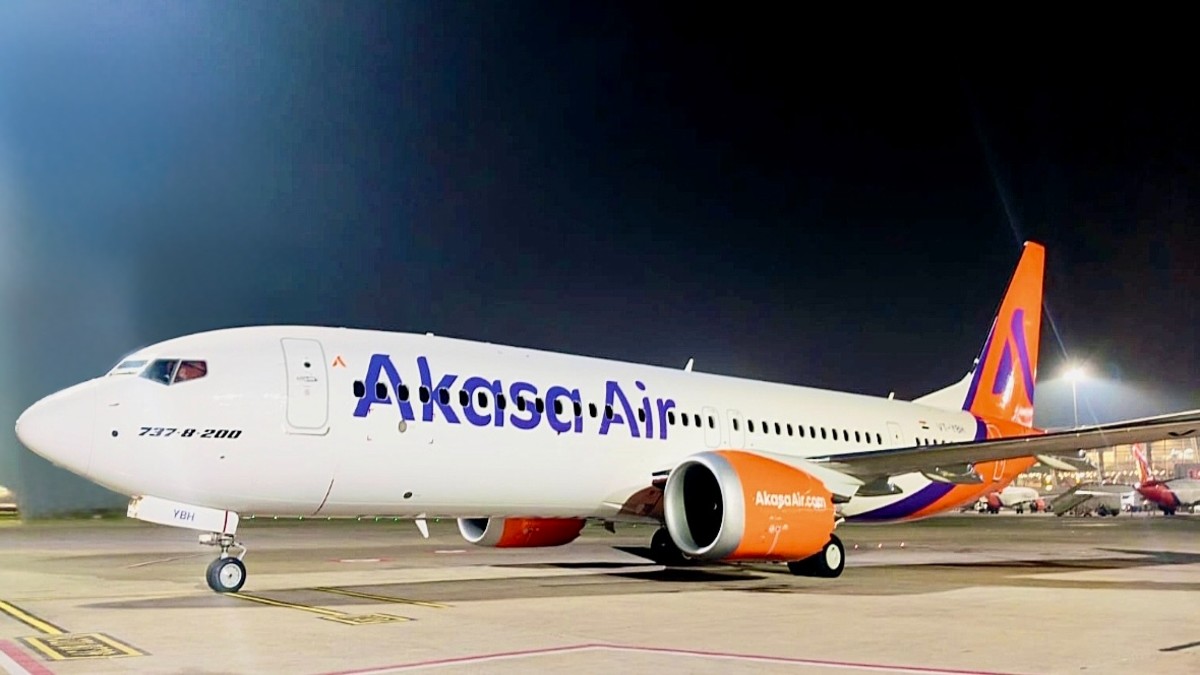
Akasa Air, which currently serves 26 domestic and six international destinations, expects around 40% of its operations to serve global destinations within the next three to four years, the airline’s founder and chief executive officer, Vinay Dube, said.
Speaking at the Wings India 2026 air show launch at Begumpet Airport in Hyderabad, Dube said that the 40% target is more of a flexible expectation than a rigid target, as assets will be moved to wherever sustainable profitability is highest
Dube added that Akasa Air currently has 32 planes as part of its fleet and expects the fleet to rise to 34 by the end of February. He added that the delivery of planes from Boeing is part of the airlines’ growth strategy, and there haven’t been any major delays in aircraft deliveries from the US aerospace major.
He added that the airline’s network strategy continues to focus on “sticking to its knitting”—connecting metros to Tier 2 and Tier 3 cities. Akasa Air’s leadership also revealed that the airline is entering a new phase of accelerated growth that coincides with the upcoming opening of major hubs like Navi Mumbai and Noida International airports.
Pilot Retention Focus
Regarding concerns around its pilots’ flying hours, Dube said that all of the airline’s 775 pilots are now flying significant hours. He added that the airline has taken a firm stance on pilot retention, positioning itself as an employee-centric organisation that refuses to “let any one of these pilots go” despite the industry’s fluctuating delivery schedules.
In December 2024, some Akasa Air pilots approached the civil aviation ministry, alleging mismanagement, favouritism, harassment, and compromised safety standards in the airline’s pilot training and evaluation processes. Akasa Air termed them as “baseless and untrue.”
Flying hours are important for pilots as most contracts offered by airlines are based on hours-per-month payout, which means lower flying hours result in lower takeaways for pilots.
Dube added that the airline has resumed pilot hiring after an 18-month pause as it prepares to add more aircraft to its fleet.
“We stopped hiring pilots because the delivery of planes had slowed,’ Dube said, adding that the airline has “restarted hiring pilots in November-December and we’ll continue hiring.”
Akasa’s decision to resume pilot hiring is significant, as it becomes the third airline, following IndiGo and Air India, to take this step. This trend emphasises that crew availability is increasingly becoming a key factor in airline growth, especially with stricter duty-time regulations in place.
As airlines look to expand their capacity, the focus on hiring pilots is now just as crucial as receiving new aircraft deliveries.
Domestic Aircraft Financing
Dube also called for a holistic evolution of the lending sector in the Indian aviation ecosystem. Dube highlighted a critical need for Indian financial institutions—such as SBI, HDFC, and ICICI—to take a leading role in aircraft financing, which is currently dominated by foreign lessors.
He added that Akasa Air is also working on establishing a legal structure to utilise GIFT City for future financing needs.
Looking ahead, Akasa Air anticipates a double-digit growth rate for the Indian aviation sector over the next decade. However, they cautioned that the government must address inflationary costs—including taxes and landing charges—to ensure the industry achieves “growth with stability” rather than just expansion followed by failure.
Regardless of the industry’s “duopoly” concerns, Akasa Air remains confident in its ability to hold its own on a level playing field, Dube said.