



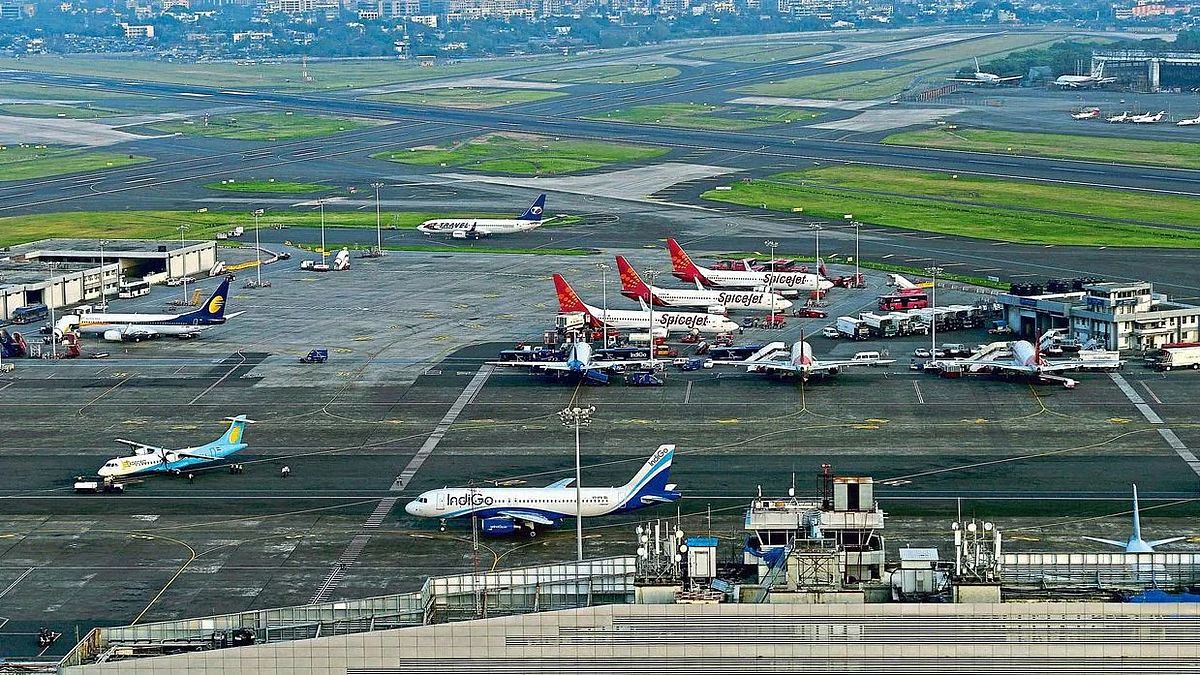
The Airports Authority of India (AAI) is set to kick off the third round of airport monetisation after a gap of nearly five years, seeking bids for 11 airports including Varanasi and Amritsar by April, multiple government officials aware of the discussions told FE.
In the new round, the government has created five bundles, each combining metro and non-metro airports. These are Amritsar-Kangra, Varanasi-Kushinagar-Gaya, Raipur-Aurangabad, Bhubaneswar-Hubli, and Trichy-Tirupati.
As envisaged under the national monetisation pipeline, these airports will be leased out on long-term concession through the public-private partnership (PPP) model for operation, management and development.
“We expect the public private partnership appraisal committee (PPPAC) to clear the proposal for PPPs in airport operations and management over the next two months, after which RFPs (requests for proposal) will be invited,” a senior government official said.
The official added that the government is aiming to raise around Rs 6,000 crore in 2026-27 from leasing these 11 airports. The proceeds will likely be deployed by AAI for further expansion and creation of new airport assets in the country.
What do MCA reps say?
Officials in the Ministry of Civil Aviation said that five airport operators — domestic as well as international — have so far expressed interest in participating in the bidding.
“Apart from the Adani Group and GMR Airports, other interested parties include Vinci Airports and investment firm NIIF,” another government official said, adding that several other global private equity funds and airport developers have also shown preliminary interest in the programme.
These airports will be awarded to bidders offering the highest revenue share per passenger to AAI, a mechanism the government believes will enhance transparency in revenue sharing.
What does the third round of Airport monetization mark?
The third round of airport monetisation marks the first use of a bundling approach, under which high-traffic, profitable airports are paired with smaller, loss-making ones. The model is aimed at enabling cross-subsidisation, ensuring sustained investment in non-metro airports that may otherwise struggle to attract private capital on a standalone basis.
The PPPAC will evaluate key structural issues, including the choice between revenue-sharing and per-passenger fee models, the framework for user development fees, and whether caps should be imposed on the number of airports that a single entity can operate. These decisions will have a direct bearing on passenger tariffs, particularly at smaller airports.
Airport monetisation began in India in 2003 under the National Democratic Alliance (NDA) government, with the approval of PPPs for Delhi and Mumbai airports, where AAI retained a 26% stake and private partners held 74%. In 2006, the GMR consortium won the Delhi airport bid, while the GVK consortium secured Mumbai airport through a competitive revenue-sharing model. The Adani Group took over the operations of Mumbai airport from GVK in February 2021.
In the second round, Ahmedabad, Lucknow and Mangaluru airports were leased out in October-November 2020 and Jaipur, Guwahati and Thiruvananthapuram airports in October 2021.
BHEL OFS opens today, govt to raise Rs 4,422 cr
The government will sell up to 5% stake in Bharat Heavy Electricals (BHEL) via offer for sale (OFS) on Wednesday and Thursday to raise about Rs 4,422 crore.
OFS in BHEL “opens tomorrow for non-retail investors. Retail investors can bid on Thursday. Government offers to disinvest 3% equity in BHEL with an additional 2% as a greenshoe option,” Department of Investment and Public Asset Management Secretary Arunish Chawla posted on X.
The OFS floor price has been set at Rs 254 — a discount of nearly 8% to the closing price of the stock on the BSE on Tuesday. The government has raised Rs 8,768 crore in disinvestment receipts so far this financial year.