



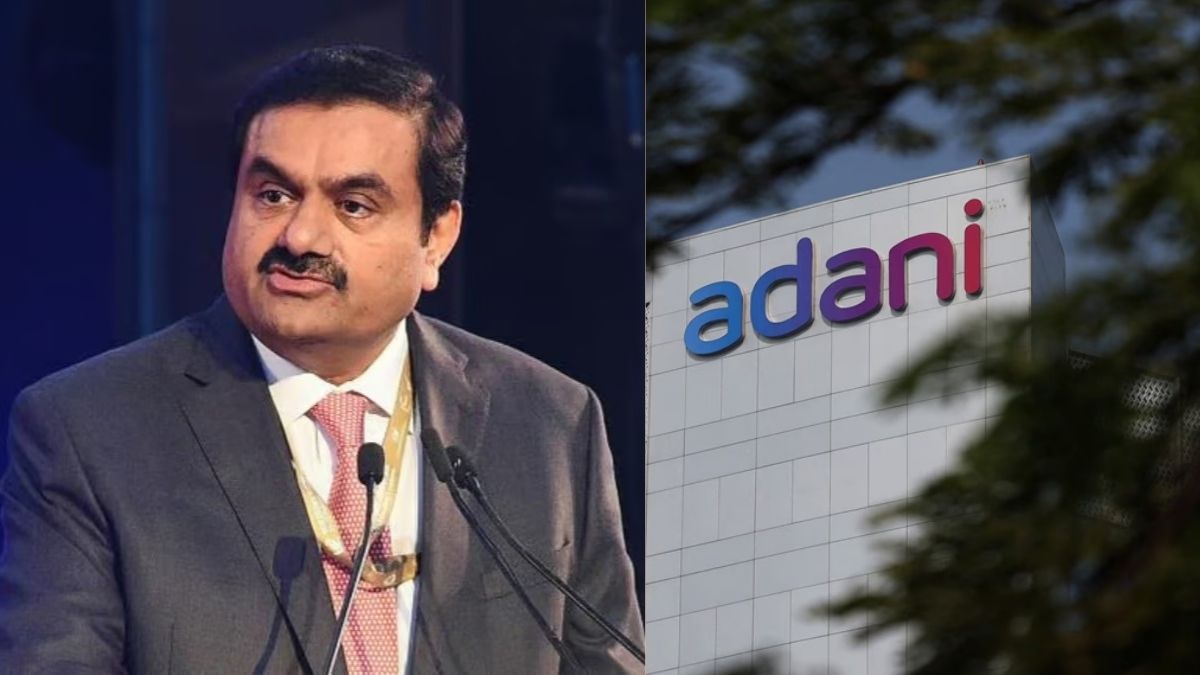
A 10-week legal campaign involving hundreds of pages of submissions, expert reports and presentations played a key role in persuading the US Justice Department to abandon its criminal prosecution of billionaire Gautam Adani, newly unsealed court filings have revealed. The filings provide the most detailed account so far of how Adani’s defence team challenged the US government’s case and ultimately helped secure the dismissal of bribery and securities fraud charges in one of the most closely watched corporate prosecutions in recent years.
600 pages of legal submissions in 10 weeks
News agency PTI reported that a July 14 filing by Robert J. Giuffra Jr, Adani’s lead counsel and co-chair of law firm Sullivan & Cromwell, revealed that the defence campaign ran from February 3 to April 17, 2026.
During that period, the legal team reportedly submitted 118-page submission to prosecutors, a 12-page supplemental filing, two slide presentations totalling 130 pages and a separate 151-page presentation to the US Securities and Exchange Commission.
The defence also relied on reports from four outside experts, including a Harvard Law School securities law professor, a former acting chair of the SEC, a former Chief Justice of India and a former head of India’s Central Electricity Authority.
Together, the experts reportedly produced nearly 200 pages of analysis covering the alleged securities violations, India’s anti-corruption framework and the technical functioning of renewable energy auctions. Giuffra said the team spent “many thousands of hours” examining the government’s case and argued that the indictment had serious legal and factual weaknesses.
Adani case began with $250 million bribery allegations
It can be seen that the case was launched on November 20, 2024, when US prosecutors unsealed an indictment against Gautam Adani, his nephew and Adani Green Energy executive director Sagar Adani, former Adani Green CEO Vneet Jaain and others.
Prosecutors alleged that the defendants had conspired to pay more than $250 million in bribes to Indian government officials to secure solar energy supply contracts.
According to the indictment, the contracts were projected to generate more than $2 billion in after-tax profits over two decades. US prosecutors also alleged that investors were misled about the alleged bribery scheme, allowing the group to raise more than $3 billion through loans and bond issuances.
The Adani Group has repeatedly denied the allegations and described them as baseless.
Defence challenged US jurisdiction and prosecution’s evidence
The defence argued that the case relied too heavily on the extraterritorial application of US securities law. Giuffra’s team also challenged statements that prosecutors had treated as actionable under securities law, arguing that relevant legal precedents would not support such claims.
The bribery allegations were described by the defence as “implausible” and “internally inconsistent”. The legal team also questioned whether key potential witnesses would be credible enough to support the prosecution’s case at trial.
The defence further argued that the case was largely centred on conduct that took place in India and that the US government’s jurisdiction over the alleged conduct was limited.
DOJ eventually sought dismissal of indictment
The criminal case remained largely dormant after the indictment was unsealed. On May 18, 2026, the Justice Department moved to dismiss the charges. US District Judge Nicholas Garaufis initially questioned the government’s explanation, finding it insufficient and asking prosecutors to publicly clarify why they had decided to abandon the case.
In a subsequent filing, Principal Associate Deputy Attorney General R. Trent McCotter cited several reasons for the decision. These included the fact that the alleged conduct was overwhelmingly centred in India, jurisdictional and evidentiary challenges, absence of identified investor losses and changes in the department’s enforcement priorities.
The filing also stated that Indian authorities had examined the matter and that the case had limited prospects of reaching trial.
$10 billion US investment proposal rejected as part of settlement
The court filings also shed light on an unusual element of the discussions between Adani’s legal team and US prosecutors. On two occasions, the defence reportedly raised Gautam Adani’s November 2024 pledge to invest $10 billion in US energy security and resilient infrastructure projects. The Adani Group had said the proposed investment could support up to 15,000 jobs.
According to the filings, the defence presented the criminal charges as an obstacle to the proposed investment and suggested that the matter could have implications for broader US-India economic relations. However, the Justice Department rejected any proposal to resolve the criminal charges through the investment commitment.
In a May 11 email to Giuffra, US Attorney Joseph Nocella said that any proposal to resolve the charges partly through a general commitment to invest $10 billion in the United States was “categorically rejected”. The email added that the proposal “will not be considered” by the US Attorney’s Office.
Criminal case ended alongside separate SEC settlements
The criminal case was unwound alongside separate civil proceedings by the US Securities and Exchange Commission. Under proposed settlements filed on May 14, Gautam Adani agreed to pay a $6 million civil penalty, while Sagar Adani agreed to pay $12 million.
The settlements also included injunctions against future violations of US securities laws. The Adanis did not admit or deny the SEC’s allegations. The settlements were later revised on May 30 after the SEC rescinded a rule that had restricted defendants from publicly disputing allegations made against them in settlement proceedings.
A separate sanctions inquiry by the US Treasury Department’s Office of Foreign Assets Control involving another Adani Group entity was also discussed during the broader negotiations, although the defence filing maintained that it was resolved independently of the criminal case.
Who made the decision to drop the case?
A separate declaration filed on July 17 by Nocella raised questions about who ultimately made the decision to seek dismissal of the criminal charges. Judge Garaufis had asked the US Attorney to confirm that the reasons publicly cited for dropping the case were the actual reasons behind the decision.
Nocella said he was “not the decisionmaker for the motion to dismiss” and had not drafted the rationale submitted to the court. According to his declaration, the authority belonged to McCotter, his direct supervisor at the Justice Department.
McCotter had described meetings involving more than a dozen defence lawyers, as well as separate discussions among Justice Department lawyers without the defence present. Nocella also said that both his May 11 email rejecting the $10 billion investment proposal and the May 18 motion to dismiss were sent or filed at McCotter’s direction or with his authorisation.
Defence argues court should not second-guess dismissal
Beyond challenging the prosecution’s evidence and legal theories, Adani’s lawyers have also made a broader argument about the court’s authority to examine the Justice Department’s decision. Giuffra cited Rule 48(a) of the Federal Rules of Criminal Procedure, which governs the dismissal of criminal charges by the government.
The defence argues that courts should intervene only in limited circumstances, such as when a dismissal would prejudice the defendant or be clearly contrary to the public interest. According to the defence, the Adani case was dropped after an extensive review of its legal and factual merits and did not involve any improper political or business consideration.
The filings now offer a detailed picture of the legal strategy that preceded the Justice Department’s decision: an intensive campaign combining arguments on US jurisdiction, securities law, evidence credibility, Indian regulatory systems and the practical prospects of taking the case to trial.
(With inputs from PTI)