



In a dramatic shift in Bangladesh’s political landscape, the Bangladesh Nationalist Party (BNP) is poised to form the next government, nearly 18 months after the end of Sheikh Hasina’s 15-year rule. Her tenure came to an end in July 2024 following widespread student-led protests that reshaped the country’s power structure.
With the BNP crossing the 200-seat mark in the 300-member Jatiya Sangsad, early trends suggest a comfortable majority for the opposition party. Counting is still underway in some constituencies, but multiple tallies indicate the party has secured enough seats to stake claim to government formation.
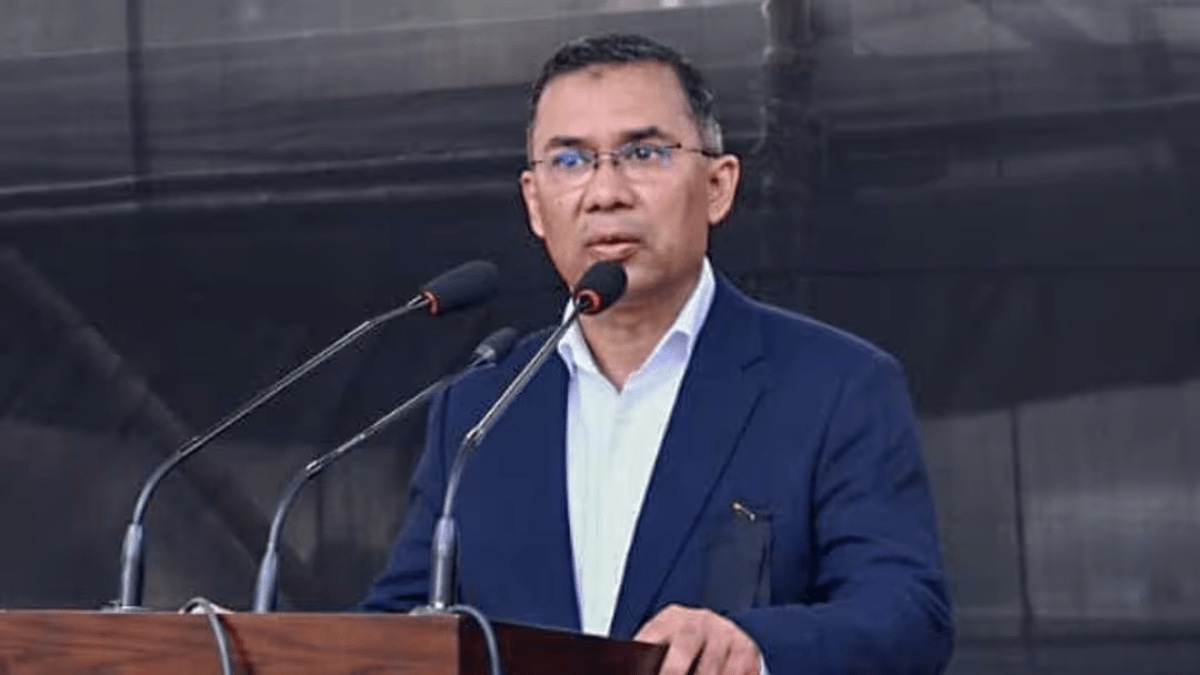
Party chairman Tarique Rahman is now expected to take oath as Prime Minister, marking a significant political comeback after nearly two decades away from the country.
Who is Tarique Rahman? From 17 Years in Exile to the Prime Minister’s Office
Born on November 20, 1965, in Dhaka, Rahman is the son of former Prime Minister and BNP chief Khaleda Zia. He left Bangladesh in 2008 after being detained during an anti-corruption drive under a military-backed government. Then he subsequently spent 17 years in self-imposed exile in London and return only in December last year. Meanwhile, he the authorities also sentenced him to life-time imprisonment under Hasina’s tenure.
During Sheikh Hasina’s tenure, Rahman faced multiple corruption and criminal cases, which he consistently denied, calling them politically motivated. Following the change in government in 2024, he was cleared of the cases and returned to Bangladesh in December that year to a massive show of support from party workers.
His return came months after Hasina’s government fell in August 2024 amid a youth-led uprising. Just days after Rahman’s homecoming, his mother Khaleda Zia passed away, marking the end of an era in Bangladeshi politics. Rahman then formally took charge of the BNP’s campaign strategy, overseeing alliances and candidate selection.
Under his leadership, the BNP and its allies crossed the 200-seat threshold in the 13th national election, positioning him to lead the country at a pivotal moment.
How will Tarique’s win define India-Bangladesh Relations?
1) A BNP-led government is likely to recalibrate ties with India. For years, New Delhi viewed the BNP cautiously, particularly due to its alliance with Jamaat-e-Islami between 2001 and 2006 — a period that shaped perceptions of the party within Indian strategic circles.
Rahman has indicated a desire to reset relations on what he describes as “mutual respect” and equality. Key bilateral issues are expected to surface quickly if the BNP forms the government, including the revival of the SAARC summit.
2) However, the biggest blocker in reset of India and Bangldesh ties would be Sheikh Hasina. Country’s former prime minister and BNP’s arch rival is currently in New Delhi and has been sentenced to death in absentia by a special tribunal in Bangladesh for alleged crimes against humanity. Any formal request for her extradition — and India’s response — could become a major diplomatic flashpoint.
In an interview with The Indian Express, Mahdi Amin, a close adviser to Rahman, pointed to what he called “great opportunities” for cooperation with India under a BNP administration.
“Of course, there are issues, but every issue can be an opportunity as well to forge better ties between people-to-people contacts,” Amin said. “We would appreciate bilateral relations based on mutual trust, mutual interest, a reciprocal relation where we can serve both nations with equality, fairness and justice.”
3) Since the political shift in 2024, Bangladesh’s Hindu minority — estimated at around 13 million — has faced growing anxiety. Independent reports recorded over 2,900 incidents of violence after the previous government’s fall, including attacks on homes and temples. While many incidents were politically driven, fears of religious targeting remain a key concern for India.
At rallies in February 2026, Tarique Rahman sought to reassure minorities, stating, “Religion is individual, but the state belongs to everyone.” He pledged equal treatment for all faiths.
For New Delhi, the safety of Hindus is a red line. Any rise in violence could force India to raise the issue diplomatically, potentially complicating efforts to reset ties under a BNP government.
4) There are over a million Rohingya refugees in Bangladesh, and many have crossed into India over the years. This affects security in India’s Northeast and border states.
If a BNP government makes life in the camps harder to force them to leave, more refugees may try to cross the porous border into India (West Bengal, Tripura, and Assam).
India and Bangladesh will have to cooperate closely to manage the border.