



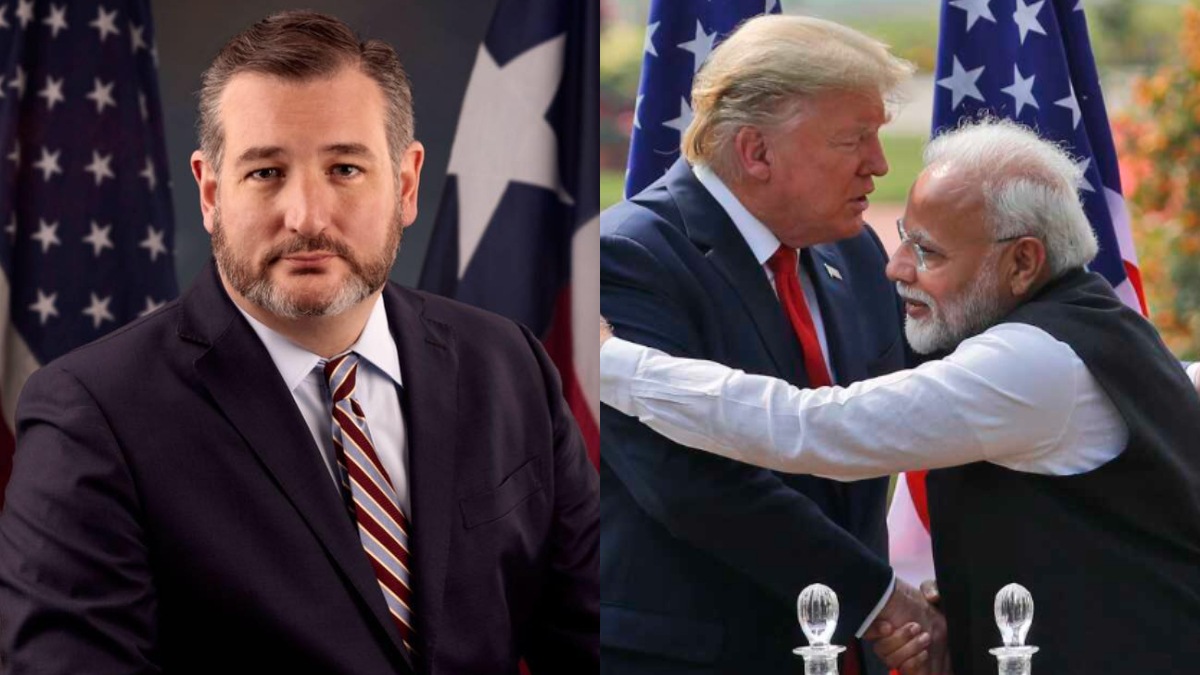
If you’re wondering why US Senator Ted Cruz is suddenly all over bombshell headlines, it no longer just has to do with his potential 2028 White House run. This week, the Republican politician became the shocking centre of conversations surrounding the much-delayed trade deal between India and the United States of America.
A bombshell Axios report breaking the word around a leaked audio from Cruz’s donor meeting ended up spilling eye-widening claims about severe divisions within the Donald Trump administration over India trade policy. As per the shocking claims made therein, the report suggested that top White House officials, including the president, were key influential drivers behind the stalled US-India deal.
Capturing conversations from two meetings held last year, the recordings are believed to have been made in early and middle 2025 following Trump’s massive tariff regime announcement. The supposed secret recordings spanning nearly 10 minutes were provided to Axios by a fellow Republican source.
Trump behind stalled India US trade deal?
When a donor brought up Trump’s branding for his tariffs regime announcement – “Liberation Day” – during a session, Cruz jokingly said that he’d threatened to fire people from his team if they used those words, as per the secret recordings reported by Axios.
While on that subject matter, the US senator reportedly told the donors about “battling” the White House to push top officials to accept a trade agreement with India. As per Axios, Cruz was ultimately asked about who in the Trump administration had stalled the deal, the Republican senator name-dropped White House economic advisor Peter Navarro, Vice President JD Vance and “sometimes” Donald Trump.
Cruz, who emerged as Trump’s main rival during the Republican primary a decade ago, reportedly dropped some of the harshest criticisms of the US president-vice president duo during the purported meetings. These scathing remarks extended to portraying Vance as a pawn of far-right podcast Tucker Carlson.
At another point, Ted Cruz even claimed that he and some other senators had tried to dissuade Trump about his tariff agenda. According to the Axios report, the lengthy call “did not go well,” and resulted in Trump “yelling” and “cursing” at the others.
Further revealing details about the alleged tariff phone call, Cruz reportedly told Trump, “Mr. President, if we get to November of [2026] and people’s 401(k)s are down 30% and prices are up 10–20% at the supermarket, we’re going to go into Election Day, face a bloodbath.”
“You’re going to lose the House, you’re going to lose the Senate, you’re going to spend the next two years being impeached every single week.”
The Republican president, in turn, purportedly responded, “F** you, Ted,” according to Cruz’s claims highlighted in the report.
Notably, the report shed light on Cruz “positioning himself as a traditional free trade, pro-interventionist Republican” ahead of the 2028 primary campaign against Vance.
Where does the India-US trade deal situation stand?
Earlier this month, Sergio Gor, the new US ambassador to India, visited the South Asian country’s capital for the first time after his swearing-in ceremony. During the trip, he weighed in on Trump and Indian Prime Minister Narendra Modi’s “real” friendship, and how they can “resolve their differences” despite certain disagreements.
While Gor spoke positively about the potential deal, some US officials had previously blamed India for the delay in signing the agreement. Delhi ultimately contradicted the claims, issuing a firm rejection of the statement.
Trade negotiations between India and the US have particularly been in hot water since Trump hit Delhi with 50% tariffs on Indian goods in August over its purchase of Russian oil.
However, amid the World Economic Forum in Davos, Trump told Indian news outlet Moneycontrol that he has great respect for Modi and both countries are “going to have a good deal.”
Treasury Secretary Scott Bessent’s recent remarks at Davos 2026 echoed a similar positive intent, as he revealed that the additional 25% punitive tariffs on India could be scrapped in the future.
“We put 25% tariffs on India for buying Russian oil, and the Indian purchases by their refineries… have collapsed,” Bessent said at the USA House in Davos. “That is a success. The 25% Russian oil tariffs are still on. I would imagine there is a path to take them off now. So that’s a check and a huge success.”