



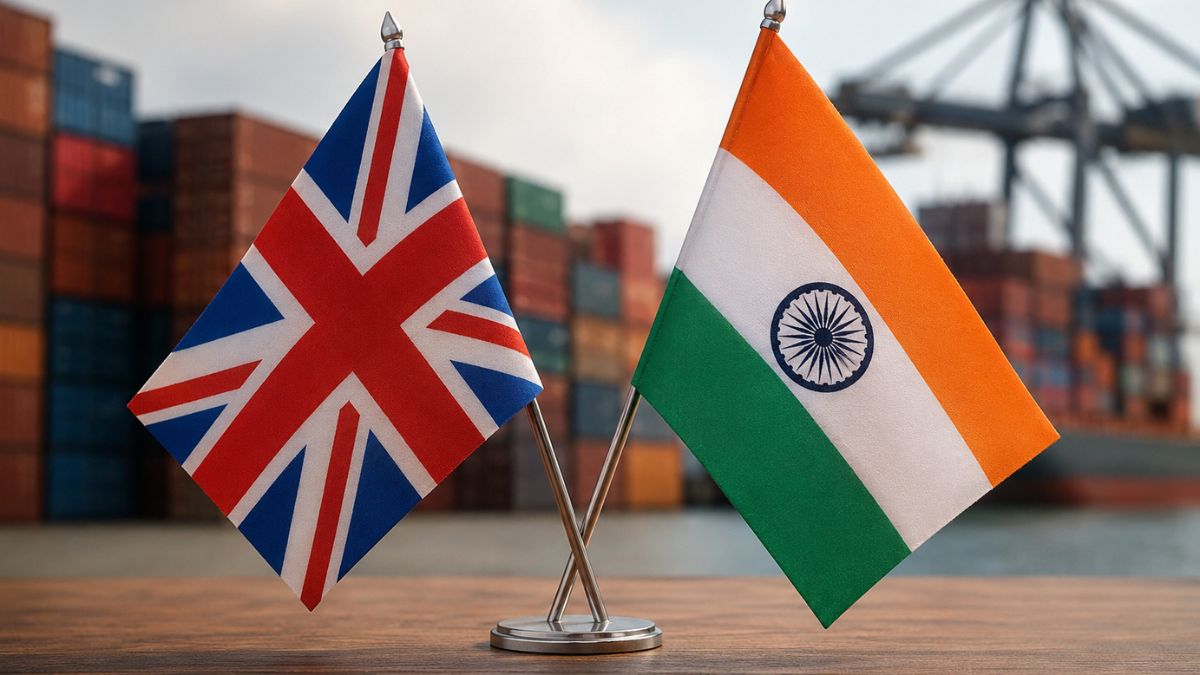
After resolving the issue of steel quotas that paved the way for implementation of the Comprehensive Economic and Trade Agreement (CETA) from Wednesday, India is now discussing with the UK to shield its exports from carbon tax regulation.
Under the initial UK steel mechanism, 80% of India’s steel exports were duty-free and 20% of tariff lines, amounting to $200 million in annual exports at the current rate, faced higher duties. After negotiations, the UK has now raised the duty-free quota to $350 million under these tariff lines where exports currently stand at $200 million.
“The UK’s Carbon Border Adjustment Mechanism is a regulation in the works. It has yet not come to fruition. Both sides are discussing CBAM regulations,” Commerce Secretary Rajesh Agarwal said here.
If a country comes up a regulation which is taking away certain concessions under a Free Trade Agreement (FTA they have to negotiate it with their partner countries as part of the World Trade Organisation (WTO) regulations, he said, asked whether after the CETA some other regulations can impact India’s trade with UK.
Through CETA that comes into force from July 15, both sides are aiming to increase their trade to $ 100 billion by 2030 from around $60 billion at present. In 2025, goods and services exports from India to the UK stood at $ 38.5 billion while imports were $ 25.8 billion.
The CETA will allow 99% of Indian exports to enter the UK duty-free and cover almost 100% of the trade in value terms. For the UK, India will reduce or eliminate duties on 90% of the tariff lines that account for 92% of the imports.
Duties on key sectors of export interest to India are substantial and they will gain maximum from the agreement. “The FTA removes the tariff disadvantage faced by Indian exporters relative to key suppliers such as Norway (18.9% share of UK imports), Iceland (9.9%), China (9.0%), Vietnam (7.0%), Ecuador (5.8%) strengthening India’s competitiveness in the UK market,’ additional secretary in Department of Commerce Darpan Jain said.
For sectors like textile and clothing, duties for India will come down from 12% to nil, while for leather and footwear the drop to zero will be from a high of 16%. Auto parts which attract duties of 18% and electrical machinery where duties are 14%, will see all duties eliminated. Other machinery and chemicals will see duties drop from 8% to zero.
Processed foods that have duties up to 70% and marine products at 20% will also benefit from duty elimination. Processed foods that have duties up to 70% and marine products that are at 20% will also benefit from duty elimination.
Agrawal said India managed to protect its steel exports to the UK through negotiations.
“We have been able to preserve the market access in steel in terms of value that we have enjoyed till now,” Agarwal said, adding that “our quotas in the steel sector are comparatively higher compared to other trading partners of the UK.
From 1 July, the UK has limited tariff-free steel imports, reducing overall quota volumes by 51% compared to the earlier steel safeguard measure. Any imports above these levels will then face a 50% tariff. Due to this measure 20% of India’s steel exports to the UK worth $ 200 million was impacted. After negotiation this quota has been raised to $ 350 million, Agrawal said.
The negotiations around steel after CETA has been signed, also resulted in the UK increasing the time period for exemption form payment of social security contributions by Indians working in the UK to five years from three years under the Double Contribution Convention (DCC).
The DCC will benefit 75,000 Indian workers and over 900 employers. It will result in savings of more than $ 600 million annually.