



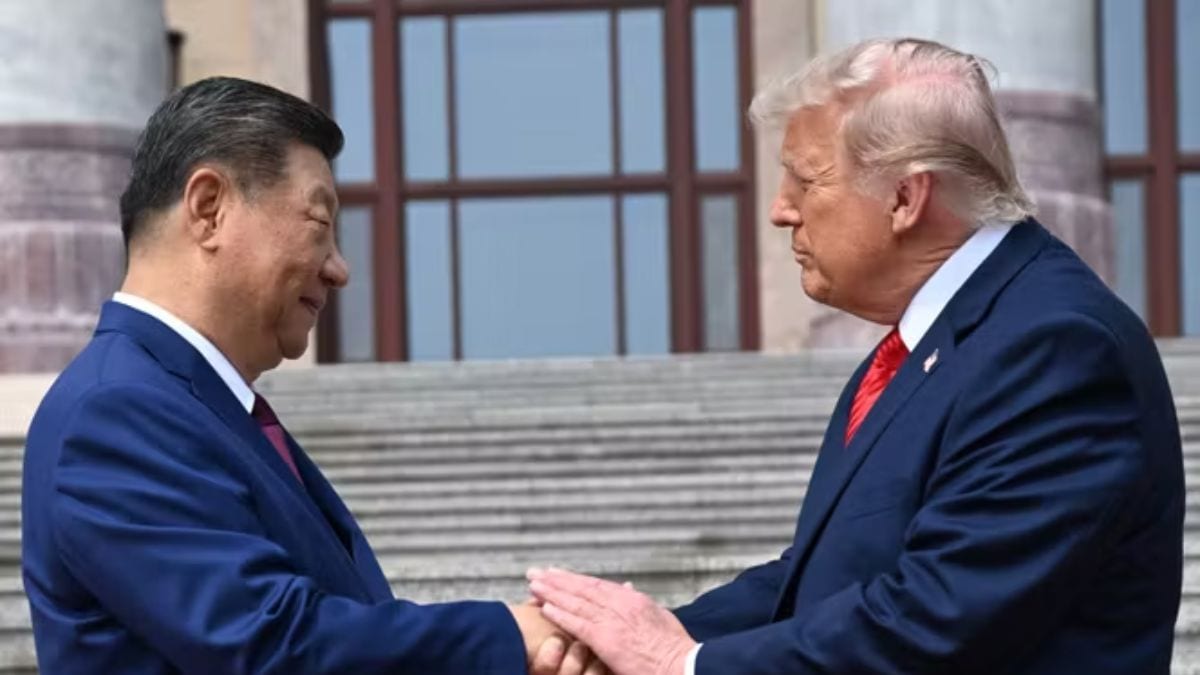
Nearly a decade after his last visit to Beijing in 2017, US President Donald Trump returned to China for a high-stakes two-day summit with Chinese President Xi Jinping. The meeting carried global importance as the world’s two largest economies tried to stabilise ties strained by trade disputes, Taiwan tensions, technology restrictions and geopolitical rivalry. Both leaders publicly spoke about cooperation, most American media outlets described the summit as important but limited in what it actually achieved.
US media on the Trump-Xi meeting
The Wall Street Journal described the summit as a strategic negotiation rather than a diplomatic breakthrough. The paper focused on what both sides hoped to gain and whether any concrete agreements would come out of the talks.
It said both leaders repeated their existing positions on Iran and highlighted Trump’s push for China to open up more to American businesses. The paper also stressed that both countries were trying to “downplay their disagreements” while still protecting their positions on major issues like trade and Taiwan.
The New York Times framed the summit as a test of whether Washington and Beijing could stop relations from getting worse. The paper described the meeting as part of a larger struggle over the future balance of power between the US and China. It also mentioned Trump’s past criticism of the newspaper over its China coverage.
CNN focused on the unresolved tensions between the two countries. The network said that despite the positive public messaging, key disputes over Iran, Taiwan and trade remained unresolved. CNN described the summit as important for temporarily stabilising relations, but not enough to change the rivalry between the US and China.
ABC News explained the carefully planned and theatrical nature of the summit. The network noted that Beijing understood Trump’s preference for ceremony and prestige, saying China knew he liked “the red carpet rolled out” and “certainly delivered.” ABC also focused on Trump calling it “an honor” to be Xi’s friend and describing Xi as “a great leader.” At the same time, the network pointed out that Taiwan remained the biggest source of tension between the two countries.
The Washington Post presented some of the strongest geopolitical analysis. Even before the summit began, the paper described Xi as a confident leader presenting China as a stable alternative to an unpredictable United States. During the summit, it stressed that Taiwan remained Beijing’s top concern despite efforts to improve ties and secure economic deals.
The Los Angeles Times placed the summit within the shift in global power over the past decade. Its coverage said that despite positive public comments from both leaders, there were no major breakthroughs before Trump left Beijing. CNBC focused mainly on the economic side of the summit. The network reported that both sides agreed to a “strategic framework” for managing relations over the next three years. However, CNBC said experts viewed the framework more as a “guardrail” to stop tensions from worsening rather than as a real reset in relations.
Reuters treated the summit as diplomatically successful in a limited way. The agency reported Trump’s optimistic comments about future US-China relations while also repeatedly reminding readers that the major disagreements between the two countries still remained. The New York Post took a more dramatic and Trump-friendly approach. Its coverage focused on backstage tensions and reports of “chaos” during the summit, including claims involving White House staff and security officials.