



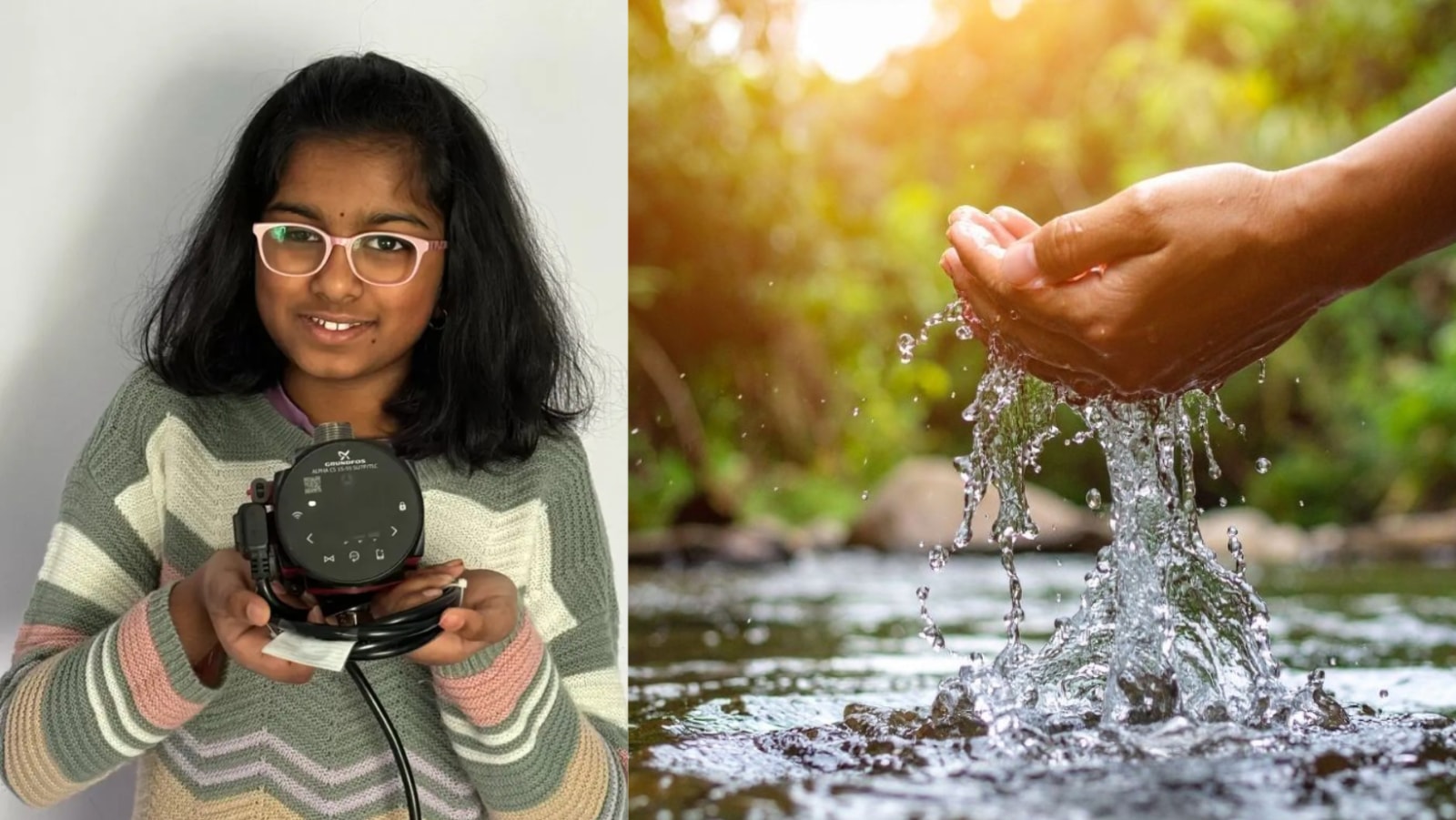
A normal ten-year-old’s life is predictable. They may be playing on the ground, complaining about those homework they have to finish but at just 10 years old, Nithya Tammana has become a passionate voice in the fight against water waste.
For many children, waiting for the shower to warm up is just another everyday routine. For Nithya Tammana, it became the start of a larger environmental mission.
When she was living in New Jersey, USA, Nithya began noticing something that many adults did not pay attention to, the large amount of clean water flowing down the drain while people wait for hot water. Curious about how much water was actually being wasted, she decided to test it herself. In her TEDx talk, she recalled the moment that made her think differently about the issue. She even timed how long it took for the water in her own home to heat up.
“A few months ago I decided to time how long it takes for my shower to heat up. I got comfortable and I waited… and waited… and waited. By the time my shower heated up, I could have written a book.” That simple observation led to a deeper question, how much water is wasted in homes every day.
The Problem of invisible water waste
Through research, Nithya discovered that the problem was much bigger than she expected. In the United States alone, the average family wastes between 20,000 and 25,000 gallons of water each year while waiting for hot water to reach taps and showers. At the same time, billions of people across the world struggle to access safe drinking water.
“The surprising part is that 3.2 billion people around the world don’t even have access to clean water,” she stated in her TEDx talk. The contrast between water scarcity in many parts of the world and waste in everyday household routines became impossible to ignore for this ten-year-old.
The birth of Save Drop
Motivated by this realisation, Nithya founded an initiative called Save Drop, focused on reducing water waste caused by inefficient plumbing systems.
The initiative aims to educate people about water conservation and encourage the use of simple technology that can prevent unnecessary water loss. One of the key solutions promoted by Save Drop is the installation of hot water recirculation pumps.
“These pumps are amazing because they send cold water back into the hot water tank,” she explained during her TEDx talk.
Instead of allowing cold water to flow down the drain while waiting for hot water, the pump redirects it back into the heater until the water reaches the desired temperature.
The system costs around USD 500 to install and can save thousands of gallons of water every year without requiring people to change their daily habits.
From a small idea to a national campaign
What began as a personal observation soon grew into a broader awareness movement. Nithya launched a petition calling for recirculation pumps to be made mandatory in new homes. The petition has gathered more than 650 signatures so far.
She also wrote letters to all 50 governors across the United States, urging them to support policies that encourage water-saving infrastructure in residential buildings.
Through school programmes, public talks, and youth events, Save Drop has expanded rapidly. Nithya now works with a network of more than 100 student volunteers who run water conservation clubs in their schools.
Each week, she engages more than 450 students through leadership and sustainability sessions that teach young people about environmental responsibility and water conservation. Today, the initiative has reached over one million people globally through awareness campaigns and educational activities.
Young innovator looking for practical solutions
Beyond awareness campaigns, Nithya has also worked on developing practical solutions for water safety.
One of her projects is BioLayer, a low-cost filtration system designed for school drinking fountains. The filter uses a layered system of sand, activated charcoal and a biological filtration layer made from Sphagnum moss.
Research suggests that Sphagnum moss can remove up to 95 percent of lead from water within 60 seconds through a process known as ion exchange biosorption.
Unlike many water purification systems, BioLayer requires no electricity and produces no plastic waste. The filter can be built for less than USD 30 using materials commonly available in hardware or garden stores.
This makes it particularly useful for communities in regions such as West Africa and Southeast Asia where access to safe drinking water remains a challenge. Nithya attends school in New Jersey and drinks from school fountains herself. Ensuring safe drinking water for children like her remains one of her core motivations. Much of Nithya’s work focuses on involving young people in environmental action.
Through the Save Drop Ambassador Program, more than 100 students now help spread awareness about water conservation in schools, libraries and community spaces. These student volunteers run awareness campaigns, organise educational sessions and encourage households to adopt water-saving habits. The initiative has also gained support through books written by Nithya to help younger audiences understand environmental issues.
Her books, The Water Bus and The Recirculation Revolution, explain water conservation and the science behind recirculation pumps in a way that is easy for children to understand.
Recognition for environmental leadership
Nithya’s work has received national and international recognition. She was the only student to receive the New Jersey Governor’s Environmental Stewardship Award for her work promoting water-saving technologies.
Her community service efforts have also earned her both the Gold and Silver President’s Volunteer Service Awards. She received the Daily Point of Light Award from the Points of Light Foundation for her contributions to environmental education and volunteer work.
Other recognitions include the Alaska Airlines Project Award for the Save Drop initiative and the Young Planet Leader title from the Heal The Planet organisation.
Her work has also gained global attention. Nithya became the youngest delegate in the 70-year history of the UN Commission on the Status of Women and delivered a TEDx talk titled “Save Drop, “A Simple Solution for a Sustainable Shower!” She was also invited to send a video message to the UK House of Lords about global water conservation.
“Imagine this: every drop of water we save today is a drop that can be used by someone in need tomorrow,” she explained in her TEDx Talk. Through small actions, whether installing recirculation pumps, taking shorter showers, or spreading awareness, she believes individuals can collectively make a significant difference.