



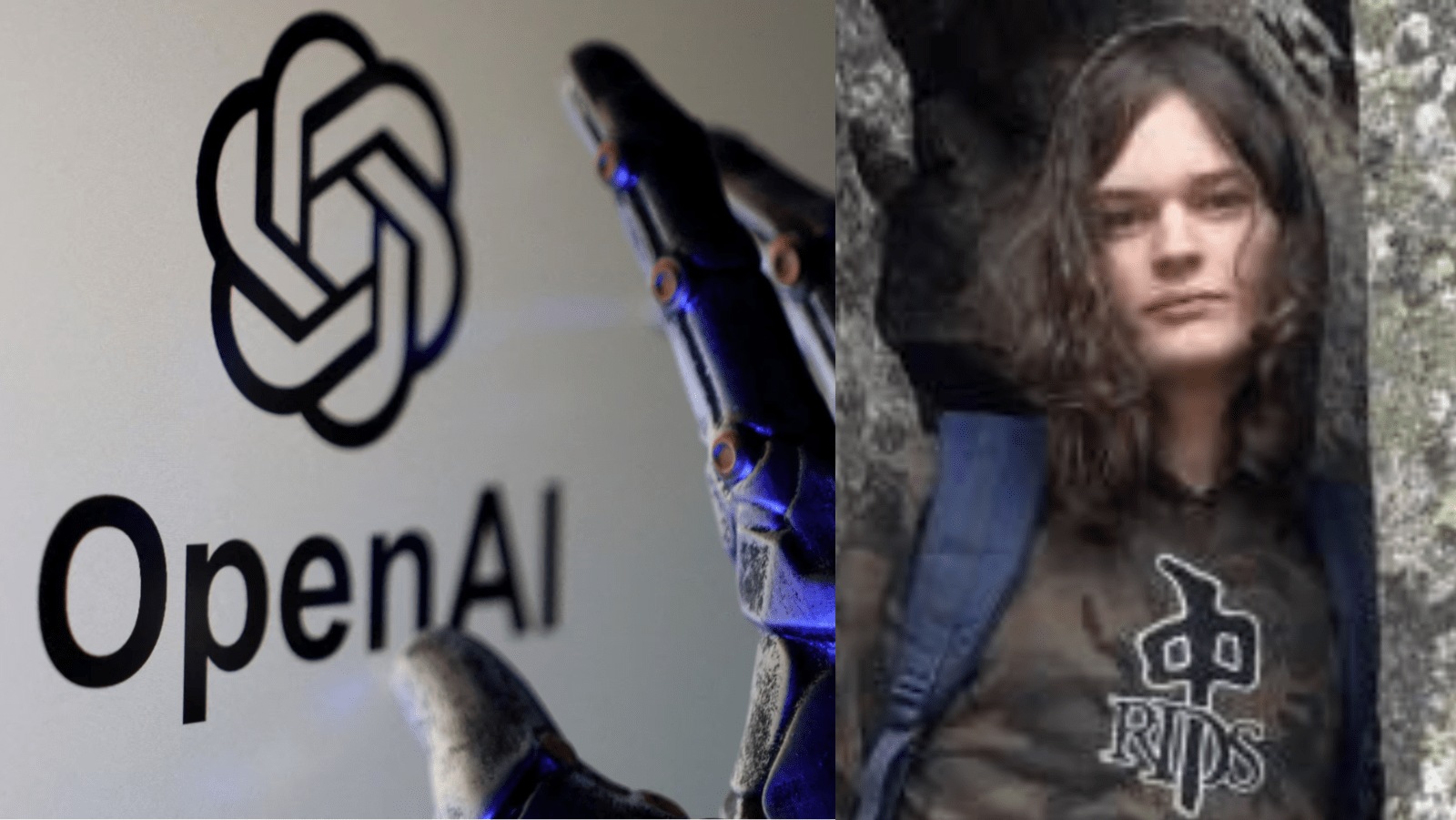
Months before a deadly school shooting shocked a small town in British Columbia, OpenAI employees were discussing whether they should alert police about a user’s troubling conversations with ChatGPT. The user was later identified as 18-year-old Jesse Van Rootselaar.
According to Wall Street Journal, last June, she used ChatGPT over several days to describe different gun-related violent situations. The company’s automated safety systems flagged the conversations, which led to a human review.
About a dozen OpenAI employees examined the messages. Some felt the content suggested a possible real-world threat and believed authorities in Canada should be informed. Others questioned whether the situation met the legal and internal standards required to involve law enforcement. In the end, company leadership chose not to report the activity.
Why police were not contacted
As reported by Wall Street Journal, OpenAI later confirmed that the account was permanently banned. However, the company said the situation did not meet the standard required to alert law enforcement. According to a company spokeswoman, reporting would have required “a credible and imminent risk of serious physical harm to others.”
OpenAI says it has systems in place to reduce harm. Its AI models are trained to discourage violence. When users appear to express harmful intent, conversations can be escalated to human moderators. Those reviewers can involve police if they believe there is an immediate danger. The company says these decisions are not simple. It must weigh the possibility of violence against user privacy and the potential emotional harm that could come from contacting police without strong evidence of an immediate threat.
February 10 attack
On February 10, a shooting took place at a school in Tumbler Ridge, British Columbia. Eight people were killed and at least 25 were injured. Police later identified Van Rootselaar as the suspect. She was found dead at the scene from what appeared to be a self-inflicted injury. After the shooting, OpenAI contacted the Royal Canadian Mounted Police and said it is assisting with the investigation. “Our thoughts are with everyone affected by the Tumbler Ridge tragedy,” the company said in a statement.
Following the attack, investigators began examining Van Rootselaar’s online presence.She had reportedly developed a game on the Roblox platform that simulated a mass shooting scenario. Social media posts showed her discussing her transition process, as well as interests in anime and drugs. Older posts showed her at a shooting range. She had also claimed to experiment with 3-D printing a bullet cartridge and took part in online discussions related to gun-focused YouTube content.
Prior police and mental health concerns
Authorities said Van Rootselaar had previous interactions with local police. Officers had visited her residence several times due to mental-health concerns. At one point, firearms were temporarily removed from the home. RCMP Commissioner Dwayne McDonald said investigators are now reviewing her full digital history and past police interactions to better understand the events leading up to the attack.
The incident has brought renewed attention to a difficult question facing tech companies: when should private online conversations be reported to law enforcement? For years, social media companies have struggled with this balance. Now, AI companies face similar decisions. Many users share deeply personal and emotional thoughts with chatbots, making the line between privacy and public safety more complex. OpenAI says it tries to carefully balance both concerns when making these decisions.