



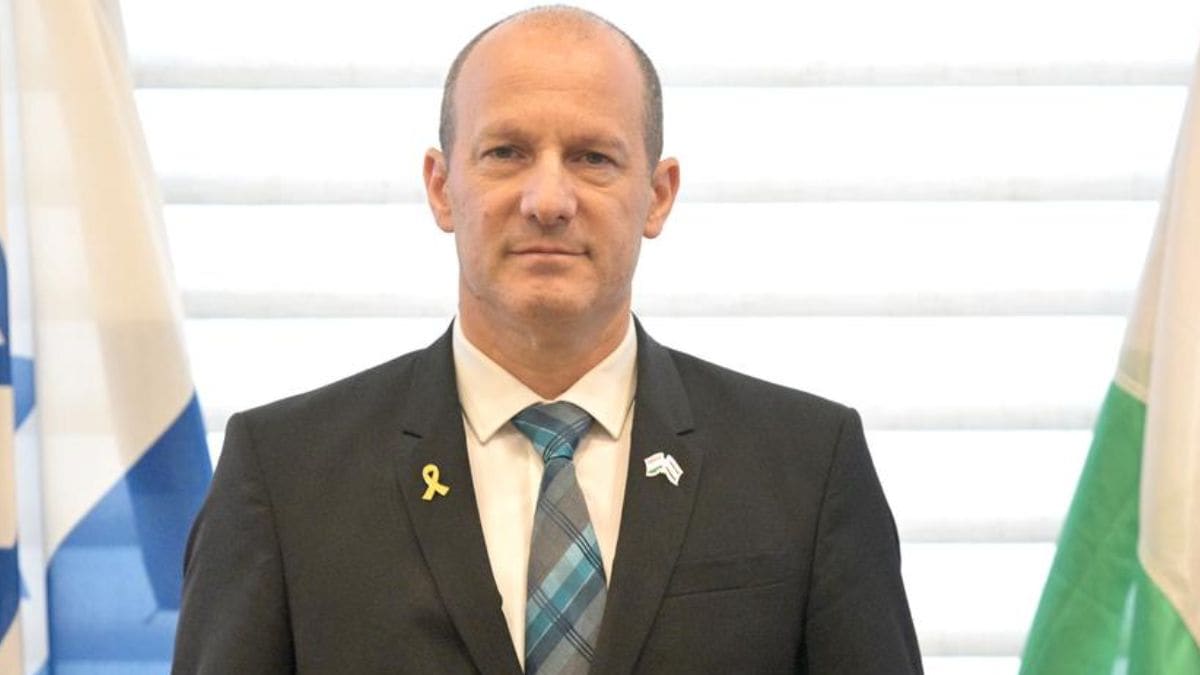
As missiles continue to fly across West Asia and oil markets swing with every new strike, the conflict between Israel, Iran, and their regional allies is slipping into a long, uncertain stretch. In New Delhi, Israeli Ambassador Reuven Azar defended his country’s close coordination with the United States, insisting both sides are “in sync” on military action.
At the same time, President Donald Trump in Washington sounded hopeful, saying a deal could still come together “over the weekend.” But Iran is not on the same page, rejecting any attempt to separate the Lebanon and Iran tracks and warning of a wider conflict.
‘We are partners. We have to be in sync’
“We are exercising our right to self-defence. And we don’t do not depend on the consent of Iran or any other country to do so. We are working in sync with United States because as you probably know, this is the first time that The United States and Israel went on a joint military operation. So we are partners, and we have to be in sync. Sometimes there are differences, but we are capable of working out these differences,” Azar told PTI.
VIDEO | PTI Exclusive: Israeli Ambassador to India Reuven Azar says, "Going to exercise our right for self-defence. And we don't do not depend on the consent of Iran or any other country to do so. We are working in sync with United States because as you probably know, this is the… pic.twitter.com/2gGI8d3eVo
— Press Trust of India (@PTI_News) June 4, 2026
When asked about reports of a call between Trump and Netanyahu, he downplayed it. “It was reported in an exaggerated way to create an effect,” he said.
Earlier, speaking to CNBC, Israeli Prime Minister Benjamin Netanyahu said he and Trump may not always see eye to eye, but their core positions remain aligned. According to him, there are “tactical disagreements” on how the war is being handled, but added that both leaders still “agree on many things.” Netanyahu described Iran as an existential threat not only to Israel but also to the United States, and stressed that stopping Tehran from acquiring nuclear weapons remains a top priority.
India’s ‘huge role’ in West Asia, says Israeli envoy
Earlier, speaking to ANI on India’s position in the ongoing West Asia crisis, Azar said India’s fast-growing economy and expanding trade links could unlock major opportunities for the region, but only if stability is maintained and extremist threats are kept in check.
“India has a huge role to play because India is the fastest-growing economy in our region and, as a result of the agreements it has signed with all the major trade blocs, we are going to see trillions of dollars of merchandise moving, a lot of investment moving, and our region, West Asia, can enjoy that if we have stability,” Azar said.
“So we have to achieve stability, we have to neutralise the radical elements, and then I think both India and us and all the countries in the region will be able to enjoy the prosperity that is going to come from India towards our region.”
‘They were in a race to build weapons of mass destruction’
Azar also took a moment to strongly defend Israel’s position, rejecting the idea of endless escalation but defending military action. “I think we have to rid ourselves of this fantasy that we can erase others. You know, like they want to erase us. We are not in the business of trying to erase Iran. We have been trying diplomacy and political, and economic pressure for many years to try to convince this regime to change course. At the end of the day, it did not help because they were in a race to build these weapons of mass destruction with a very bad intention, as I said before. So now we are trying to convince them through military means. But we said at the outset that we do not have an intention to invade Iran…”
VIDEO | PTI Exclusive: Israeli Ambassador to India Reuven Azar says, "In Gaza, there is a buffer zone. Hezbollah, which once had the capability to destroy entire cities in Israel, is much weaker now, and the regime in Iran is also weaker."#PTIExclusive #Israel
— Press Trust of India (@PTI_News) June 4, 2026
(Full video… pic.twitter.com/KarfXZJFFu
He also dismissed Iranian claims of success on the battlefield as misleading.
“They have basically attacked their neighbours for no reason whatsoever. This is not the way to conduct relations with your neighbours, especially not with the countries that you call your friends. I think that this is going to have repercussions for the long term. I think that the Iranian regime is at a very weak point, despite the rhetoric, you know, that they are victorious. You know, as much as you hear more rhetoric about victory, it means that they are in a much worse position.”
Pakistan as mediator ‘not reliable’
Azar also commented on the idea of Pakistan acting as a mediator in possible US–Iran talks, a role Islamabad has reportedly been interested in. He dismissed the suggestion, saying Pakistan would not be a reliable mediator.
Violence continues on multiple fronts
Even with ceasefire announcements and diplomatic activity, the violence has continued. Israeli strikes in Gaza killed at least eight people, according to local civil defence officials. In northern Israel, air raid sirens sounded twice, one incident turned out to be a false alarm, while another was resolved without major damage.
At the same time, Iran’s attacks extended beyond the main conflict zones, including a strike on an international airport in Kuwait that killed at least one person.