



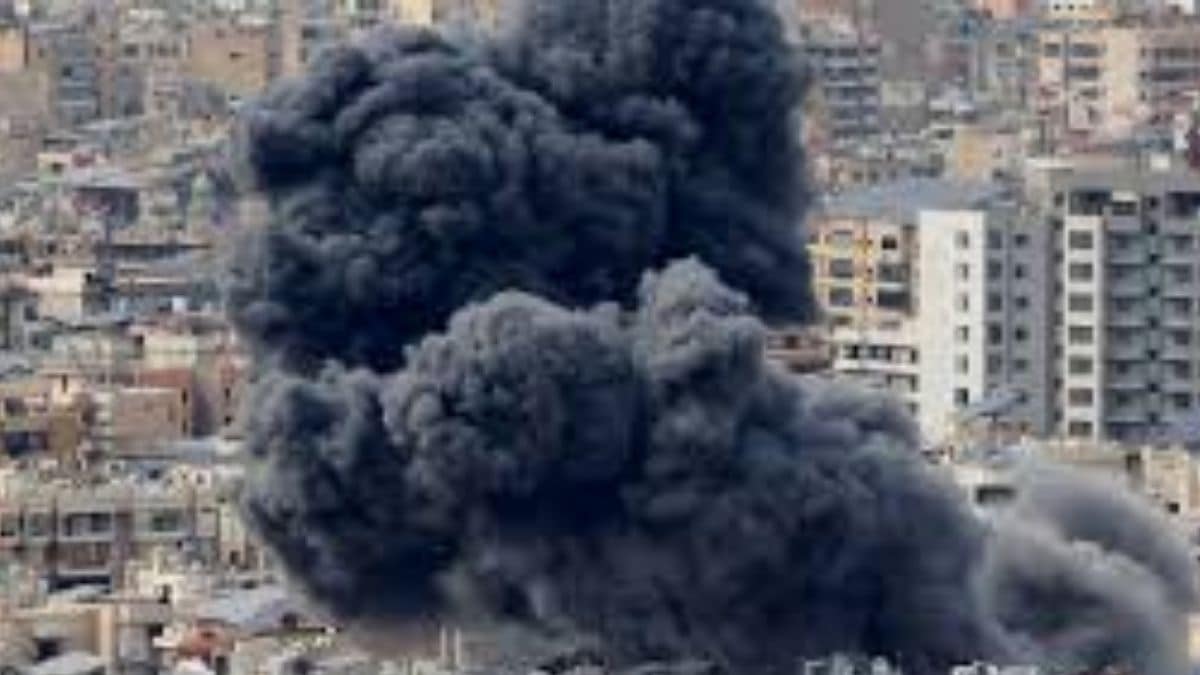
Israel launched airstrikes on Beirut’s southern suburbs on Sunday, just days after a ceasefire agreement between Lebanon and Israel took effect following talks in the US, reported Reuters. The Israeli strikes targeted areas known as Hezbollah strongholds in the southern part of the Lebanese capital.
In a statement, the office of Israeli Prime Minister Benjamin Netanyahu said the strikes came in response to fire directed toward northern Israel earlier in the day. “The attacks targeted command centers,” Netanyahu’s office said, adding that the action was a response to Hezbollah activity against Israel, reported Reuters.
However, Hezbollah did not immediately claim responsibility for the reported attack on northern Israel.
Previous strikes
The latest strikes came despite renewed diplomatic efforts in the US, where Lebanese and Israeli officials recently agreed to extend a ceasefire arrangement.
Israel had already carried out two previous strikes on Beirut’s southern suburbs since the first ceasefire agreement came into effect on April 17, reported Reuters.
Israel had earlier threatened to target Beirut after Hezbollah claimed attacks in northern Israel. Diplomatic contacts involving the US temporarily prevented those strikes after discussions focused on stopping attacks on Israeli border communities.
The attack also came despite warnings from Iran. Tehran had warned that any Israeli strike on the Lebanese capital could trigger a broader regional conflict.
The Iranian-backed Hezbollah has rejected the US-brokered ceasefire arrangement. The group supports Iran’s position that any agreement should include an end to fighting in Lebanon as part of wider negotiations involving the United States.
Israeli forces have seized large areas of southern Lebanon during their latest ground operation, while Hezbollah continues to launch attacks against Israeli positions.
Iran has demanded that any long-term ceasefire cover Lebanon as well. Netanyahu, who faces elections later this year, has said Israel will continue military operations until Hezbollah no longer poses a threat to the country.
Meanwhile, Lebanon’s army commander, General Rodolphe Haikal, traveled to Pakistan on Saturday at the invitation of Pakistan’s army chief. Lebanese authorities did not disclose details of the visit.
Diplomatic efforts intensified as Pakistan stepped up attempts to revive talks between Iran and the United States. Pakistan’s Interior Minister Mohsin Naqvi arrived in Tehran and met senior Iranian officials, including Interior Minister Eskandar Momeni and Foreign Minister Abbas Araghchi.
According to Iran’s state-run IRNA news agency, Naqvi carried a message from Pakistan’s army chief, Field Marshal Asim Munir, for Iranian Supreme Leader Ayatollah Mojtaba Khamenei.
Iranian officials did not reveal the contents of the message. Pakistani authorities have said Islamabad is working with regional countries, including Qatar, Turkey and Egypt, to help bridge differences between Tehran and Washington, reported Reuters.
The diplomatic push comes as fighting around the Strait of Hormuz continues to threaten global trade and energy supplies. The US military said it shot down additional Iranian drones over the Strait of Hormuz after determining they posed a threat to maritime traffic. “The attack drones posed an immediate threat to regional maritime traffic,” US Central Command said in a statement.
Iran’s Revolutionary Guard said it targeted the Ali Al Salem air base in Kuwait, which hosts US forces, as well as the US Navy’s Fifth Fleet headquarters in Bahrain, according to IRNA. Meanwhile, the US military said it received no reports of injuries among American personnel.