



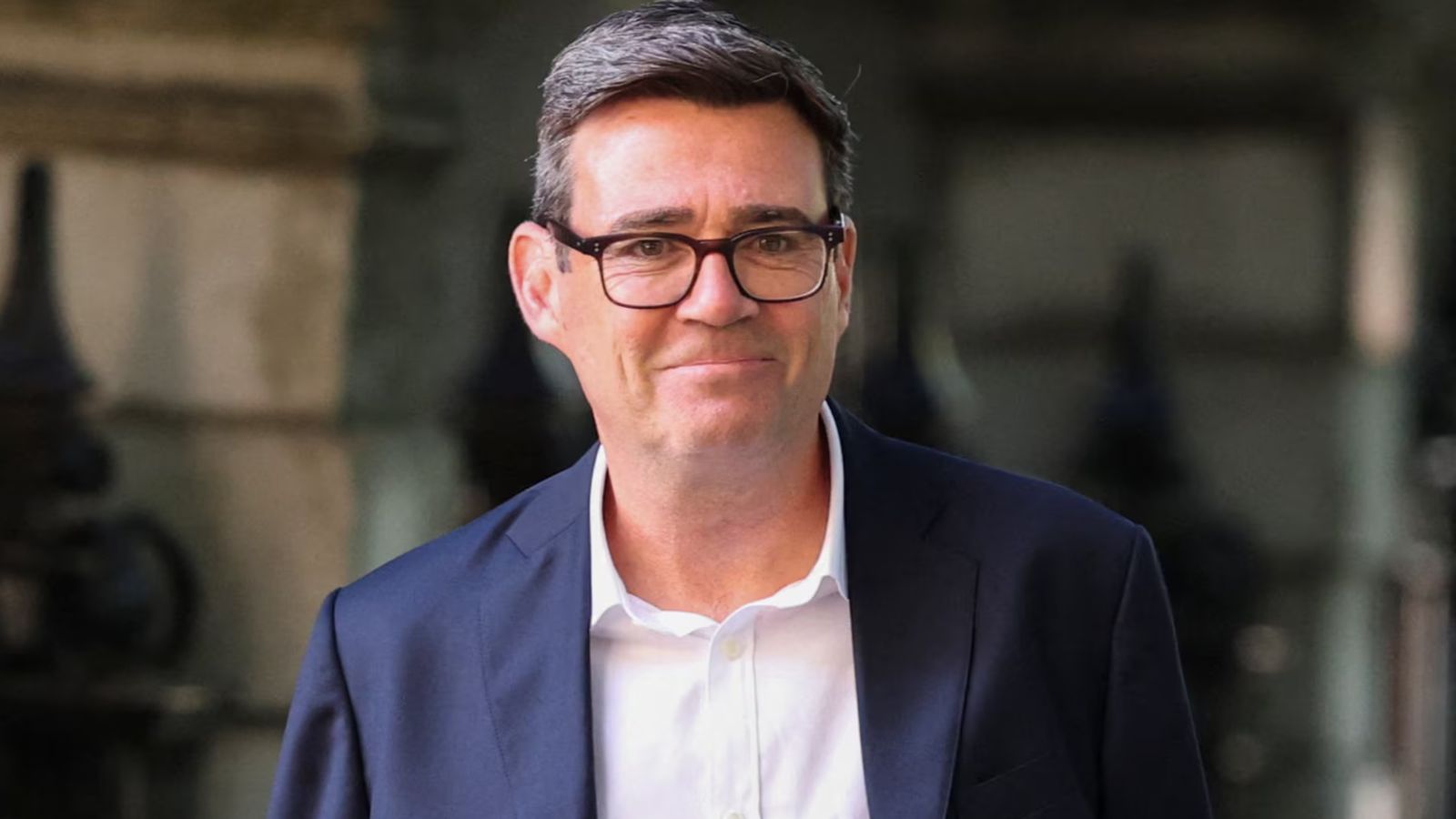
Andy Burnham formally became the United Kingdom’s seventh prime minister in just a decade on Monday. As per his official statement from his office, he pledged to “rewire” the country and restore faith in politics after years of instability and economic strain.
Burnham addressed the nation and outlined his vision for the nation. In his first remarks after taking office as prime minister, Andy Burnham described his appointment as “a moment for reflection and new resolution”, and acknowledged the scale of the challenges facing both his government and the country.
Burnham said the responsibility now falls on his generation of leaders to “raise our game” as Britain works to restore confidence at home and abroad.
Stressing the need to rebuild trust, he said Britain must demonstrate “that we can regain our stability once again and that is our challenge”.
Addressing public frustration with the political establishment, Burnham admitted that many people have lost faith in those in power.
“I hear you. We have not been good enough and we need to be better. We will be.”
He pledged to use his premiership to reset the country’s political culture, promising, “We will make this moment a circuit-breaker for Britain,” and arguing that the country needs “a new political model.”
Andy Burnham’s first speech as PM
Looking back at Britain’s recent history, Burnham criticised what he called the “wrong turns” of the 1980s, citing privatisation and de-industrialisation as policies whose effects continue to be felt in many parts of the country.
He said numerous communities have yet to recover from those changes and vowed to replace adversarial politics with a more collaborative approach focused on solving problems rather than scoring political points.
According to his office, he will argue that Britain must refocus on the issues people care about most, including the cost-of-living crisis and underperforming public services.
This is yet another change at the top of British politics, making him the UK’s seventh prime minister in the past 10 years, a period marked by Brexit, successive leadership contests, economic upheaval and frequent changes in government.
Burnham’s 10 year plan for UK
Burnham said one of his government’s priorities would be to decentralise power, promising to shift decision-making away from Westminster and into local communities across the country.
As prime minister, he said he would take power out of Westminster and bring it into “every postcode in the land, so they can do more”.
Outlining his economic agenda, Burnham pledged to create a new economic model by putting “life’s essentials back under public control” to make them more affordable for people across Britain.
He also vowed to revive the country’s industrial base, saying his government would re-industrialise Britain and “back British industry”.
Looking beyond his immediate priorities, Burnham announced that his government would unveil a long-term roadmap for the country later this year. He said he would present a 10-year plan setting out the direction he wants Britain to take and the goals his government hopes to achieve over the next decade.
‘Britain starts to believe again’
Burnham said his government would move quickly to ease pressure on households, announcing that work on measures to provide people with more “breathing space” on the cost of living would begin as early as tomorrow.
He also outlined plans to improve opportunities for younger generations, saying reforms to the education system would help more young people into work while expanding access to support services, including mental health care.
On housing, Burnham pledged to increase the supply of council homes, describing the policy as the “fair and sustainable way” to bring the welfare bill down.
He said improving people’s quality of life would remain central to his government, adding: “I will issue my first instruction to end rough sleeping in our country.”
Turning to the principles that will guide his administration, Burnham said he would focus on “putting the right values and right standards at the heart of government”.
“The care of people will be at the heart of everything I will do,” he said, promising, “I will give this my all” as he seeks to “build a new national sense of unity”.
Concluding his address, Burnham appealed to the public and his supporters to back his vision, calling it the moment “when Britain starts to believe again – the moment we bring back hope”.
He ended his speech to sustained applause before embracing his wife with a kiss, waving to supporters and photographers, and walking through the iconic black door of 10 Downing Street.