



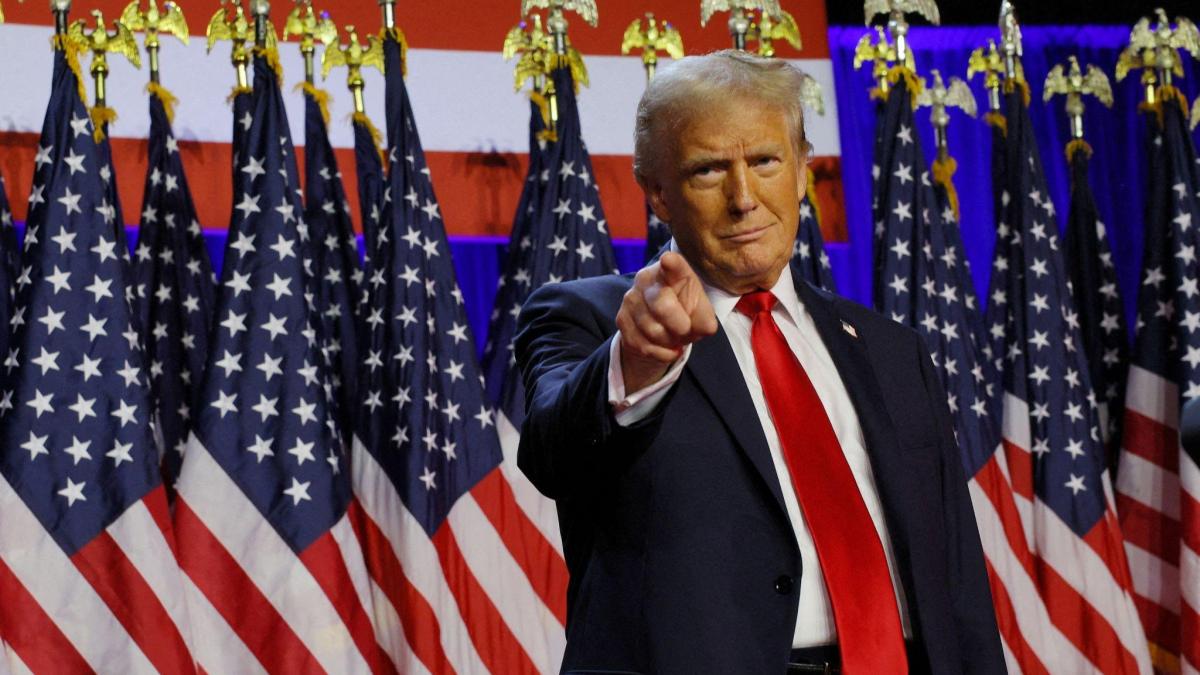
US President Donald Trump on Friday escalated his rhetoric on Greenland and said America would “do something” about the semi-autonomous Danish territory “whether they like it or not”. His remarks have revived a familiar question in global diplomacy: does Washington really need to buy, seize or otherwise control the world’s largest island to secure its interests?
Trump’s fixation is not new. He has repeatedly framed Greenland as a national security imperative, recently saying the United States “needs Greenland from the standpoint of national security”. Leaders of five political parties represented in Greenland’s parliament issued a joint statement on Friday night, firmly rejecting the idea. “We do not want to be Americans or Danes. We want to be Greenlanders,” the leaders said in the statement, which was endorsed by Greenland Prime Minister Jens-Frederik Nielsen.
Behind the rhetoric, however, lies a less dramatic reality. The United States already enjoys expansive military access to Greenland under a Cold War-era agreement that gives Washington most of what it would want, without owning the territory.
A Cold War deal that still shapes today
That access flows from a 1951 defence agreement signed between the United States and Denmark, which colonised Greenland more than 300 years ago and still retains control over parts of its governance. The agreement allows the US to “construct, install, maintain and operate” military bases across Greenland, house personnel and control the movement of ships and aircraft.
The origins of the pact are rooted in World War II. When Denmark was occupied by Nazi Germany, its ambassador in Washington, cut off from Copenhagen, negotiated a defence arrangement with the US to protect Greenland. The fear was that Nazi forces could use the island, located in North America along the Arctic and close to Canada, as a staging ground for attacks.
That concern was not theoretical. Germany had already set up meteorological stations on Greenland’s east coast, feeding weather data crucial to battles in Europe. US troops eventually pushed them out and established more than a dozen bases, complete with airstrips and thousands of personnel.
Treaty updated in 2004
After the war, the US retained a network of bases and early-warning radar installations across Greenland. As the Cold War ended, most were shut down, leaving just one major installation — the Pittufik Space Base, formerly Thule Air Base. Today, it plays a key role in tracking missiles that might cross the North Pole.
In 2004, the original agreement was updated to reflect Greenland’s evolving political status. The amendment brought Greenland’s semi-autonomous government into the framework. This meant Washington would be required to consult both Copenhagen and Nuuk before making “significant changes” to US military operations. Signed by then US Secretary of State Colin Powell, the update explicitly recognised Greenland as “an equal part of the Kingdom of Denmark”.
Minerals, not just missiles
Security is not the only attraction for Trump and his advisers. Beneath Greenland’s ice lie vast reserves of critical minerals essential for modern technologies, from electric vehicles to defence systems.
Greenland’s leaders have repeatedly said they are open to foreign investment and business partnerships, including with American firms. In other words, the US can pursue mineral access through trade and investment rather than territorial ambition.
So why the takeover talk?
Taken together, the existing defence agreement already grants Washington extraordinary freedom of action in Greenland. Combined with the island’s openness to commercial partnerships, the practical case for buying or taking Greenland looks thin.
Trump’s rhetoric may resonate politically but legally and strategically, the United States already has what it needs. Greenland, it turns out, does not have to be bought to be vital.