



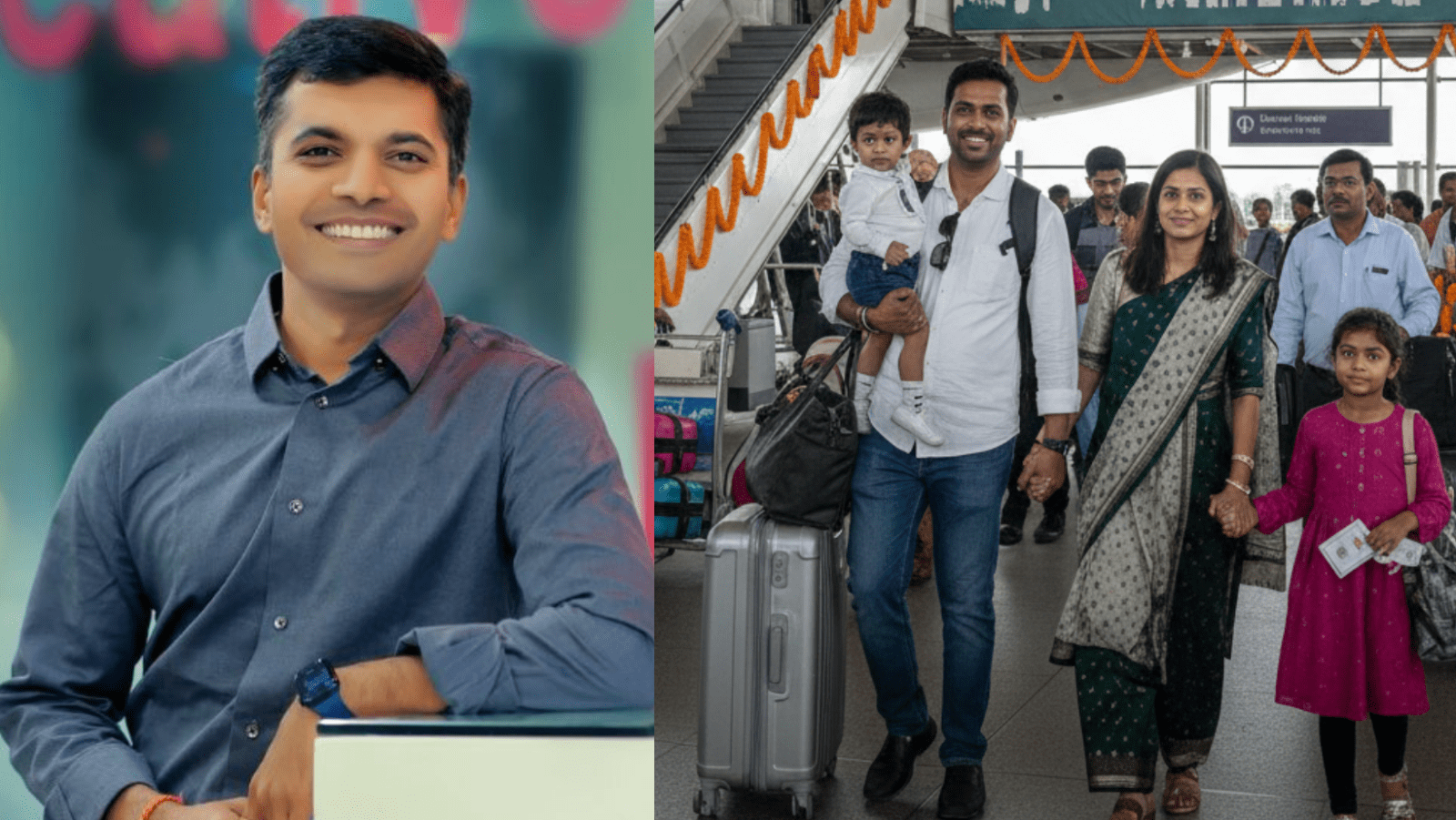
In 2022, after spending two decades in the United States, Avinash made a life-altering decision. He left behind a long corporate career, packed up his life from US, and returned to India with his family to begin again in Hyderabad. Speaking on the Desi Return podcast, nearly three years later, he says his life looks very different an majorly in eight key areas:
Kids: learning, adjusting, and growing
When the family moved back, Avinash’s children were still young, entering primary school in India. One of the early advantages was choice. India’s education system offered multiple curriculums, and the family opted for the IB board, which helped ease the transition.
Language was a concern initially. The children could speak Telugu but were not comfortable reading or writing it. However, schools handled this gently, treating the regional language as a third subject and adjusting lessons to each child’s level. Because many students came from different states and countries, English became the common language, which helped the children settle in faster.
School fees, however, were far higher than expected. Annual hikes, along with extra costs during transitions to higher grades, became one of the biggest financial adjustments for the family.
Childhood outdoors instead of indoors
One noticeable change was how much time the children spent outside. India’s climate and community living allowed them to play almost year-round.
Living in a gated community meant children could safely play after school and on weekends, form friendships naturally, and grow more independent. Access to sports and creative activities within the community reduced travel time and added structure to their days.
Family: being present matters most
Family was the strongest reason behind the move. With Avinash’s brother already in India and caring for their ageing parents, returning brought a deep sense of relief. “My brother had already moved back and was taking care of our parents,” he says on the podcast. “Now I can be there too.”
Being physically present for everyday moments including medical appointments, family gatherings, or simple conversations made a meaningful difference. The bond between grandparents and grandchildren grew stronger. “There’s no guilt anymore about being far away,” he says on the podcast.
Career: stepping off the fast track
Avinash chose not to continue in the corporate world after returning. After years in senior leadership roles abroad, he decided to step away and focus on financial independence and personal time.
From what he observes, work culture in India is improving but still demanding, with long hours and irregular schedules common in many roles. Product-based companies tend to offer better balance than service-oriented firms, though challenges remain.
Entrepreneurship, however, feels full of energy. Cities like Hyderabad are buzzing with opportunity but inefficiencies and bureaucracy seems to be frustrating to him.
Convenience: life powered by services
Daily life in India brought unexpected ease. From grocery deliveries to home services, apps now handle much of what once took hours. Domestic help added another layer of convenience, freeing up time for family and personal interests. Traffic and pollution are real issues, Avinash admits. “But you learn to work around them,” he says on the podcast. “Timing your travel helps.”
Money: digital ease, rising costs
Managing money in India turned out to be surprisingly smooth. Digital payments, UPI, and online banking made everyday transactions effortless. In some parts of Hyderabad, expenses especially housing and school fees almost felt comparable to life abroad.“UPI is brilliant,” he explains on the podcast. “Paying bills or transferring money is effortless.”
Environment: Adjusting expectations
Traffic and pollution were unavoidable realities, but not deal-breakers. Adjusting travel times and planning routes helped reduce daily stress.
Living in a gated community eased the transition offering security, facilities, and a social circle of people with similar experiences, particularly other returning NRIs.
Social life, hobbies, and travel
Socially, life turned out to be more active than expected. Friends from the US visited India regularly, making reunions more frequent than before. Avinash also noticed a growing number of NRIs returning, especially within his own community.
Hobbies found space again. From running groups to outdoor activities, the city offered more options than anticipated. Travel also became easier, both within India and to nearby regions making vacations feel more accessible and meaningful.
Avinash never compared his current life with what might have been had he stayed in the US. Instead, he treated the move as a fresh beginning. “We saw it as starting a new chapter,” he says on the podcast. “Not a step back.”