



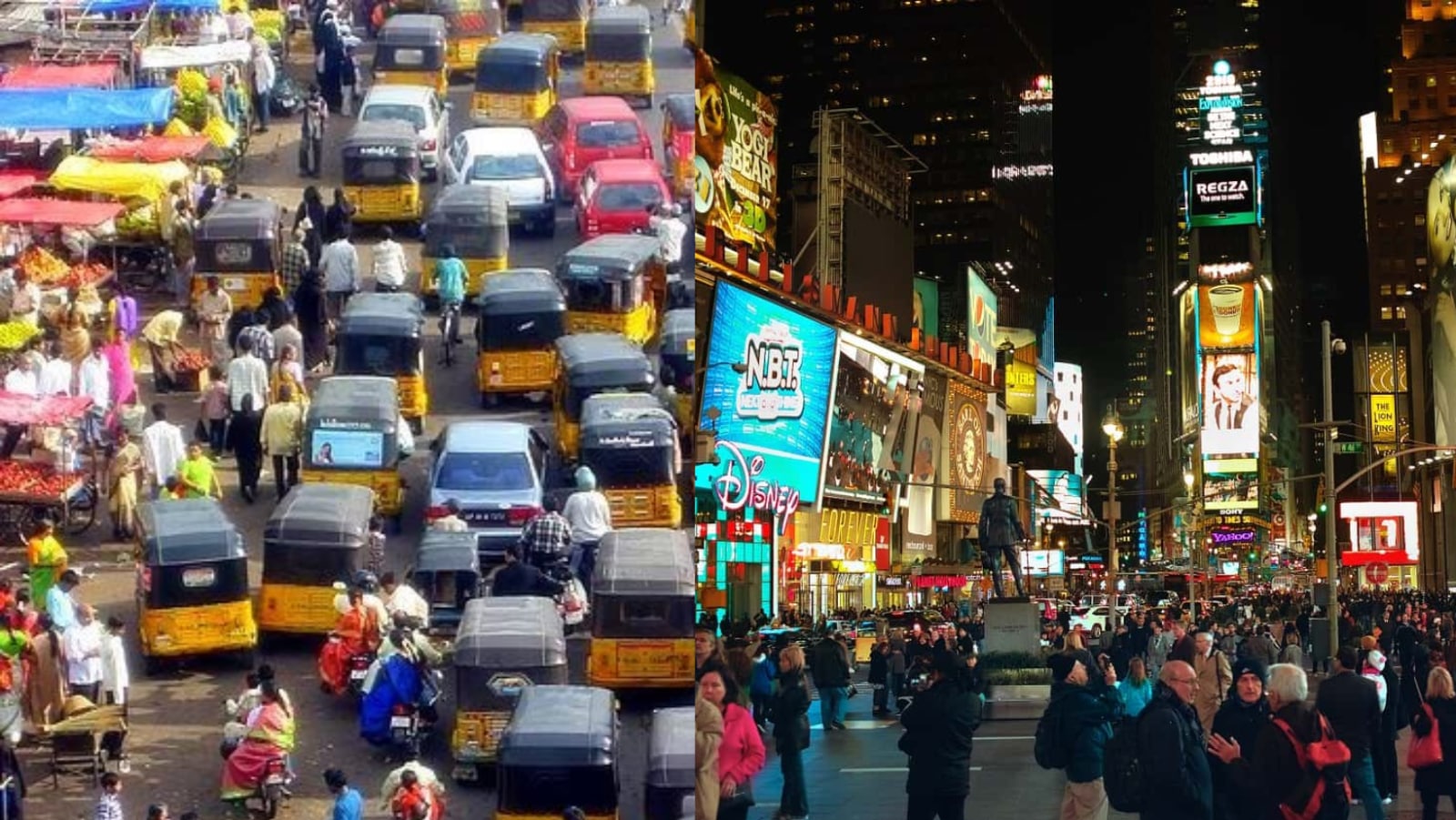
For many Indians, moving back from a country like the United States is a personal and thoughtful decision. Along with career and family reasons it brings a big lifestyle change. From spending habits to daily routines, life in India can feel very different.
Nitisha Bansal, Vice President at a venture capital firm, recently shared her experience on LinkedIn about returning to India from the US. She wrote about how the move changed her daily life, especially how she spends money and socialises.
A change in daily habits
Bansal wrote, “Ever since I moved back from the US, I noticed something about myself. I almost never eat out. Even catching up with friends – ‘Come home, I’ll cook.’”
At first, she thought it was because of habit, home-cooked food, or that eating at home was cheaper. “But that’s not it,” she explained.
She compared her weekends in the US with her life now. In the US, she described how easy it was to step outside. Clean footpaths, shaded streets, cafes with outdoor seating, and people walking without hurry made it natural to spend time — and money — outside. A simple outing could turn into hours spent outside and $80 gone, but it felt effortless.
The street experience in India
In India, she feels the experience is very different. “You open the door and the city hits you in the face. 40°C. Horns. Garbage. Dust. A footpath that’s become a two-wheeler parking lot. You last 30 seconds and turn back inside. The street doesn’t invite you. It rejects you.”
Because of this, she believes people prefer staying indoors. She also shared numbers to support her point. According to her post, Indians eat out 1.6 times a week at around $3 per meal, while Americans eat out 5.9 times a week at $25 per meal.
India has responded by making delivery fast and easy. Groceries and food can arrive within minutes. But Bansal believes the real solution lies outside the home.
“Fix the street → people step outside → dwell time goes up → retail, food, experiences, real estate all follow.”
She says improving streets and footpaths could unlock $100-150 billion in extra consumption by 2035.
“The best infrastructure investment India can make right now isn’t a highway. It’s a footpath.”
Followers react
Followers were divided on her opinion. A user noted, “If we fixed the streets and people ate out 5.9x/week (like the US), wouldn’t we have as big a health crisis as the US does? I’m not saying we shouldn’t fix the streets. But we shouldn’t fix them so people can eat out 5.9x/week. That’ll likely be a bigger economic disaster than the broken streets.”
Another added, “It’s a little simplistically put to just say that people eat in because of the city. People eat outside with higher frequency outside India because the alternate is to come home and cook yourself or eat leftovers. When you are tired, it’s rather easy to just go outside.In India, having help to cook fresh food for you every day reduces that need by a lot.”
“You must have been in California in the US. In NYC/NJ, it always felt hectic, Saturday or Sunday. I am lucky to have returned to my home state of Kerala(m) after a few years in the US. It was 2011 and there were large projects going on in the the bigger cities to construct footpaths & closed culverts everywhere. This has made cities very walkable. Also, people generally don’t tolerate open piles of garbage though it’s nowhere as clean as Anytown, USA.
People eat out less in India because they don’t earn as much disposable income as Americans. I have been told that the American tendency to eat out all meals especially every lunch is not shared in other Western countries. I ate out every lunch and still have that bad habit.
People have to be convinced of the need for cleanliness. Then store owners will demand it and city corporations & municipalities will be forced to deliver them. Also, it helps if people have exposure to the good practices of other parts of the world. Maybe private players can release slick persuasive PSAs encouraging people to appreciate cleanliness, hygiene & civic sense. But I will bet that they will be shut down quickly because delivering effective services means less money for the crooks to steal,” explained a follower.