



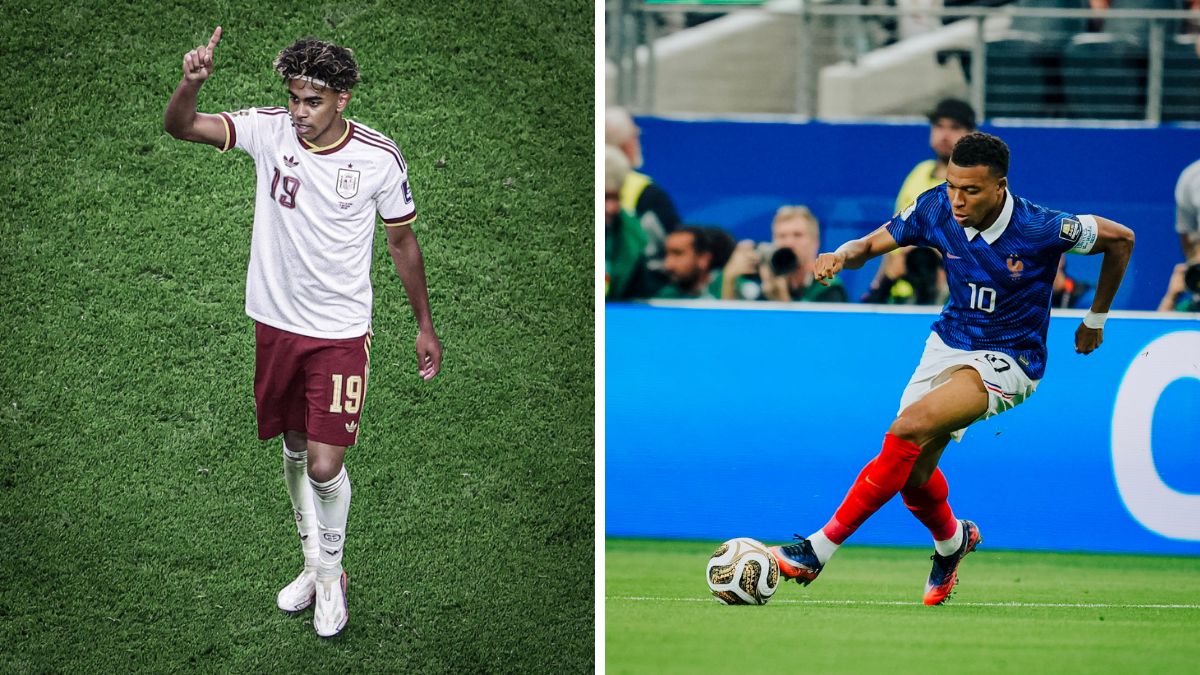
The pre-match hype around the 2026 FIFA World Cup semi-final in Dallas was billed as the ultimate clash of footballing titans. But when the final whistle blew, the reality on the pitch painted a vastly different picture. Spain systematically dismantled France in a clinical 2–0 victory, booking their ticket to Sunday’s final and leaving Didier Deschamps’ highly-favoured squad searching for answers.
Nowhere was the gulf between the two sides more apparent than in the direct, highly anticipated comparison between 19-year-old Lamine Yamal and French captain Kylian Mbappé.
The Star Subplot: Yamal Roams Free, Mbappé Suffocates
| Player Metric | Lamine Yamal (Spain) | Kylian Mbappé (France) |
|---|---|---|
| Shots on Target | 1 (disallowed for offside, 62′) | 0 (3 shots total) |
| Key Contributions | Won 22nd-min penalty | Yellow carded (86th min) |
| Defensive Tracking | Outstanding on the right wing | Highly static in central transitions |
While Mbappé entered the match as the tournament’s Golden Boot frontrunner, he was largely nullified by a well-organised Spanish defence marshalled by Pau Cubarsí and Aymeric Laporte, with Rodri and Fabián Ruiz screening in front. The Real Madrid superstar cut a frustrated, isolated figure on the pitch, managing three shots without troubling Unai Simón once.
Yamal, celebrating his 19th birthday a day prior, was the spark plug for Spain’s attack. In the 22nd minute, he drove aggressively at Lucas Digne, drawing a clear foul in the penalty box. Mikel Oyarzabal stepped up to convert the spot-kick, breaking the deadlock. Yamal linked play beautifully throughout and had the ball in the net again in the 62nd minute, only to see it chalked off for offside.
Mbappé’s frustration boiled over late, resulting in a yellow card in the 86th minute as France’s World Cup dreams evaporated.
5 Reasons Why Spain Beat France
1. The Lamine Yamal vs. Kylian Mbappé Factor
This match was the ultimate distillation of collective effort versus individual dependency. While Yamal acted as a selfless, energetic outlet — stretching the pitch, winning the crucial first-half penalty, and tracking back — Mbappé was choked out of the game by a well-drilled Spanish structure. Without service from a stagnant French midfield, Mbappé could not carry the team on his back, proving that Spain’s teenage talisman is currently operating with a far greater, more balanced tactical impact than France’s captain.
2. Midfield Suffocation by Rodri and Fabián Ruiz
Between the attack and the defence, Spain completely owned the middle third of the pitch. Rodri and Fabián Ruiz put on a clinic in retention and pressing. Whenever France attempted to launch a transition, the Spanish midfield line recycled the ball within seconds. Adrien Rabiot and Aurélien Tchouaméni were consistently overrun — the returning Tchouaméni managing just three passes into the final third all match — preventing the ball from ever cleanly reaching France’s creative front line.
3. The Sudden William Saliba Injury Blow
France’s defensive structure took a hit around the half-hour mark when centre-back William Saliba, who had been managing a back problem through the tournament, was forced off. His replacement, Maxence Lacroix, struggled to adapt to the speed of Spain’s quick-passing triangles, leaving France visibly disorganised at the back.
4. Tactical Fluidity and Pedro Porro’s Overloads
Luis de la Fuente’s tactical setup constantly manipulated France’s defensive width. Right-back Pedro Porro was a constant menace, exploiting space in behind. His overlapping run and one-two with Dani Olmo in the 58th minute sliced France open, allowing Porro to finish beyond Mike Maignan for the decisive second goal.
5. Complete Lack of French Off-the-Ball Movement
When France fell behind, they had no tactical Plan B. Didier Deschamps brought on Rayan Cherki for the anonymous Michael Olise, but the team’s off-the-ball movement remained static. Unai Simón comfortably swept up France’s increasingly desperate direct balls as the clock ran down.