



In 2008, Nita Ambani walked into the IPL auction room and paid 111.9 million dollars for a Mumbai cricket team. People thought she was mad. That was more money than anyone had ever spent on an Indian sports franchise.
The team had no history, no trophy cabinet, no legacy. It was just a name on paper and a few players in blue jerseys.
Eighteen years later, that same blue jersey is being worn by cricketers in Cape Town, New York, London, Abu Dhabi and across India women’s circuit. The brand is now worth close to 242 million dollars.
They have won thirteen major titles across five continents. And the woman who started it all is being compared to the sheikhs and billionaires who run European football empires.
But here is the thing. This was never really about cricket. Not in the way we think of cricket anyway.
The bet that made no sense on paper
Back in 2008, Reliance was already the biggest company in India. They had oil refineries, telecom networks, retail stores. They did not need a cricket team. Mukesh Ambani could have bought three teams with his pocket change and nobody would have noticed.
But Nita Ambani wanted this one team. She wanted it because she saw something that the spreadsheets could not show her. She saw that in India, cricket is not a sport. It is the only language that everyone speaks.
The first few years were rough. Mumbai Indians lost more than they won. The players looked confused. The fans were angry. In 2009, the team finished near the bottom and people started calling them the most expensive mistake in Indian sport.
That is when Nita Ambani did something strange. She did not fire the coach. She did not blame the captain. She started showing up in the dressing room. She started talking to the players like they were her own kids.
She asked Rohit Sharma what he was eating. She asked Zaheer Khan about his injury. She did not pretend to know cricket. She admitted she was learning. And somehow, that honesty worked better than any pep talk.
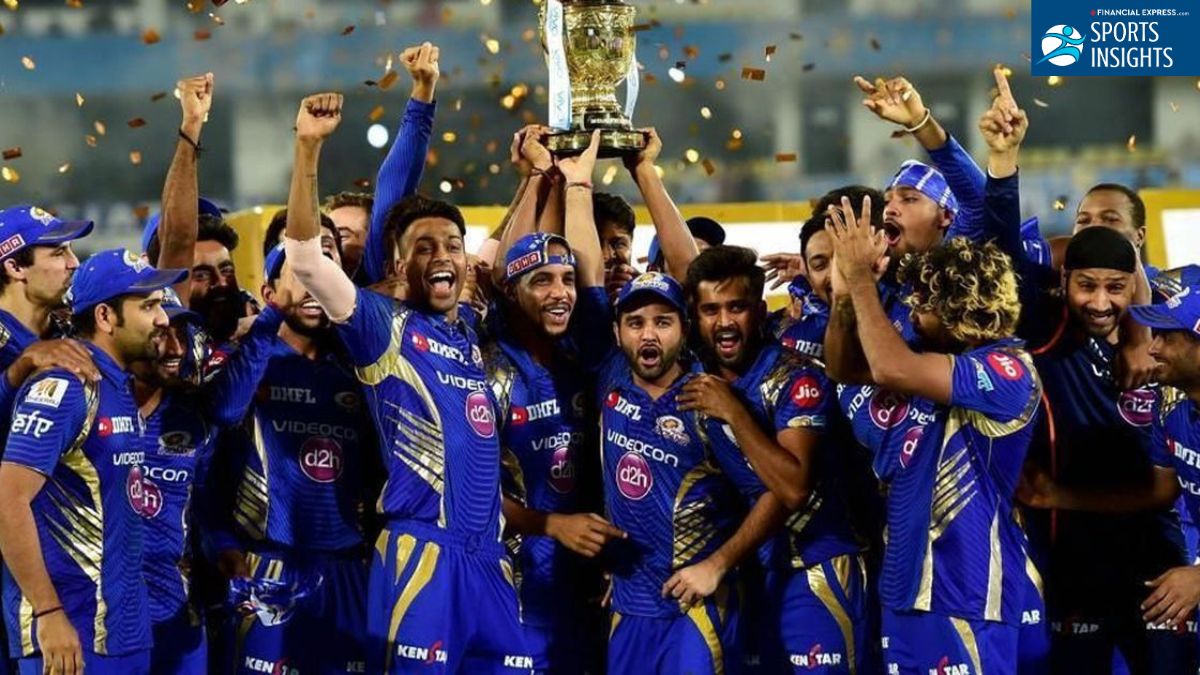
The team won their first IPL title in 2013. Then another in 2015. Then 2017, 2019, 2020. By the time they had five titles, everyone had stopped laughing at the price tag.
The factory without walls
Here is where the story gets interesting. Most rich people buy sports teams and sit back. Nita Ambani started buying more teams.
In 2022, she picked up franchises in Dubai and Cape Town. In 2023, she went to New York and started a women’s team in Mumbai. In 2025, she bought nearly half of the Oval Invincibles in London and painted them blue and gold.
On paper, this looks like a rich person collecting toys. But look closer and you see a pattern. Every new franchise is placed exactly where a certain kind of cricketer is growing up. South Africa produces fast bowlers and aggressive batters.
The UAE has become a hub for players from associate nations who need a stage. America has that massive South Asian diaspora and the 2028 Olympics coming. England is the birthplace of the sport and still the place where the biggest commercial deals get done.
Mahela Jayawardene runs the cricket side globally. Zaheer Khan handles development. They have built something they call a high-performance ecosystem, which is a fancy way of saying that if you are a 17-year-old left-arm spinner in Khayelitsha or a wicketkeeper from Brooklyn, the same scout might be watching you.
And if you are good enough, you do not just get a contract. You get moved into a system where the training, the diet, the language, the expectations are all the same whether you land in Mumbai or Manhattan.
Ryan Rickelton is a perfect example. The South African opener plays for MI Cape Town, then gets called to MI New York, then maybe turns up in Mumbai.
He does not need a month to adjust. He already knows the drill. The bus leaves at the same time. The team meeting has the same format. The coach asks the same questions. It is eerie how smooth it is.
The boy they watched for three years
Every franchise says they scout well. Mumbai Indians does something different. They watch kids without the kids knowing.
Take Marco Jansen. The South African left-arm pacer is six foot eight and bowls at nearly 145 clicks. Everyone wants him now. But the MI scouts first saw him when he was seventeen.
They tracked him for three full years. They watched him in school tournaments. They watched him in club games. They never called him for a trial. They never sent him an email. They just collected data and waited.
Why? Because the moment a young player knows a big franchise is watching, he starts playing for the scout. He stops taking risks. He stops being himself. MI wanted to see what Jansen looked like when nobody was looking.
That is how they figured out he had the temperament to bowl at the death. Not because his yorker was perfect at seventeen. Because he still tried to bowl the yorker even after being hit for two sixes.
This is the part that gets missed when people talk about MI’s money. Yes, they have money. But money cannot buy patience. You cannot rush three years of silent watching. You cannot fake the instinct that tells you a boy from Bloemfontein will one day win you a final.
The day 19,000 kids took over Wankhede
Now let us talk about the part that has nothing to do with winning.
Every year, Mumbai Indians hosts something called ESA Day at Wankhede Stadium. ESA stands for Education and Sports for All. They bus in children from slums, from orphanages, from villages where a concrete pitch is a luxury.
In 2024, there were 19,000 kids in the stands. The players wear special jerseys. The match stops being about points and becomes about something else entirely.
Nita Ambani started this in 2010. Since then, Reliance Foundation claims to have reached 23 million children through sports and education programs. Those numbers are big and hard to imagine. But picture this.
A girl from a Mumbai chawl sits in the same seat where Sachin Tendulkar once watched a game. She sees Harmanpreet Kaur hit a six. She goes home and tells her mother she wants to play cricket. That is not corporate social responsibility. That is a door opening.
Amanjot Kaur, who broke through in the WPL, came from a small town in Punjab. She did not have fancy academies. She had a bat and a dream and somehow the MI scouting network found her.
Now she is a champion. There are hundreds like her who will never make the headlines but whose lives changed because someone decided that cricket should not only belong to people who can pay for it.
Losing money and not caring
Here is a fact that will surprise you. MI New York and MI Cape Town together lost more than 44 crore rupees in 2024. That is a lot of money for a cricket team.
For Reliance Industries, which made an operating income of 1.83 lakh crore rupees in 2025, it is pocket change. But still. Most businesses do not like losing money.
Nita Ambani does not seem bothered. She treats these overseas teams like infrastructure projects. Like laying fibre optic cables. You lose money for five years, maybe ten. Then one day, the network is so big that nobody can compete with you.
While other IPL owners are fighting over television ratings in India, she is building cricket stadiums in America and signing partnerships with Accenture to teach Americans how to watch the sport.
The London deal is the latest move. She paid around 76 million dollars for 49 percent of the Oval Invincibles. She partnered with Surrey, one of the oldest cricket clubs in the world. Some English fans were angry. They called it a takeover. But here is what she actually got.
She got entry into a market where cricket is still considered a gentleman’s game. She got access to English broadcasters, English sponsors, and English talent. And she got a defensive moat. If cricket really becomes a global sport by 2028, she will already be sitting in the room where the decisions are made.
People compare her to the City Football Group, which owns Manchester City and a dozen other clubs. But CFG is about control. They want every team to play the same way. Nita Ambani wants every team to feel like the same family. That is a different thing. You can copy tactics. You cannot copy culture.
The woman who learned cricket in South Africa
There is a story Nita Ambani tells about the early years. She says she knew nothing about cricket when MI started. She would sit in the dugout and not understand why everyone was so stressed.
Then in 2009, the team had a terrible season in South Africa. She flew there to be with them. She sat through the losses. She listened to the players talk about pressure, about homesickness, about fear. And something clicked.
She realised that her job was not to understand cover drives. Her job was to understand people. That is when she started calling players by their nicknames.
That is when she started introducing Kieron Pollard to her grandchildren as Polly Kaka. That is when the team stopped being a company asset and started being something else.
At the 2026 TIME100 Summit, she talked about soft power. She said the world needs less hard power and more compassion. A lot of rich people say things like that and you roll your eyes. But with her, you sort of believe it.
Because you have seen the videos of her hugging players after a loss. You have seen her sit with the women’s team and celebrate their WPL wins with the same energy she brings to the men’s finals. You have seen 19,000 kids in a stadium that usually costs a fortune to enter.
What happens next
Mumbai Indians Women have already won two WPL titles. The men’s team has five IPL trophies. The global network has 13 major championships. But the real game is just starting.
In 2028, cricket returns to the Olympics in Los Angeles. America will be watching. Nita Ambani has a team there already.
She has been simplifying the game for American audiences with fireworks and festivals and shorter formats. If even one percent of America falls in love with cricket, that is five million new fans. And she will be ready for them.
Back home, the Media and Entertainment arm of Reliance grew 74 percent last year. JioHotstar had 280 million subscribers during the last IPL.
The sports vertical is not just making money from ticket sales. It is making money because cricket is the only thing that makes 61 million Indians watch the same screen at the same time. Advertisers will pay anything for that.
But here is what stays with you. In a world where sports is becoming a playground for cryptocurrency companies and hedge funds, Nita Ambani still talks about Vasudhaiva Kutumbakam.
The world is one family. It sounds like a line from a prayer. But when you see a South African kid, an American teenager, and a girl from a Mumbai slum all wearing the same blue jersey, it starts to sound like a plan.
She did not build an empire. She built a language. And now half the world is learning how to speak it.