



Tuesday in Lahore started without warning signs. The routine was familiar. Players reported to the fitness trainer for hydration checks. They ate breakfast. They drank coffee.
By 8:30 am, the bus pulled out for Gaddafi Stadium. Everyone was thinking about cricket. Nineteen Pakistani wickets stood between them and a series win. That was the worry. Not guns. Not grenades. Not death waiting at a roundabout.
The convoy looked secure enough. Three or four police cars. A dozen officers. Motorbike outriders. Road junctions were cleared. Side streets blocked. This was standard procedure for teams in the subcontinent. The players felt safe. Why wouldn’t they? They were cricketers, not politicians or soldiers.
The bus filled with noise. Stories about Lahore shopping. Jokes. Tactical discussions about the morning session. Then they reached the roundabout near the stadium.
The first sound was innocent. Like a firecracker. The bus stopped. Some players stood up to look. Then someone shouted the words that changed everything. “They are shooting at us!”
Twelve gunmen and one brave driver
What followed was organised chaos. Twelve masked terrorists had positioned themselves around Liberty Square. They emerged from behind trees with military precision. Their first targets were the bus tires. They wanted the vehicle immobile. They wanted easy targets.
Mahela Jayawardene heard the screams from the front. “Get down, get down!” The Sri Lankan captain hit the floor. So did everyone else. Bodies piled on top of each other. Hands covered heads. Bullets tore through the metal shell above them. Explosions followed.
Hand grenades, though the players didn’t know that yet. The air inside the bus turned sharp with fear and the smell of gunpowder.
Sangakkara sat beside Thilan Samaraweera and young Tharanga Paranavitana. He moved his head slightly, trying to see. A bullet whistled past his ear and buried itself in the empty seat. Two inches different and the Sri Lankan cricket story would have ended differently.
For two minutes, the bus stayed still. Twelve gunmen poured fire into a stationary target. Then the players started shouting at the driver. “Go, go, go!”
Mohammad Khalil didn’t need encouragement. The tires were shredded. He was exposed at the front, fully visible to the shooters. But Khalil had made a decision. He jammed the accelerator. The bus lurched forward, metal screaming on rims.
Jayawardene later said they owed their lives to this man. Khalil saw a hand grenade roll under the bus. It failed to explode. He drove through a hail of bullets. A rocket-propelled grenade missed them by seconds, hitting an electricity pylon instead.
The bus took twenty-five bullets but kept moving. Those few hundred meters to the stadium gates felt like miles.
The wounded and the waiting
Inside the wrecked bus, Tharanga Paranavitana sat up holding his chest. He announced he was hit, then collapsed. Sangakkara feared the worst. But the bullet had struck sternum at an angle. It didn’t penetrate. Paranavitana would live. Samaraweera felt numbness in his leg. That was a bullet wound.
Sangakkara himself felt a dull ache later. Shrapnel in his shoulder muscle. Ajantha Mendis had metal shards in his scalp and neck. His hair was shaved off for surgery. Paul Farbrace, the assistant coach, carried a large piece of shrapnel in his arm. Mahela Jayawardene had a cut on his ankle.
They reached the dressing room. Paramedics worked on the wounds. Phones began ringing. Families in Colombo were waking up to horror.
Suranga Lakmal’s parents hadn’t eaten since hearing the news. “He is our only son,” his father Albert said at the airport. This was Lakmal’s first national call-up. His first tour. His first encounter with terrorism targeted specifically at athletes.
Muttiah Muralitharan sat in the corner with a cup of tea. He had seen his life flash before his eyes when the bullets started. Now he tried to calm himself. Dilhara Fernando wandered onto the balcony, talking on his phone, pretending normalcy while the world outside had gone mad.
A history of warnings ignored
This didn’t happen in a vacuum. Pakistan’s cricket had been dying slowly for years. The timeline tells its own story.
September 2001. New Zealand refused to tour after 9/11. West Indies and Australia moved matches to Colombo and Sharjah.
May 2002. New Zealand cancelled again after a bomb outside Karachi’s Sheraton Hotel. March 2008. Australia postponed their tour following Benazir Bhutto’s assassination.
August 2008. Five of eight ICC nations refused to send teams for the Champions Trophy. The tournament moved to 2009 in South Africa.
October 2008. West Indies called off their tour.
December 2008. India refused to come after Mumbai terror attack.
The Sri Lankans stepped in as replacements. They were the friends who said yes when everyone else said no.
The warnings were specific. A letter dated January 22, 2009, advised that terrorists planned to attack the team at their hotel or between hotel and stadium. Then the Punjab government changed. The meeting about this threat never happened.
Pervez Rashid, from the dismissed government, confirmed it. Intelligence reports had spoken of an attack. No proper security followed.
Opposition MPs claimed officials knew. The PCB called it “beyond our control.” Twelve gunmen attacked a bus in broad daylight in a major city. They escaped.
Security forces defused two car bombs afterward. They found grenades, three kilograms of explosives, pistols, detonating cables. The evidence of planning was everywhere. So was the evidence of negligence.
The Sri Lankan condition
Jayawardene explained his team’s reaction with words that carry weight. “We have been brought up in a background of terrorist activities. We are used to hearing, seeing these things. Firing. Bombings. So we ducked under our seats when the firing began. It was like natural instinct.”
This is the Sri Lankan reality. Decades of civil war made their cricketers familiar with violence. They knew what gunfire sounded like. They knew to take cover. They didn’t panic. This experience, born of tragedy at home, saved them in Lahore.
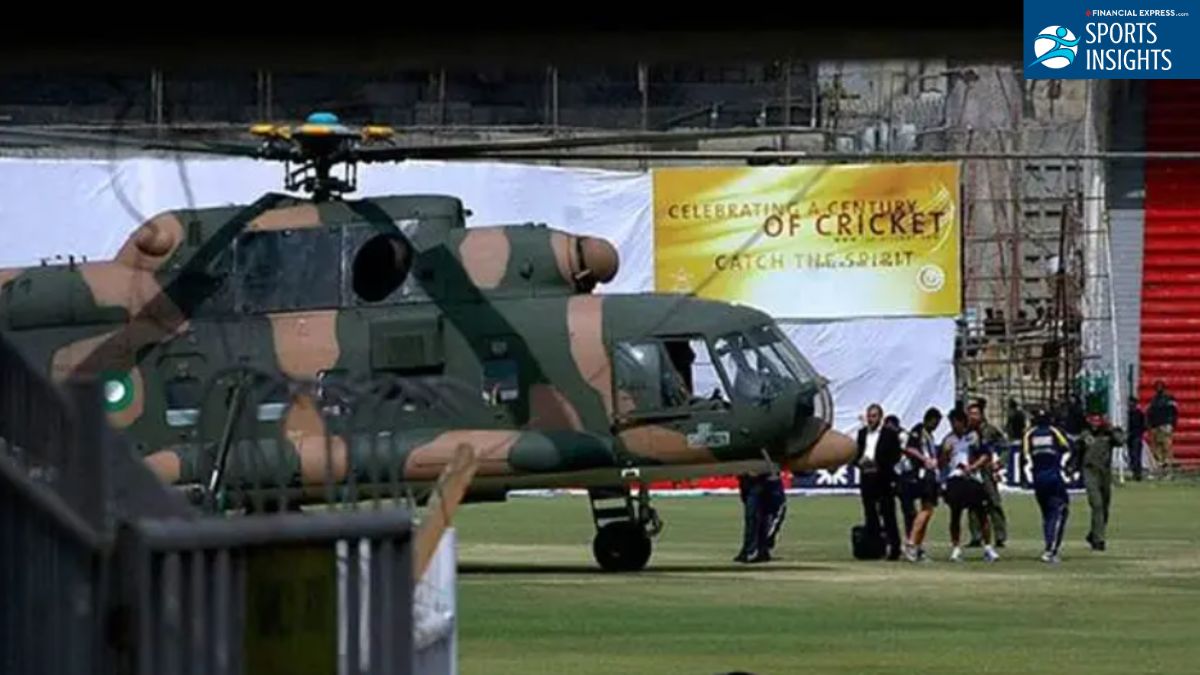
The evacuation was military. Helicopters to an airbase. Chartered flight to Abu Dhabi. Landing in Colombo past midnight. Ambulances for Samaraweera and Paranavitana. Tearful reunions. Geethanjana Mendis, the sports doctor, promised further surgery. The wounds would heal. The trauma would not.
The aftermath and the empty stadiums
Inzamam-ul-Haq spoke on Geo TV while the blood was still being cleaned from Liberty Square. He knew what this meant.
“This is the first time that a cricket team has been seriously targeted. Pakistan’s image will be hit. Only time will tell how much damage has been done. The World Cup too might be affected. No country would want to come now to Pakistan. I am worried where Pakistan will get a chance to play, not only in Pakistan but outside as well. This is all so sad.”
He was right. The 2009 Champions Trophy, already postponed once, would not happen in Pakistan. The 2011 World Cup lost its Pakistani venues. International cricket would not return to the country for years. Pakistan played home series in UAE. They became a team without a home.
In Napier, New Zealand and India wore black armbands. A small gesture. The umpire Steve Davis, who was on that bus, said he was lost for words. Australian cameraman Tony Bennett described the bus arriving at the stadium sprayed with bullets.
Players carried into the dressing room. The reserve umpire Ahsan Raza was wounded. TV umpire Nadeem Ghauri, in the following bus, described the sustained firing.
The unasked questions
Sri Lanka had requested a shortened tour. They asked for independent security assessment. They wanted guarantees. Proper insurance covering terrorist attacks. Their board had originally been asked to play two extra ODIs. They refused.
They wanted less time in Pakistan, not more. They knew the risks. They came anyway. That is what cricket does to teams. It creates obligations. It creates hope that things will be fine because they need to be fine.
The forgotten hero
The gunmen knew the route. They knew the timing. They had rocket launchers and grenades and explosive charges. They were prepared for war. The security convoy was prepared for traffic management. Six policemen died. Two civilians died. The terrorists escaped. The match was cancelled before lunch.
Mohammad Khalil, the driver, went back to his life. He saved the lives of international sportsmen through courage and quick thinking. He is remembered in articles like this one. But he is not famous. He is not rich. He did his job under fire, literally, and then disappeared into the city he almost died in.
What was lost that day
Sports has seen terror before. The 1972 Munich Olympics killed eleven Israeli athletes. That was political. This was different.
This was cricket itself being targeted. The gentleman’s game. The common religion of the subcontinent. The one thing India and Pakistan shared besides history and hatred. When they came for the cricketers, they came for something sacred to millions.
The Sri Lankan players returned to their families. Some continued careers. Some retired. They all carry Lahore with them. The sound of bullets on metal. The smell of fear. The sight of teammates bleeding. The feeling of lying on a bus floor wondering if the next bullet has your name on it.
Pakistan waited for more than a decade just to see proper international cricket return home. An entire generation grew up without watching their own team play big Test matches in their own stadiums. Think about that. Kids who became adults without ever feeling that home crowd noise for a major series.
They built new stadiums. They upgraded security. They kept giving assurances. Zimbabwe came. Sri Lanka returned. West Indies toured again. Step by step, things improved.
But here’s the thing. Before every major tour, the same whispers start again. Security concerns. Doubts. Delays. And the biggest series still mostly happen somewhere else. The 2009 Lahore attack closed a door that has only partially opened since. But it has never fully felt the same.
In the end, cricket survived. It always does. But the Lahore attack changed how teams think about touring. It changed how players look at bus windows. It changed how families watch news bulletins. The game goes on, but the innocence is gone.
That Tuesday morning in March cost more than a Test match. It cost Pakistan its place in the cricket world, and it cost twelve Sri Lankans their sense of safety forever.