



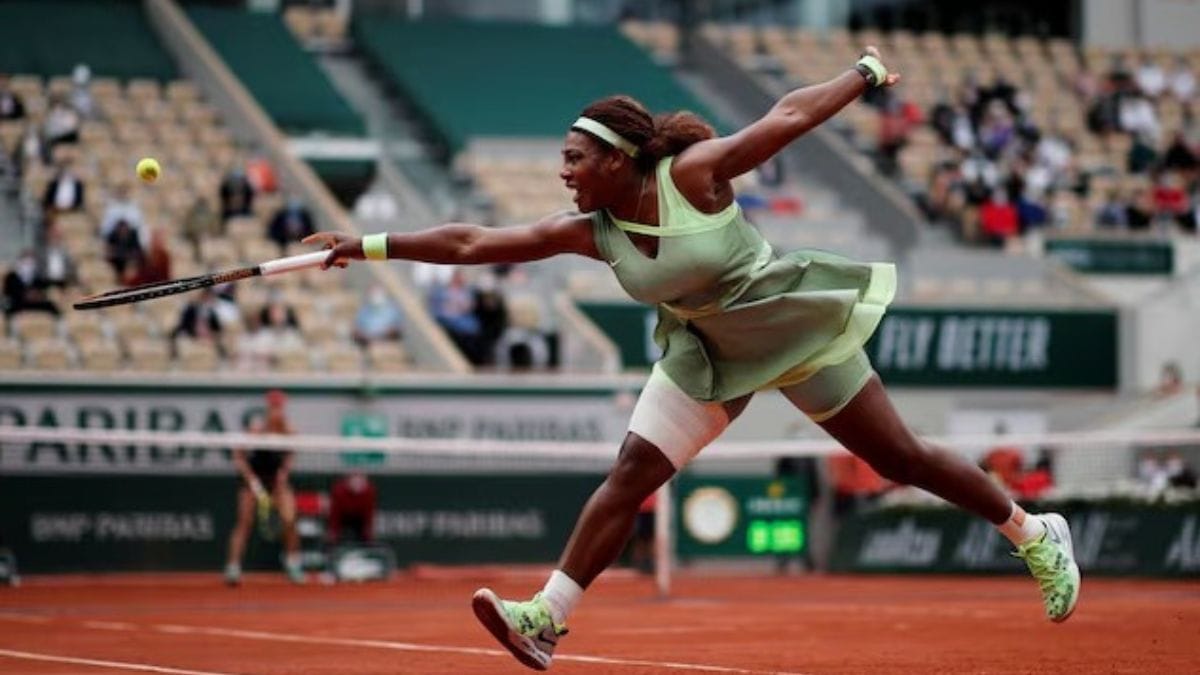
Serena Williams will return to competitive tennis later this month after accepting a wildcard entry into the women’s doubles draw at the Queen’s Club Championships in London.
The 44-year-old has not played a professional match since the 2022 US Open, where she bowed out in the third round before stepping away from the sport after an illustrious career that transformed women’s tennis.
Her return at the WTA 500 grass-court event marks one of the most significant comeback stories in recent tennis history and immediately raises questions about whether a Wimbledon appearance could follow.
Why Queen’s club matters
Williams described Queen’s Club as the ideal venue to begin her comeback, citing her long-standing connection with grass-court tennis.
“Grass has given me some of the most meaningful moments of my career, and I’m excited to be back competing on one of the sport’s most iconic stages,” she said as per a statement released by the organisers.
The surface has produced some of the defining moments of her career. Across two decades of dominance, Williams captured seven Wimbledon singles titles and six Wimbledon doubles crowns alongside her sister Venus Williams, establishing herself as one of the most successful grass-court players in tennis history.
The Queen’s Club tournament, scheduled from June 8-14, serves as a key Wimbledon warm-up event, making it a natural setting for a player looking to test her competitive readiness ahead of the summer’s biggest championship.
The return fans have been waiting for
Speculation around a Serena comeback has circulated for months, fuelled by occasional hints from the 23-time Grand Slam singles champion.
Monday’s confirmation finally ended that uncertainty.
While tournament organizers have yet to officially announce her doubles partner, reports suggest Williams could team up with Canadian teenager Victoria Mboko, creating one of the most intriguing pairings of the grass-court season.
The prospect of one of tennis’ most decorated champions sharing the court with a rising star also underscores the generational significance of her return.
More than a champion
Williams’ impact on tennis extends far beyond her trophy cabinet.
A former World No. 1 for 319 weeks, she redefined athletic longevity, commercial influence and global visibility for women’s sport. Her achievements include 23 Grand Slam singles titles, 14 major doubles titles with Venus Williams and four Olympic gold medals.
She remains the only player to complete a Career Golden Slam in both singles and doubles, a feat that places her among the most accomplished athletes in Olympic and tennis history.
Since stepping away from the game, Williams has expanded her business portfolio, entrepreneurial ventures and advocacy work while raising her two daughters.
What comes next?
The immediate focus will be on Queen’s Club but Williams’ return inevitably sparks a bigger conversation.
If she demonstrates competitive fitness and form on grass, attention will quickly shift toward Wimbledon and whether tournament organisers extend a wildcard invitation for either doubles or singles competition.
For now, tennis has something it has not had in nearly four years, Serena Williams back in a competitive draw.