



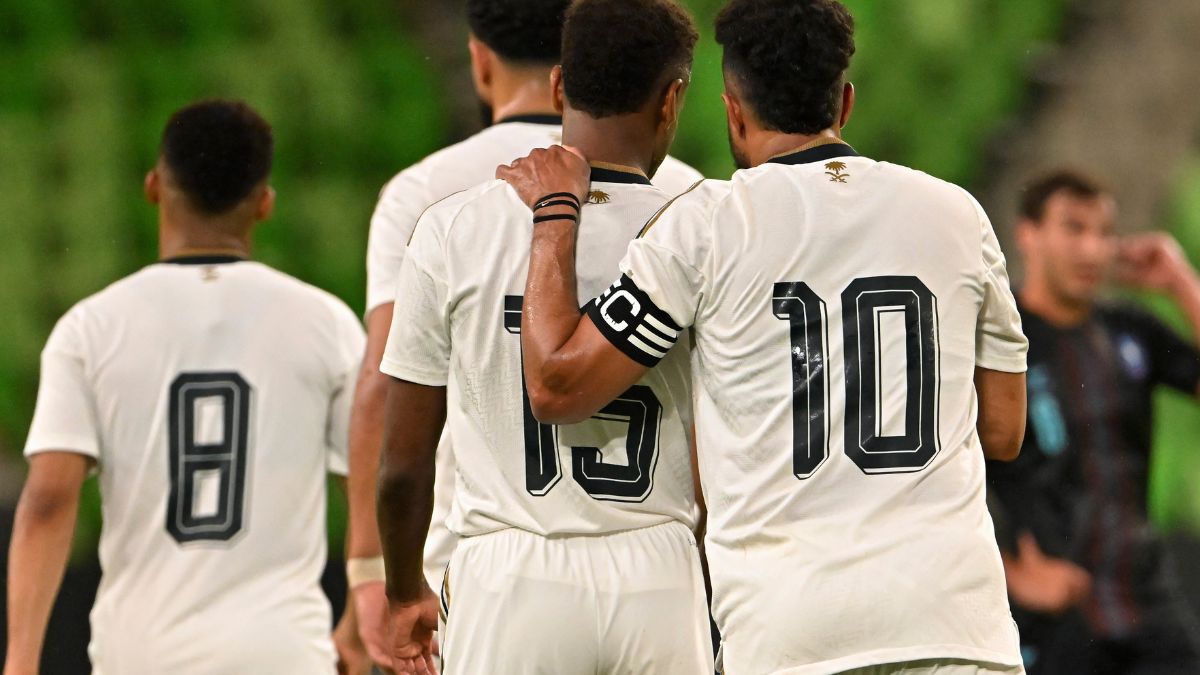
Saudi Arabia’s multi-billion-dollar push to reshape global football is heading into its most consequential phase yet, as the country prepares to test whether heavy investment in superstar talent can translate into sustained on-field success and long-term football development.
From signing Cristiano Ronaldo and Karim Benzema to attracting Neymar and a wave of other European-based stars, the kingdom has spent heavily in recent years to elevate its domestic league and global sporting profile. But as they attention now shifts toward the FIFA World Cup, the 2034 edition of which Saudi Arabia is hosting, the focus is moving beyond marquee names to a more complex question: has the spending actually strengthened Saudi football where it matters most?
The country’s 2-1 shock win over Argentina at the 2022 World Cup in Qatar briefly signalled a breakthrough moment for Saudi football. However, results since then have been inconsistent, raising questions over whether elite foreign signings have had any meaningful impact on the national team’s competitive depth.
From Galacticos strategy to reality check
While the Saudi Pro League has become one of the most visible beneficiaries of the spending spree, the national side’s performances have been less convincing. The team’s early exit at the 2024 Asian Cup, coupled with managerial instability, including the high-profile departure of Roberto Mancini and the return and subsequent exit of Herve Renard, has highlighted the gap between domestic ambition and international execution.
The reliance on global stars has boosted visibility and commercial appeal, but has also raised questions about whether it has created structural bottlenecks for domestic talent development. In several matches, critics have pointed to an over-dependence on imported talent in key positions, leaving the national pipeline under pressure.
The shift towards long-term football infrastructure
Now, a new phase appears to be underway.
According to an Associated Press report, Saudi Arabia is increasingly shifting its focus toward structural football development, including youth systems and talent pathways. The appointment of former US Soccer sporting director Matt Crocker to oversee talent development, along with a reported increase in youth investment to $26.7 million over the past three years, signals a strategic pivot from short-term star acquisition to long-term team building.
The expansion of regional training centres and the emphasis on domestic player development are being positioned as critical pillars of preparation for the 2034 World Cup, which Saudi Arabia will host.
Yet challenges remain. The integration of foreign superstars into the domestic league has not automatically translated into a stronger national pipeline. Instead, it has raised concerns in some quarters about whether local players are receiving sufficient opportunities to develop at the highest level.
With coach Georgios Donis now tasked with steering the national team through the next competitive cycle, expectations are being carefully managed. As he noted during squad announcements, the priority is building belief and cohesion within a rapidly evolving system rather than promising immediate breakthroughs.
Saudi Arabia’s football project, once defined by headline-grabbing transfers and record-breaking deals, is now being judged on a different metric: whether billions in investment can ultimately produce a competitive, self-sustaining football ecosystem capable of delivering on the world stage in 2034.
For now, the experiment is no longer about disruption. It is about delivery.