



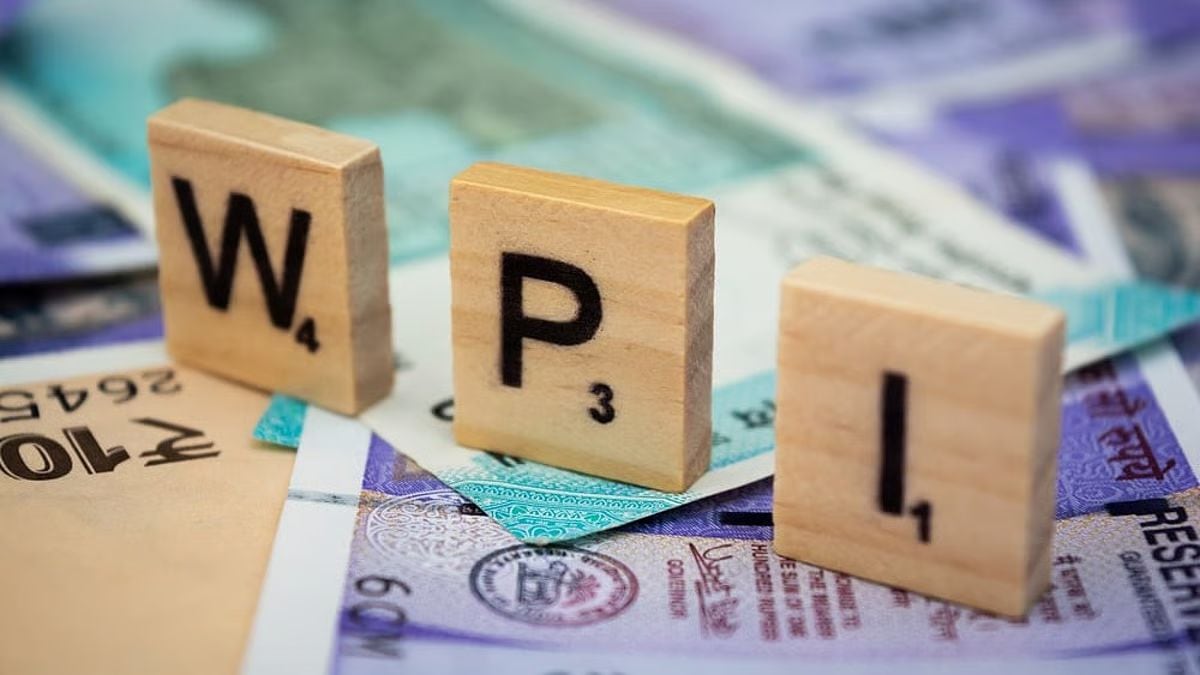
After more than a decade of preparatory work, the Producer Price Indices (PPI) is finally ready for launch and will be unveiled for the first time along with the revised Wholesale Price Index (WPI) on 15th of June.
The PPI will have three indices – Output PPI, Trial Input PPI and Services PPI. Output PPI and Trial Input PPI will be released monthly and Services PPI will be compiled on a quarterly basis.
All major economies like the US, China, Japan, Germany, France and other G-20 countries use PPI to measure the average changes in prices received by domestic producers for their output.
“The transition from WPI to PPI is in alignment with the global best practices adopted by advanced economies and the recommendations of the International Monetary Fund (IMF),” Principal Economic Advisor at Department for Promotion of Industry and Internal Trade (DPIIT) Praveen Mahto said.
Considering the wide usage of WPI in price escalation clauses of government and other contracts the WPI will be released for five years from the date of release of the revised series along with PPI and will be discontinued thereafter, he added.
The new WPI will have a revised base year of 2022-23 from 2011-12, which was in use since May 2017. The revision has resulted in expansion of the basket of products whose prices are tracked while compiling the index to 957 from 697.
New sources of energy, such as Solar and Wind, have been added under ‘Electricity’ Group. In addition, Nuclear Electricity has been included in the basket. Crude Petroleum and Natural Gas has been shifted from the ‘Primary Articles’ to the ‘Fuel and Power. This reorganization would lead to better alignment, as this group already houses other major fuels such as coal, electricity, and petroleum products.
As a result the weight of Fuel and Power in the WPI will increase to 14.11 from 13.15. The weight of primary articles will increase to 22.76 from 22.62 and for manufactured articles it will be 63.13 in the new index, down from 64.23.
The Input PPI will track average change over time in the prices of materials, commodities, and energy bought by manufacturers to produce their goods. The Output PPI will look at the transaction prices when goods and utilities actually leave the factory gates, commercial farms, or processing plants to be sold into the wholesale market.
“Availability of both the Output PPI and Input PPI gives a better understanding of the price movements of output items vis-s-vis inputs items being used in an industry. It also explains how inflation experienced by producers on input items is passed through the output being produced,” Mahto said.
Service Producer Price Index (Service PPI) will initially cover seven services – Banking, Securities Transaction, Insurance, Management of Pension Funds, Railways, Air (Passenger), and Telecom with base year 2022-23.
Service Producer Price Index (Service PPI) of seven services, viz., Banking, Securities Transaction, Insurance, Management of Pension Funds, Railways, Air (Passenger), and Telecom with base year 2022-23.
More services are planned to be added to the basket of Service PPI in subsequent phase on the basis of availability of data, Deputy Director General at Office of Economic Advisor DPIIT Dilip Kumar Sinha said.
The PPI has been discussed for the past 20 years when its idea was first mooted. While the need to move to PPI from WPI was expressed in 2003 it was only in 2014 that a working group was set up to determine the methodology and data requirements to move ahead. The report of the group came in 2017 but no decision was taken on it.
In December 2024 a working group was constituted under the chairmanship of then Niti Aayog Member Ramesh Chand for revision of WPI and compilation of PPI with base year 2022-23.