



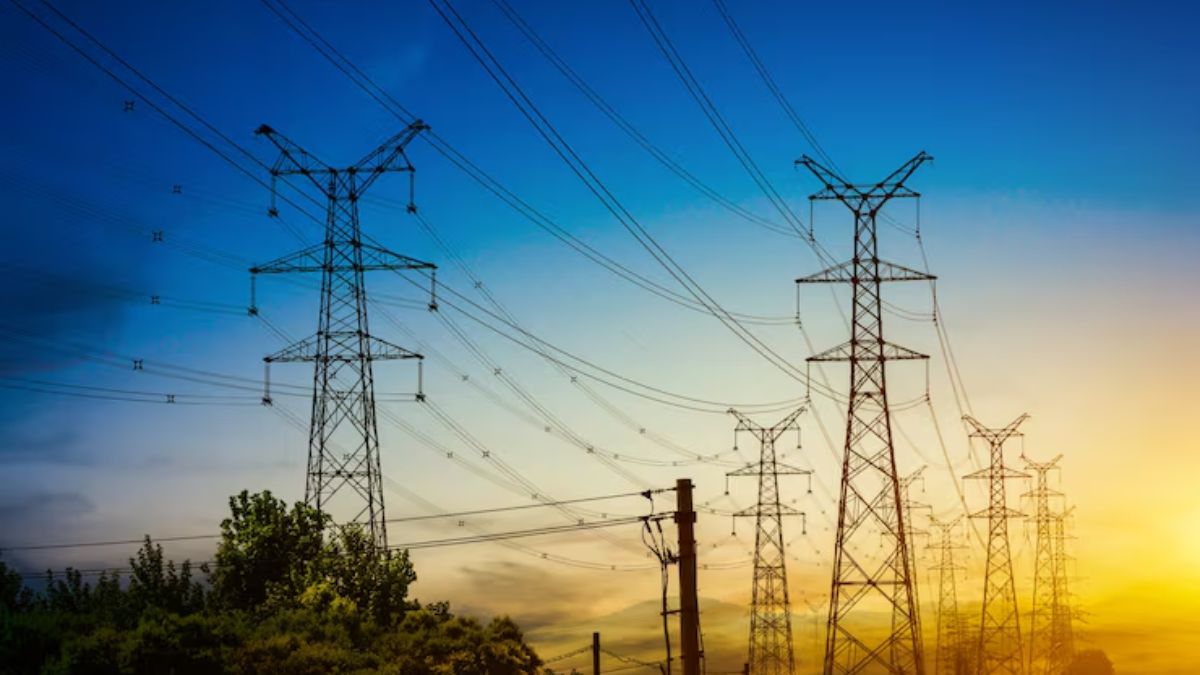
The power ministry is planning to lay a roadmap to ensure energy security for data centre developers, given the huge demand for electricity from this emerging sector.
It has started a dialogue with data centre units, state transmission utilities and distribution companies in this regard.
The deliberations cover reliable supply, dual-grid connectivity, green power, transmission capacity and grid stability, a senior ministry official told Financial Express.
The emerging roadmap is likely to focus on aligning data centre investments with transmission expansion, discom preparedness, green-power availability and storage deployment. With capacity expected to rise more than sixteenfold by 2031-32, the ministry is seeking to prepare the power system before AI-led investments translate into large electricity loads.
Navigating AI Growth
India’s data centre capacity is projected to surge from around 1.6 GW currently to 26 GW by 2031-32 and 37 GW by 2040, as the rapid growth of artificial intelligence, cloud computing and digital services drives demand for energy-intensive computing infrastructure.
The discussions involve the power ministry, the Central Electricity Authority, state transmission utilities, discoms and developers, and aim to assess the electricity infrastructure required to support the sharp capacity addition.
“The ministry is discussing the plan with different stakeholders in the data centre sector,” the official said. “Reliable power, dual-grid availability, transmission congestion and grid reliability are among the major issues under discussion.”
The proposed roadmap will examine how generation resources, transmission networks and local distribution infrastructure can be developed in line with data centre capacity expansion.
Data centres require continuous, high-quality electricity and can add large loads at individual locations. The rise of AI is expected to intensify these requirements as increasingly powerful computing systems consume more electricity and require uninterrupted operations.
Dual-grid availability is a key issue being discussed with developers. Access to separate grid connections can provide supply redundancy and allow facilities to remain operational when one link is affected by an outage, maintenance or network disruption.
Transmission congestion is also under review, particularly in regions where multiple data centre projects are expected to be concentrated. The ministry is assessing whether existing networks can absorb the proposed loads and where additional lines, substations and connectivity may be required. Southern states and the western region are among the areas being examined because of their emerging data centre clusters, renewable-energy potential and growing electricity requirements.
The preparedness of discoms will be critical because local distribution networks must provide the final connection to large facilities. Inadequate substations or distribution capacity could affect project timelines even where adequate generation and transmission infrastructure are available.
Green electricity is another central element of the discussions as developers increasingly seek renewable power for their operations. The ministry is assessing resource availability and the measures required to combine cleaner electricity with the round-the-clock reliability demanded by data centres. “The role of battery energy storage systems, supply stabilisation and transmission uptime and downtime is also being examined,” the official said.