



India’s growth story depends on the health of the vast number of unincorporated non-agricultural enterprises — which are not legally registered as companies — that belong to the informal sector. These small businesses contribute 28 to 30% of the nation’s output of goods and services or GDP and 40% of employment.
These enterprises are not just stand-alone entities but also support the incorporated or formal sector by acting as suppliers and services providers, thereby forming an integral part of the domestic value chain.
The official narrative on the latest quarterly edition of the National Statistical Office’s annual survey of unincorporated enterprises (ASUSE) for January-March 2026 highlights the robust year-on-year growth of 16.7% in the number of unincorporated enterprises and 15.5% in employment.
This indicates “healthy labour market growth” in the informal sector which is a major provider of jobs in the economy.
However, these key metrics must be considered over a longer period to assess the health of the informal sector, especially manufacturing, as it has borne the brunt of various shocks that have buffeted the economy.
While the January-March 2026 numbers are largely driven by the unincorporated services, manufacturing deserves attention as it was hit by Covid-19 and earlier disruptions like demonetisation which took high-value notes out of circulation in November 2016 and the implementation of the goods and services tax in July 2017.
As cash accounts for a bulk of transactions, demonetisation struck a body blow to informal manufacturing enterprises who downed shutters, forcing daily wage earners to return to their villages. There were 1.1 million fewer workers even a decade later, according to ASUSE 2025, as against 36 million before demonetisation in 2015-16, although enterprises were marginally up by 8.6%.
Although the January-March 2026 numbers indicate growth in unincorporated manufacturing enterprises and employment, their relative importance shrank to 27% from 28% in January-March 2025. There is no warrant to infer a nascent recovery considering the plight of the handloom and handicraft industry that are exemplars of informal manufacturing.
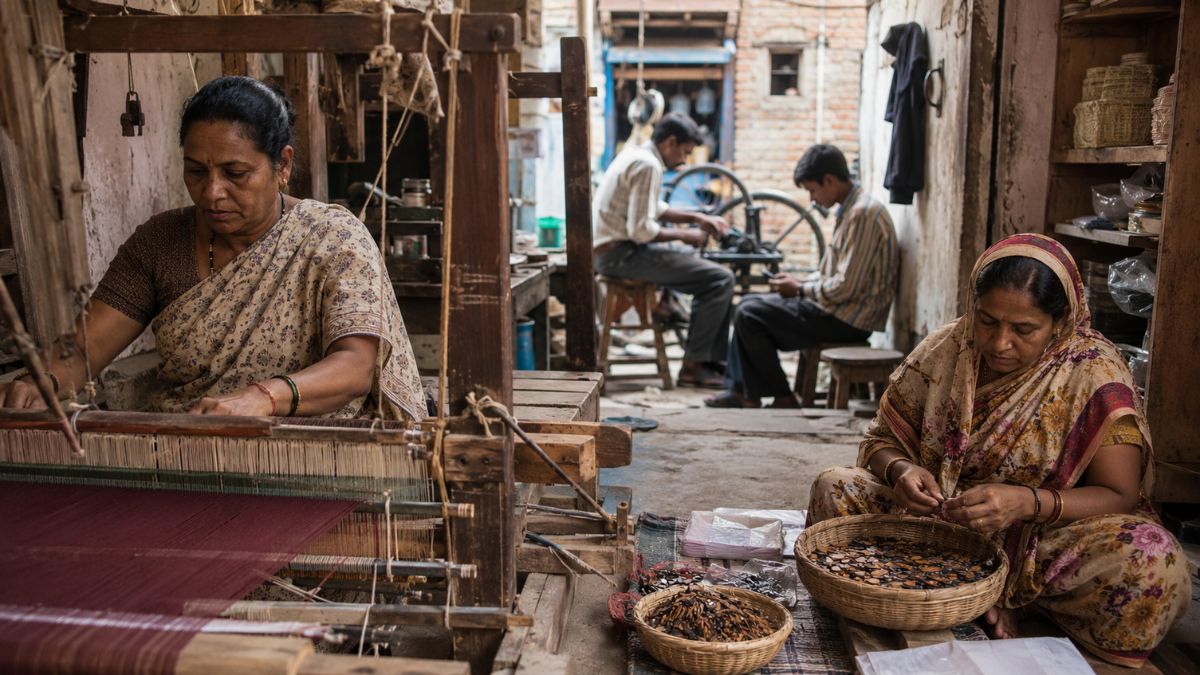
This segment supports nearly 6.5 million establishments employing 11.3 million workers, which would be 26 to 28% of the total 24.8 million informal manufacturing enterprises with 40.6 million workers. A survey of this sector in six states by the Institute for Human Development and the Crafts Council of India found that most handloom and handicraft units operated on a small home-based scale and reported declining production over the past decade.
The lot of workers was no better with a gross value added per worker of Rs 270 a day, which is below the prescribed minimum wages. While the latest quarterly data indicates an impressive services-led growth of enterprises and employment, a nuanced picture emerges on unincorporated manufacturing that hasn’t fully recovered from the shocks over the past decade.
Unincorporated trading enterprises have done no better either when compared to January-March 2025. The travails of the handloom and handicraft industry must be captured better in ASUSE data for focused policy attention.
The Ministry of Statistics and Programme Implementation is reportedly willing to incorporate sector-specific suggestions to improve its surveys to generate granular and actionable data for this segment. This is a step in the right direction as it will more accurately reflect the health of the informal economy, especially manufacturing. The official narrative will then be better informed as to whether the sector is showing resilience or continuing stress.