



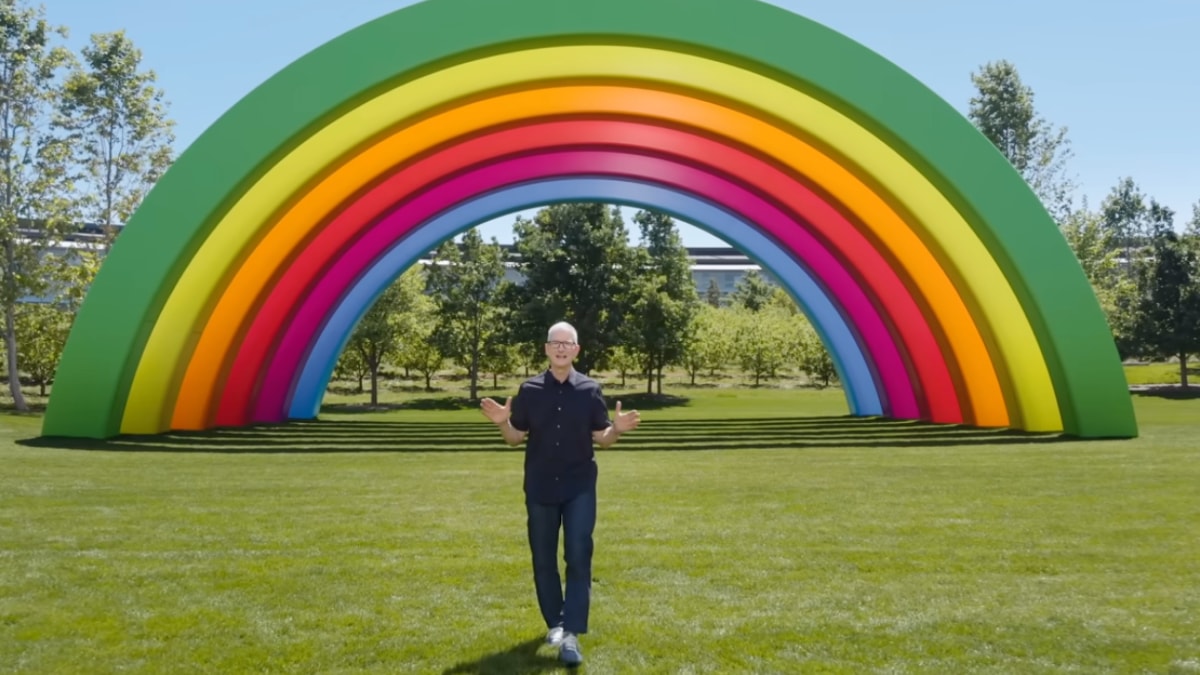
Apple Intelligence hasn’t had a smooth run. In fact, Apple’s AI ambitions can be best described as dismal, especially when its rivals are making major strides every few weeks! Hence, this year’s Worldwide Developers Conference (WWDC) means a lot more for Apple than any of the previous editions – this year’s WWDC could prove to be a make-or-break point for Apple’s AI chapter.
Over the past year, Apple has made some crucial decisions for its AI future, with the major one being a tie-up with Google for using Gemini as the base of its AI models. With the former AI chief, John Giannandrea, gone and outgoing CEO Tim Cook handing over the baton to John Ternus, Apple is now taking drastic measures to step into the AI game and catch up to its competitors, including its partner Google.
Hence, all eyes are on this year’s WWDC 2026, when Tim Cook could potentially take to the stage for the last time to lay out Apple’s future roadmap in an AI-dominated era. Let’s take a look at everything we expect Apple to announce at the WWDC 2026 event next week.
The rebirth of Siri
The crown jewel of WWDC 2026 is expected to be the long-awaited unveiling of Siri 2.0. Apple is shattering its traditional approach by partnering with Google to integrate Gemini Large Language Models (LLMs) directly into its core voice assistant. Rather than spending years and billions trying to build a massive foundational model from scratch, Apple is licensing proven, state-of-the-art conversational AI and optimising it for Apple silicon. This could give Siri a much-needed dose of intelligence boosting.
Based on a spree of recent leaks, it has been observed that Siri 2.0 is no longer just a hands-free utility for setting timers or checking the weather. Instead, it is a full-fledged, context-aware digital companion like Gemini. It is likely to allow text-based input for queries, will gain the ability to memorise actual conversations, read onscreen content and can even control 3rd-party apps. This could transform the iPhone experience for millions of users across the world.
System-wide integration
Beyond a smarter assistant, WWDC 2026 is set to introduce iOS 27 and macOS 27 as operating systems crucially rebuilt around systemic AI. Similar to Google’s Android 17, which was introduced at the I/O 2026, Apple is also going to weave AI as the very fabric that makes these operating systems; i.e., AI will be at the core of the basic operating system.
Hence, iOS 27 is likely to feature an upgraded Safari with intelligent web summaries that can distil dense academic papers or news articles into punchy, actionable bullet points in milliseconds. Apple Music is expected to leverage generative AI algorithms to create hyper-personalised playlists based on complex, text-based mood descriptions. The Photos app could boast advanced generative editing tools, allowing users to remove complex background clutter or expand image borders naturally, just like Google’s Photos.
We also expect to see revisions made to the notification system and how the systematic AI manages the delivery of notifications smartly.
But what about the privacy equation?
This massive leap forward for Apple’s AI presents a unique challenge for Apple – maintaining its sacred commitment to data privacy. To address this, it is said that Apple is introducing a localised tiering system in iOS 27 and macOS 27. Basic AI tasks and sensitive personal data processing occur strictly on-device via the Apple Neural Engine. Complex, creative prompts that require the Gemini engine are sent to secure cloud servers with strict, anonymised, and zero-retention data protocols. It remains to be seen how Apple manages the degree of privacy with AI requests.
This architecture is crucial for winning back the developer community. Over the past few years, developer scepticism has grown as Apple promised advanced tools but delivered heavily restricted APIs. By opening up Siri 2.0’s core contextual framework to third-party apps via robust new APIs, Apple is pushing developers to make their own software infinitely smarter, sparking a new wave of app store innovation.
Footnote: Apple’s make-or-break WWDC
WWDC 2026 is the ultimate test of Apple’s ecosystem relevance. By merging Google’s raw AI horsepower with its own peerless hardware integration and design sensibility, Apple is making a bold statement. The maker of the iPhone wants to prove that the future of AI does not belong to the company with the loudest standalone chatbot, but to the company who can integrate AI most seamlessly into the devices we already hold in our hands.