



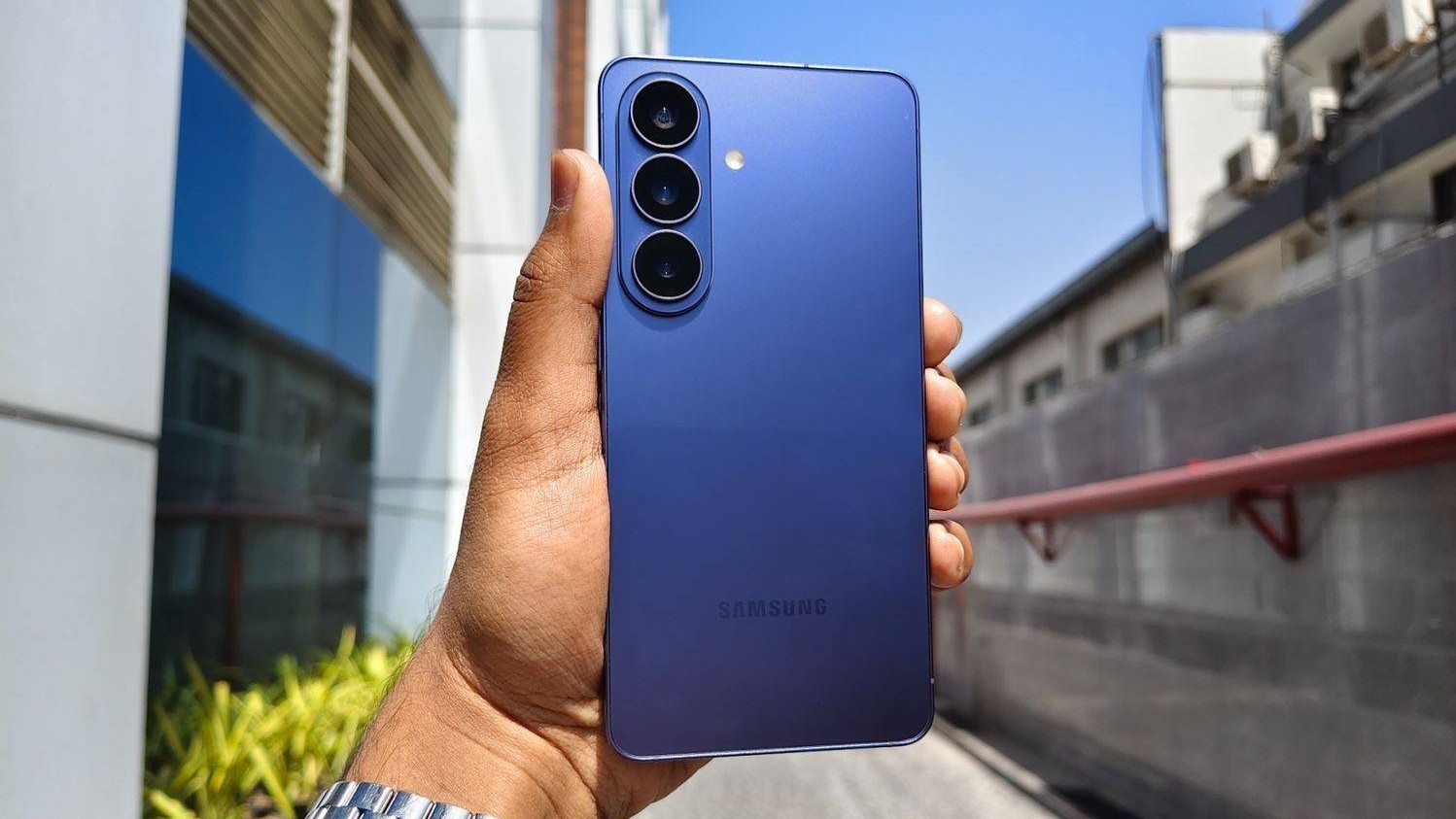
Samsung began 2026 with the launch of the Galaxy S26 series, and while the S26 Ultra grabbed the headlines, it was the standard Galaxy S26 that immediately caught my attention for other ‘small’ reasons. As someone who has been using the compact Galaxy S23 for a long time, I have always appreciated Samsung’s smaller flagship formula, a phone that offers almost everything without becoming too large or too heavy.
The Galaxy S26 follows that same philosophy. On paper, it does not look very different from its predecessor. There is a slightly larger 6.3-inch display, a new-generation chipset, more RAM as standard, and a bigger battery. But after spending time with it, the S26 feels less like a reinvention and more like Samsung refining an already successful formula.
That approach works surprisingly well. In the company of oversized flagship phones with a gazillion features, the Galaxy S26 is one of the easiest flagship phones to use in 2026. It is compact, polished, powerful, and dependable. The only question that remains is whether these refinements are enough in a year when rivals like iPhone 17 are pushing harder than ever.
Design
The Galaxy S26 does not try too hard to look new, and that may not necessarily be a bad thing. Samsung has kept the same clean, minimal design language that has defined its recent flagships, but the phone feels more refined this year.
At 7.2mm thick and 167g, the Galaxy S26 is among the lightest and most comfortable compact premium smartphones this year. After using the larger and heavier phones that dominate the market today, returning to the S26 feels refreshing. It sits naturally in the hand, is easy to use with one hand, and slips into a pocket without constantly reminding you that it is there.
Samsung has used an ‘Armor Aluminium’ frame with Gorilla Glass Victus 2 protection on both the front and back. The phone also carries an IP68 rating, which means it can survive dust and water damage to a great extent.
There is, however, one noticeable visual change. Samsung has replaced the separate camera rings with a single raised camera island that neatly houses the three sensors. It looks cleaner and more aesthetic than before, although it does make the phone wobble slightly when placed on a table.
The overall design may feel familiar, especially if you are coming from an S24 or S25, but there is no denying that the Galaxy S26 still feels every bit like a premium flagship.
Display
One of the biggest changes on the Galaxy S26 is its new 6.3-inch Dynamic AMOLED 2X display. The increase from the older 6.2-inch panel may sound small on paper, but in daily use, it makes the phone feel just a little more spacious without compromising its compact character.
The display continues to be one of the strongest reasons to buy a Samsung phone. It is bright, colourful, sharp, and wonderfully smooth thanks to the 120Hz adaptive refresh rate. Whether you are scrolling through social media, watching videos, or reading long articles, the screen feels effortless.
Samsung has also increased the peak brightness significantly. The Galaxy S26 can reach up to 2,600 nits, which means the display remains excellently readable even under harsh sunlight. During outdoor use, especially in bright afternoon conditions, the screen never felt like it was struggling.
The colours are slightly vivid, but pleasing to look at. Blacks are deep, contrast is excellent, and HDR content looks fantastic. The bezels are also extremely slim and symmetrical, making the phone feel more modern than its relatively conservative design would suggest.
However, the display is also an area where Samsung’s cost-cutting is visible. The Galaxy S26 still uses an 8-bit panel with software-assisted colour enhancement rather than a true 10-bit display. Most people are unlikely to notice the difference, because when it is compared side by side with the Xiaomi 17, which has a 12-bit display, subtle colour gradients are not quite as smooth.
Samsung has also done little to improve PWM dimming, which is at 480Hz meaning users who are sensitive to display flickering at low brightness levels may still experience some eye strain. Still, judged purely on everyday use, the Galaxy S26 still offers a nice display in the compact flagship phone category.
Performance and software
The biggest upgrade on the Galaxy S26 is hidden under the hood. In the Indian market, the phone is powered by Samsung’s new (2nm) Exynos 2600. This is paired with 12GB of RAM as standard and up to 512GB of storage.
Samsung is using the Exynos 2600 to its full potential. This is perhaps the smoothest Exynos-powered Galaxy phone in years. Built on a 2nm process, the chip feels extremely fast and efficient. The Galaxy S26 handles everything effortlessly. Apps open instantly, multitasking feels fluid, and there is never a sense that the phone is working too hard. Even demanding games such as BGMI and Shadow-Fight ran smoothly at high settings during my 30-minute sessions.
More importantly, the S26 remains cool and controlled during most everyday tasks. It can get slightly warm when using the camera extensively or gaming for long periods, but never to an uncomfortable extent.
The phone runs Android 16 with One UI 8.5, and Samsung’s software remains among the best in the Android ecosystem. One UI continues to balance between features and simplicity. It looks polished, is easy to navigate, and includes plenty of thoughtful additions.
Samsung’s Galaxy AI features are more useful this year too. Real-time translation works faster, image editing tools are smarter, and Circle to Search can now recognise and solve mathematical equations directly from the screen.
The 7-years of promised Android updates and security patches make the Galaxy S26 feel like a long-term investment rather than just another annual upgrade.
Camera
The Galaxy S26 carries forward a familiar camera setup a 50-megapixel primary sensor, a 12-megapixel ultra-wide camera, and a 10-megapixel telephoto lens with 3x optical zoom. On the front, there is a 12-megapixel selfie camera.
If you have used a recent Samsung flagship, the results will feel immediately familiar. The good news is that the Galaxy S26 still takes very good photographs. The primary camera captures detailed images with strong dynamic range and colours that are slightly dull than real life, but never excessively. Daylight shots look vibrant and polished, making them ideal for sharing directly on social media.
Samsung has also improved image processing in low light to some extent. Although night photos are cleaner than before, with better details, the colours are dull. Nonetheless, the phone is more consistent in difficult low-light conditions. Even without major hardware changes, the S26 manages to produce reliable results in most situations.
The 3x telephoto camera remains useful for portraits and closer shots. Portrait mode works especially well, producing natural-looking background blur and good skin tones. When I pushed beyond 10x zoom, the image quality started to drop very quickly. The ultra-wide camera is similarly dependable but unremarkable. It performs well enough in good lighting, although the lack of autofocus means there is no proper macro photography support.
Video recording remains a strong point. The Galaxy S26 can shoot crisp 4K footage with excellent stabilisation, and Samsung’s colour tuning makes videos look polished straight out of the camera.
In conclusion, it is one of the most reliable camera setups in the segment. The problem is that reliability is no longer enough when competitors are improving much faster.
Battery life
Samsung has increased the battery size slightly this year, and the Galaxy S26 now packs a 4,300mAh battery. Although this may not sound impressive when compared with the 5,500mAh and even 6,000mAh batteries found in some other compact phones, the efficiency improvements from the new (2nm) Exynos 2600 chipset make a noticeable difference in screen-on time.
The Galaxy S26 is comfortably a full-day phone. With a mix of Instagram reel scrolling, photography, calls, streaming, and short gaming sessions, the phone consistently lasted from morning to night with some charge left to spare.
Battery anxiety is no longer a very significant issue here. In fact, for a compact flagship, the screen-on-time is genuinely impressive.
The bigger disappointment is the charging. Samsung has once again limited the Galaxy S26 to 25W wired charging, which feels difficult to justify in 2026. While the phone does charge reasonably quickly, taking just over an hour to reach 100 per cent, several cheaper rivals can do the same in nearly half the time.
Wireless charging and reverse wireless charging are both present, but the lack of faster wired charging remains one of the S26’s most frustrating compromises.
Verdict
The Galaxy S26 is not a revolutionary phone. It does not completely change the design, introduce an upgraded new camera, or take major risks.
Instead, Samsung has focused on polishing the experience that already worked. The result is a compact flagship that feels more complete than ever. It has an excellent display, powerful performance, dependable cameras, strong battery life, and perhaps the best long-term software support in the Android ecosystem.
For users coming from older Samsung phones like the Galaxy S23 or S22, the Galaxy S26 feels like a meaningful and worthwhile upgrade. The better battery life, more RAM, and improved AI features add up to a noticeably better everyday experience.
As far as non-Samsung buyers are concerned, there could be concerns. The Apple iPhone 17 comes across as a well-rounded purchase with an equally nice display, arguably superior cameras, a secure iOS ecosystem, and great battery life. Google’s Pixel 10 cares more about the user experience with a sublime Android experience at the cost of a class-leading camera system. As for the Chinese-made flagship phones, you have to be obsessed with raw power and top-notch specifications.
The Galaxy S26, then, is a good premium phone with a compact size that does many things nicely but one should choose it only if a myriad of software features and a polished Android experience are of concern.
(Disclaimer: This review reflects the opinion of the author and doesn’t reflect the publication’s stand on any subjective statement.)