



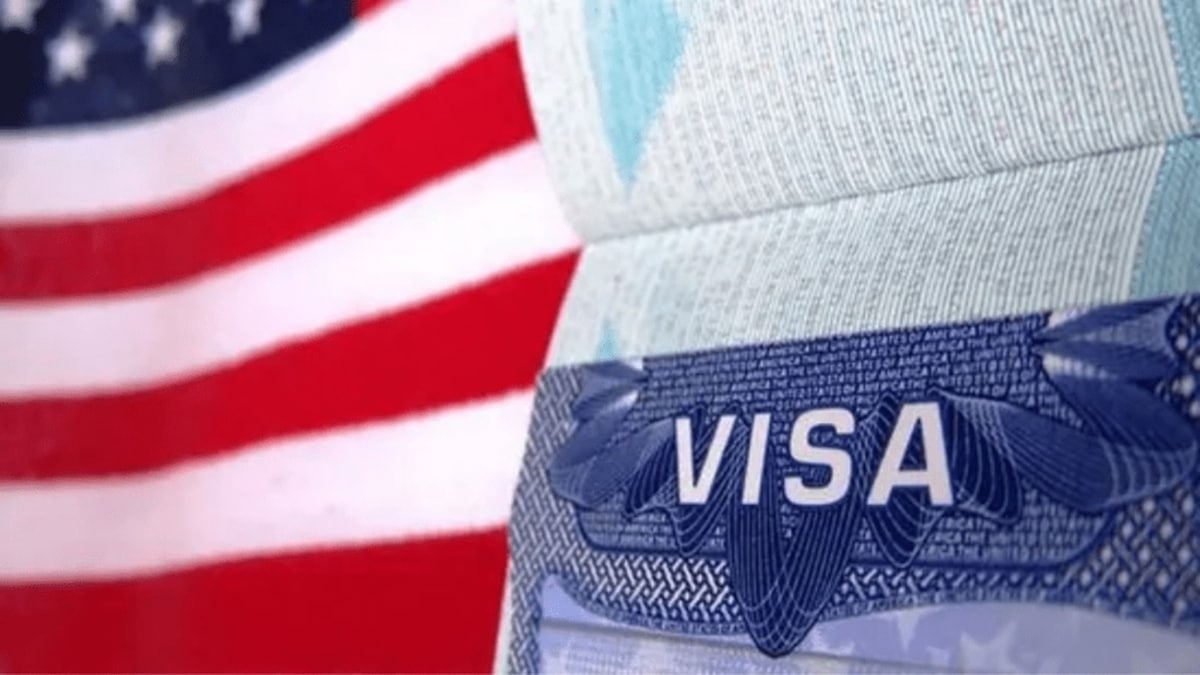
India has raised concerns with the United States over new visa rules that could affect thousands of Indian students and exchange visitors.
This comes after the US Department of Homeland Security finalised a rule that places a four-year cap on stays for F-1 student visa holders, as well as J-1 exchange visitors and I visa holders for foreign journalists.
Under the new rule, most students and exchange visitors will be allowed to stay only for the length of their approved course or programme, but for no more than four years at a time. Foreign journalists travelling on I visas will also receive fixed-term stays.
The rule is set to take effect on September 15, even though it will still undergo congressional scrutiny. Introduced as part of President Donald Trump’s broader immigration crackdown, the changes have created uncertainty for many students and professionals around the world, leaving many to question whether the American dream is becoming harder to achieve.
Speaking at a weekly media briefing on Friday, Ministry of External Affairs (MEA) spokesperson Randhir Jaiswal said India is in touch with the US government and will continue to raise cases where genuine students or travellers face difficulties because of the new rules.
India takes up the issue with the US
“We’ve seen some reports regarding the visa rules. Visa rules and visa functions and immigration matters are sovereign functions of any state,” Jaiswal said at a media briefing.
He added, “But having said that, let me tell you that as and when there are issues of difficulties, which are brought to our attention, in regard to genuine travellers [and] students, among others, who seek support from the US, we take up those issues with the US side so as to minimise the difficulties that our people face.”
India has the largest number of international students studying in the United States.
According to the Open Doors 2025 report, 363,019 Indian students were enrolled at American colleges and universities during the 2024-25 academic year. That was a 10% increase from the previous year and made India the biggest source of international students in the US for the second year in a row, ahead of China.
Jaiswal had earlier said that around 330,000 Indian students were studying in the US during the 2023-24 academic year.
Apart from students, the US also hosts around 500,000 J-1 exchange visitors and about 37,000 foreign journalists on I visas.
Experts believe students from India, China and South Korea are likely to be among those most affected by the new rules because these countries send large numbers of students to the US every year.
F-1 visa update – What has changed?
The new rule was published by the US Department of Homeland Security (DHS) on July 16 and will come into effect on September 15, 2026.
For many years, international students on F-1 visas and exchange visitors on J-1 visas were allowed to stay in the US under a system called “duration of status.” This meant they could remain in the country as long as they continued their studies or exchange programme and followed all visa rules. There was no fixed end date on their immigration documents.
That system is now ending. Under the new rule, most students and exchange visitors will be allowed to stay only for the length of their approved course or programme, but for no more than four years at a time.
However, the new rule does not mean students must leave the US after four years in every case.
Those who need more time to complete their studies can apply to the Department of Homeland Security for an extension. They can also leave the US and apply to return with a fresh period of authorised stay.
However, there is one major change. Earlier, universities had the authority to extend a student’s stay. Under the new system, that decision will now be made by US federal immigration officials, adding another layer of government approval.
Graduation rules become stricter
The new regulation also shortens the time students get after completing their studies.
Earlier, F-1 students had 60 days after graduation to leave the US, transfer to another school or change their visa status.
Under the new rule, that period has been reduced to 30 days. The regulation will also make it harder for students to switch academic programmes or transfer between institutions.
The Trump administration says these changes are meant to prevent misuse of student visas and allow closer monitoring of people staying in the US on student and exchange visas.
India has raised similar concerns before
This is not the first time India has stepped in over changes to US student visa rules.
In 2020, during the Covid-19 pandemic, the US government briefly announced that international students would have to leave the country if their universities shifted completely to online classes.
The decision faced strong criticism and was later withdrawn.
At that time, India also raised the issue with the US government. The Indian Embassy in Washington had warned that the sudden change would “cause uncertainties and difficulties” for students.
More recently, in mid-2025, India urged the US to consider Indian student visa applications “on merit” after the Trump administration temporarily paused student visa interviews and expanded social media checks for applicants. The issue was discussed around the time Foreign Secretary Vikram Misri visited Washington for talks on technology cooperation.
As the new rules are set to take effect on September 15, students already studying in the US, as well as those planning to travel for the upcoming academic session, are being advised to closely follow updates, especially on extension applications, programme transfers and the shorter 30-day period after graduation.