



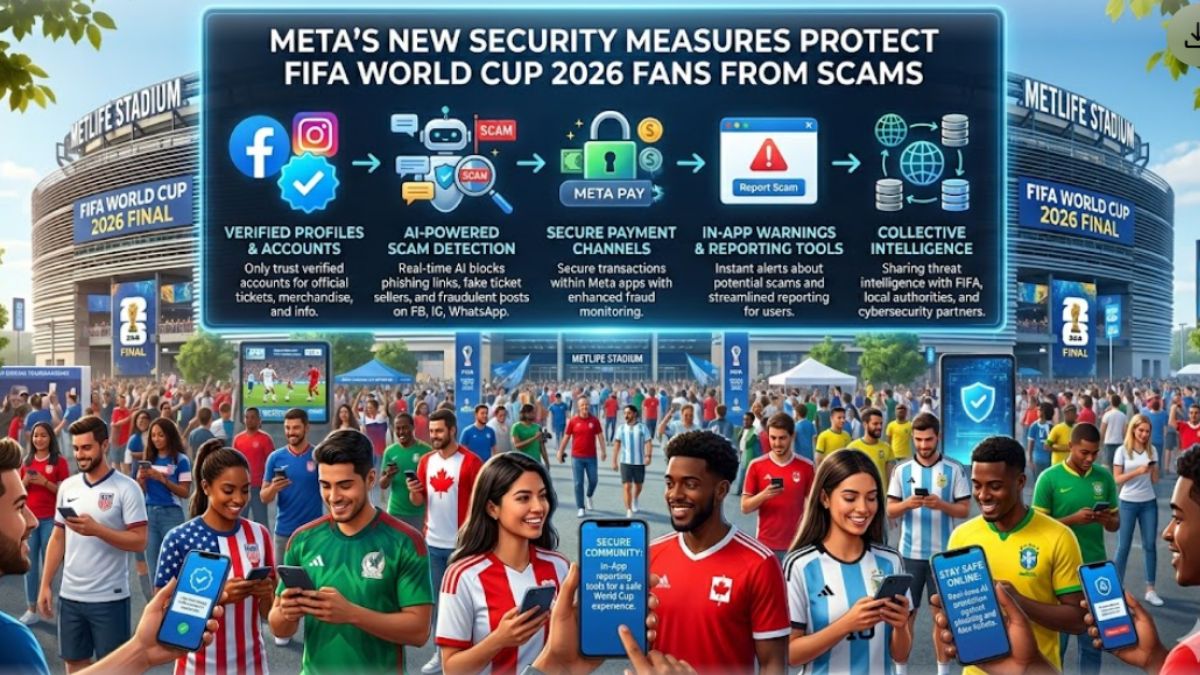
Meta has unveiled a series of new measures to keep fans and players safe from online scams and harmful activity during the FIFA World Cup 2026. Among the initiatives are Facebook safety alerts that will appear when users search for World Cup tickets or engage with related content.
The company is also strengthening its collaboration with industry partners, including Visa, to share intelligence on emerging fraud schemes and quickly dismantle scam networks operating across digital platforms.
“We’re launching a Facebook pop-up notification that will remind people throughout the tournament to make sure they get tickets from verifiable sources. When people search for terms related to FIFA World Cup tickets on Facebook or visit related Groups, we’ll remind them what to look out for before buying tickets, and also share links to our reporting tool so they can report suspicious content or accounts.
The FIFA World Cup 2026 will take place from June 11 to July 19, 2026, making history as the first tournament to feature an expanded format of 48 teams and the first to be jointly hosted by three nations: the United States, Mexico, and Canada.
Strengthening the fight against scams
The company says it is investing heavily in advanced artificial intelligence tools, specialist safety teams, and collaborations with law enforcement agencies and industry partners to identify and shut down fraudulent activity before it reaches fans.
Major sporting events often attract scammers looking to take advantage of high demand and public enthusiasm. Common schemes include fake ticket sales, bogus visa and immigration services, misleading travel and accommodation offers, and fraudulent betting platforms designed to steal personal or financial information.
To tackle these threats, Meta is working closely with industry partners through initiatives such as the Global Signal Exchange (GSE) and the Fraud Intelligence Reciprocal Exchange (FIRE). These programmes allow organisations to share intelligence on emerging scams and coordinate efforts to disrupt criminal networks operating across multiple online platforms.
One recent example involved a joint effort between Meta and Visa through the GSE. The collaboration helped uncover and remove a scam operation on Facebook that falsely used FIFA World Cup 2026 branding. The scheme directed users to fake gambling websites that promised unrealistic chances of winning while attempting to collect sensitive personal data.
Educating fans about online safety
Beyond removing fraudulent content, Meta is also focusing on helping users recognise and avoid scams.
During the tournament, Facebook users searching for World Cup tickets or browsing related groups may see safety alerts reminding them to purchase tickets only from trusted and verified sources. The alerts will also make it easier for people to report suspicious activity.
Meta is partnering with several organisations to improve public awareness of online fraud, including the Canadian Anti-Fraud Centre (CAFC), the Canadian Anti-Scam Coalition’s Stand Against Scams campaign, and Mexico’s consumer protection agency, PROFECO.
These partnerships aim to educate fans about common tactics used by scammers, such as fake ticket marketplaces and websites that impersonate official FIFA platforms.
Tackling Abuse and Harmful Content
Meta says it will continue enforcing its policies against bullying, harassment, hate speech, and violent threats directed at players, teams, officials, and supporters during the tournament.
The company relies on a combination of AI-powered detection systems and user reports to identify content that violates its rules. According to Meta, between October and December 2025, it removed approximately 2.6 million pieces of hateful content from Facebook and Instagram. More than 74% of those removals were detected proactively before users reported them.
The company says these measures are intended to help create a safer online environment as millions of football fans around the world follow the FIFA World Cup 2026.