



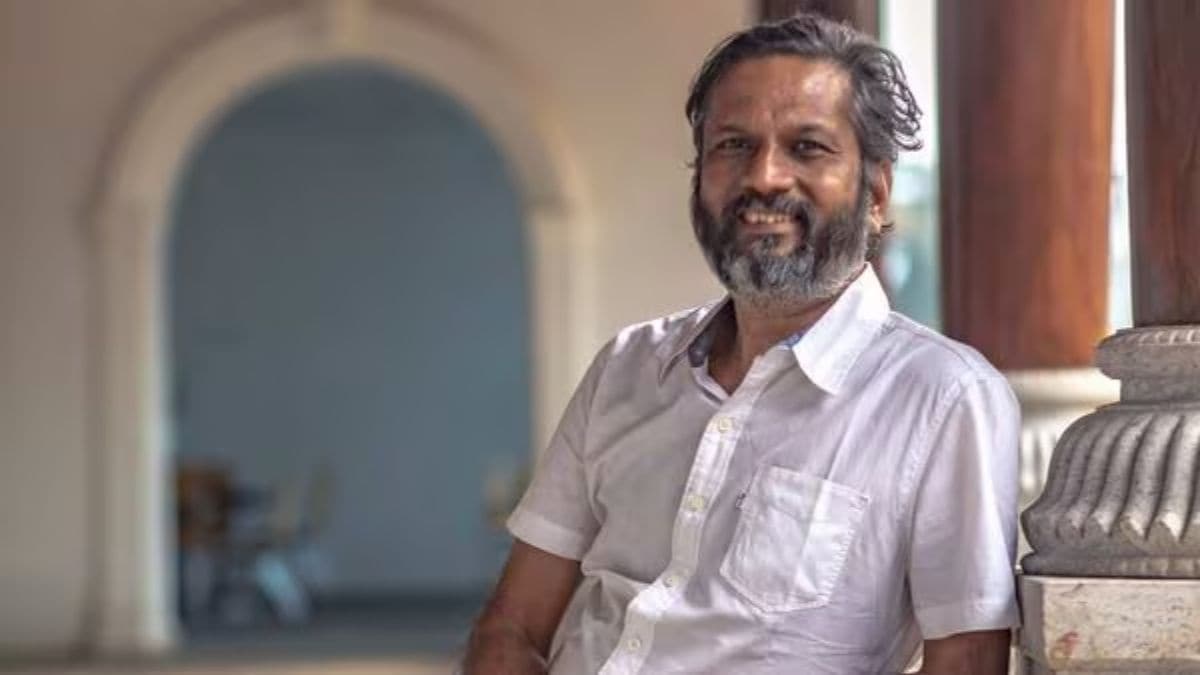
Zoho co-founder and Chief Scientist Sridhar Vembu has shared his take on OpenAI CEO Sam Altman’s recent analogy, comparing the energy demands of training AI models to the resources required for raising and educating a human being at the Express Adda event. In his post, Vembu argues that technology must never be placed on the same moral or existential plane as human life.
Altman’s comments, made during an interview at the India AI Impact Summit hosted by The Indian Express, sought to give a context of growing concerns over AI’s environmental footprint. He argued that discussions about the massive electricity and resources used to train large AI models are “unfair” without similar scrutiny applied to humans.
Vembu calls it unfair to compare humans to AI
“People talk about how much energy it takes to train an AI model… But it also takes a lot of energy to train a human. It takes like 20 years of life and all the food you eat during that time before you get smart,” Altman stated during his interview. The OpenAI CEO highlighted the shifting focus toward abundant clean energy sources like nuclear, solar, and wind rather than curbing AI progress, while dismissing exaggerated claims about per-query energy and water usage for tools like ChatGPT.
Vembu, responding directly on X (formerly Twitter), rejected the equivalence outright. “I do not want to see a world where we equate a piece of technology to a human being,” he wrote. “I work hard as a technologist to see a world where we don’t allow technology to dominate our lives, instead it should quietly recede into the background,” he added.
The Zoho leader stressed that AI and computing infrastructure should serve as supportive tools that enhance human capabilities without overshadowing or controlling them. This comes at a time when most other tech leaders frame AI’s resource intensity as part of inevitable progress toward greater intelligence and efficiency. Vembu’s take echoes the vision that underpinned the India AI Impact Summit 2026 last week, where global leaders and tech CEOs pledged to ensure that AI always serves humanity, not replace it.
Debate rages on AI’s environmental impact
The discussion surrounding the impact of AI data centers on the environment has gained momentum lately. Critics point to enormous power requirements for training models from OpenAI, which require vast arrays of GPUs and specialised hardware. Altman countered by noting that once trained, individual AI inferences can be far more energy-efficient than human cognition for certain tasks, and called for accelerated adoption of sustainable energy, like solar and nuclear power, to meet rising demand.
Vembu’s comment adds an ethical dimension, urging policymakers, developers, and society to treat AI infrastructure differently from biological needs and to prevent technology from dominating human existence.