



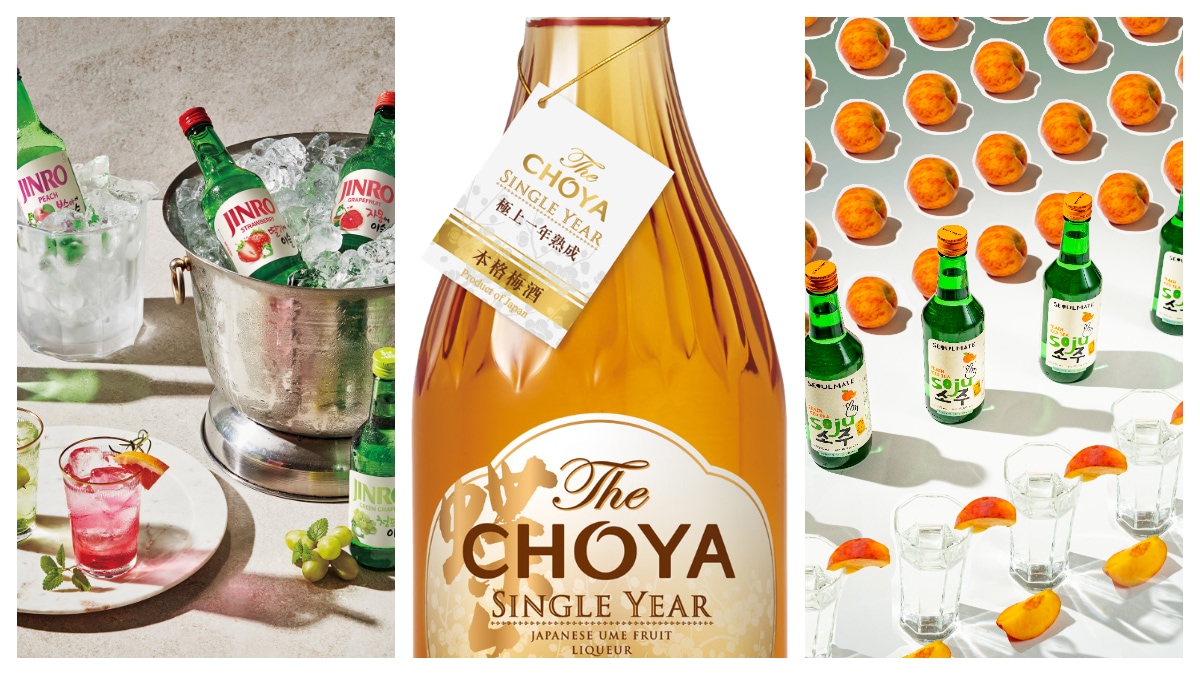
Amid a growing demand for artisanal and premium offerings, and a rising urban consumer base that’s becoming more experimental, regional Asian spirits are increasingly finding a ready market in India.
Recently, Monika Alcobev, an importer of premium wines and spirits, partnered with Jinro, a South Korean liquor brand, to bring soju, a popular alcoholic beverage, to India. “Known for its smooth taste and cultural legacy, Jinro has become a symbol of Korean community and celebration. Today, the brand reaches more than 80 countries, carrying the authentic taste of Korea across the globe,” said Kunal Patel, managing director of Monika Alcobev, adding that in 2024 alone, Jinro sold 96.8 million cases of soju worldwide.
Around the same time, Nuvola Spirits, a homegrown alco-bev company, launched another soju brand Seoulmate in India, initially in Goa, with plans to expand it to the markets in the Northeast, Haryana and Maharashtra in the next six months. “Soju has seen a steady rise in global popularity, driven by Korean culture, cuisine, and entertainment, and we saw a clear opportunity to bring an authentic yet approachable soju brand to the Indian market,” said Aakriti Kochhar, co-founder of Nuvola Spirits that also sells Mikiamo limoncello, an Italian liqueur, in India.
From K-Dramas to Karaoke Bars
Currently, Seoulmate is available in five variants—pink guava chilli, watermelon bubblegum, strawberry mint, peach iced tea and black grape, priced at Rs 550 for a 375-ml bottle in Goa. Jinro’s popular soju variants, on the other hand, include chamisul fresh, green grape, plum, strawberry, grapefruit, and peach, catering to both existing soju enthusiasts and first-time consumers discovering Korean spirits. They are priced at Rs 830-Rs 850 in Maharashtra.
Given the increasing interest in regional and globally inspired spirits, Kochhar of Nuvola Spirits sees strong potential for soju to emerge as a mainstream category in India over time.
“We expect Seoulmate to grow steadily across metros in its first phase, building a loyal consumer base and setting the foundation for wider geographic expansion and long-term revenue growth,”she added.
Besides the thriving K-wave in India, Indian drinkers are showing a preference for lighter, lower-ABV, easy-drinking spirits as well, as per Patel of Monika Alcobev. “The influencer culture is also thriving in India, with top influencers acting as custodians of Korean culture. At the same time, the boom in omakase-style dining, izakayas and Korean karaoke bars has fuelled curiosity for Asian beverages,” he added.
Earlier in 2025, Monika Alcobev partnered with The Choya, a Japanese company headquartered in Osaka, to bring its umeshu, a traditional Japanese liqueur, to India. “The Choya uses 100% premium Nanko-ume from Japan’s Kishu region, widely regarded as the finest ume (a tart, plum-like fruit) in the world, sourced through decades-long partnerships with local farmers who follow sustainable, low-pesticide and organic practices,” said Patel.
100-Million Consumer Opportunity
According to Neeraj Kumar, managing director, Suntory Global Spirits, the growing interest in traditional and regional Asian alcoholic beverages in India reflects a broader shift in consumer mindset across the Asia-Pacific region. “Rising urbanisation, higher disposable incomes and a rapidly expanding legal-age population (nearly 100 million Indians are expected to enter the legal drinking age by 2030, accounting for a quarter of global alcohol consumer growth) are fuelling premiumisation and experimentation,” he added.
Premiumisation, indeed, is driving Indian drinking trends. IWSR, a global leader in beverage alcohol data and insights, forecasts a compound annual growth rate of +8% in volume and +9% in value for premium-plus segments in India during the forecast period of 2023-2028. This is driven by a growing middle class, rising disposable incomes, and increasing consumer interest in higher-quality offerings, it added.
Meanwhile, as the founding house of Japanese whisky, Suntory has shaped the category for over a century. “Rooted in Monozukuri (a Japanese concept meaning ‘the art/spirit of making things’), its whiskies reflect distinct styles—the depth and complexity of Yamazaki, the elegance and harmony of Hibiki, the freshness of Hakushu, and the modern, versatile appeal of Toki, which has played a key role in recruiting younger consumers into the category,” said Kumar.
Recently, Suntory launched Roku Gin—Sakura Bloom Edition, reflecting “the growing appetite for seasonal, story-led expressions”.