



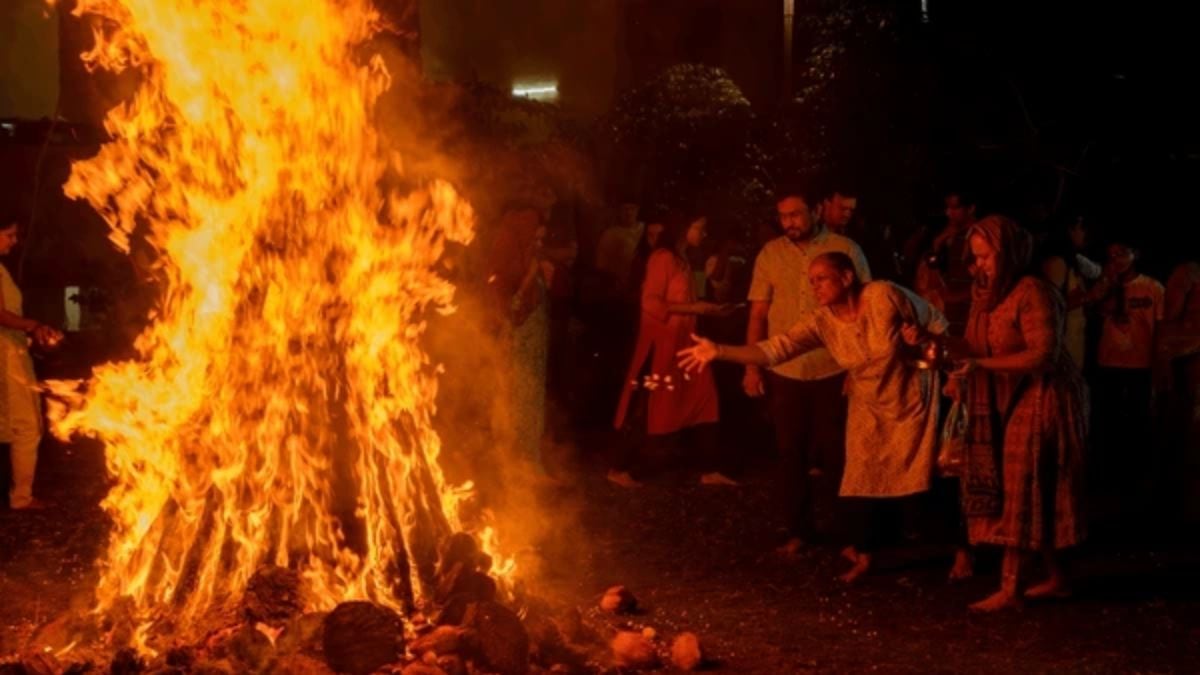
Holi is right around the corner, and as always before we play the ‘rang vali holi’ also called Dhulendi, families gather for Holika Dahan. It’s a ritual that marks the official start of the festival, symbolizing the victory of good over evil. However, this year, there’s a bit of confusion as to when Holika Dahan will be performed. With a lunar eclipse (Chandra Grahan) falling right around the same time, many people are confused about the Holika Dahan date.
When should you celebrate Holika Dahan in 2026?
As per Drik Panchang, Holika Dahan will be performed on the evening of March 3, 2026.
While the full moon (Purnima) actually begins on the evening of March 2, the timing is complicated by two things: Bhadra Kaal (an inauspicious period) and the Lunar Eclipse.
As per Drik Panchang, here are the Holika Dahan timings you need to know:
Purnima Tithi Begins: March 2 at 5:55 pm
Purnima Tithi Ends: March 3 at 5:07 pm
The Shubh muhurat for Holika Dahan: March 3, from 6:22 pm to 8:50 pm.
Rangwali Holi: Wednesday, March 4.
The Eclipse and Bhadra Kaal
As per Drik Panchang, Bhadra Kaal starts almost as soon as the Purnima begins on March 2 and doesn’t wrap up until 5:30 am on March 3. Traditionally, we avoid any auspicious rituals during Bhadra.
Then there is Chandra Grahan. On March 3, a lunar eclipse will occur, bringing with it the Sutak period (a time of fasting and prayer when many religious activities are paused). The Sutak starts at 6:23 am on March 3.
While there is a tiny window very early on March 3 morning (5:30 am to 6:23 am) to perform the ritual, most families will stick to the evening muhurat starting at 6:22 pm once the eclipse shadows pass.
Why is Holika Dahan celebrated?
At its heart, this night is about the story of Prahlad and Holika. Prahlad’s faith in Lord Vishnu kept him safe from the fire, while his aunt Holika, who thought she was invincible, was defeated. It’s a story of good over evil.
On this evening, people gather wood, dried leaves, and cow dung cakes to build the bonfire. We offer coconuts, grains, and flowers into the flames, walking around the fire (Parikrama) to pray for the health and happiness of our loved ones.