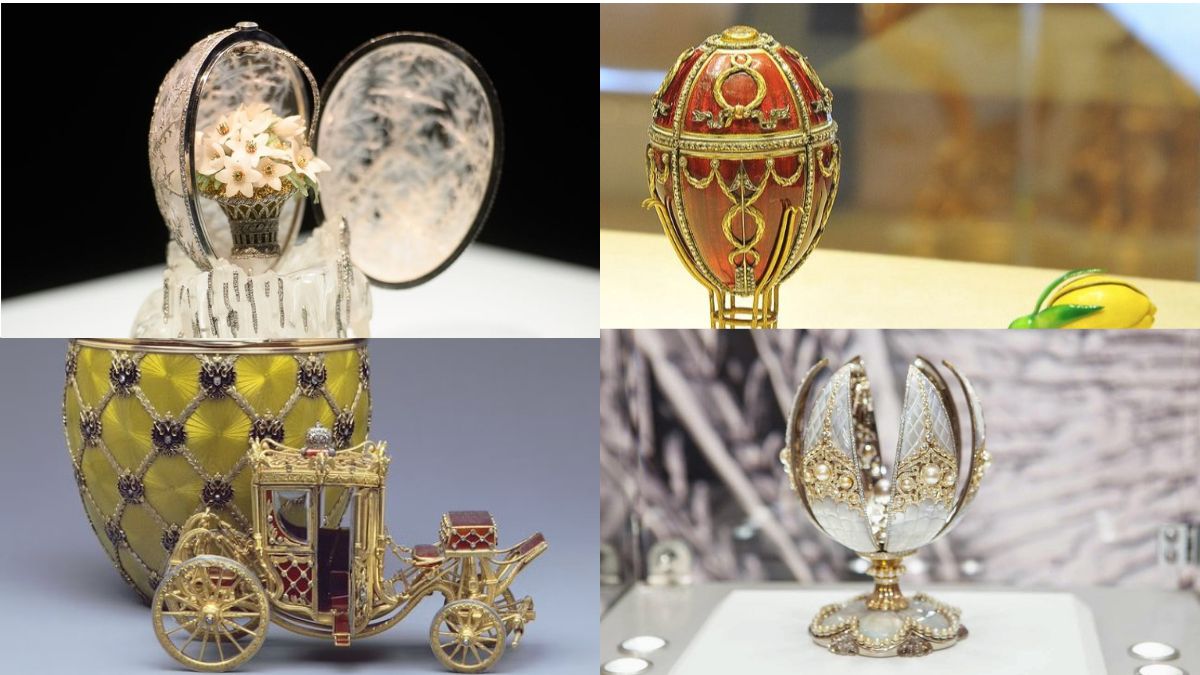
Easter 2026: One of Easter’s most popular traditions includes buying easter eggs, sweet treats laden with marzipan and sugar. But a billionaire’s collector’s item, the Faberge Egg, is one of the most exclusive artefacts to display in one’s home. And it fetched a record $30.2 million at a rare auction, which was one of the first Faberge Eggs to be under the bidding gavel in 23 years at Christie’s.

Today, there are only 50 such ornamental eggs around the world. Tucked away in a billionaire’s home, the $30.2 million Winter Egg was just one of seven left in private hands.

What are Faberge Eggs?

The origin of Faberge Eggs dates back to the Russian Empire, between 1885 and 1917. Created by the House of Faberge in St Petersburg, it was commissioned by Tsar Alexander III. Crafted by Peter Carl Faberge, Empress Maria Feodorovna and Empress Alexandra Feodorovna famously displayed them in their estates.

Each Faberge Egg is encrusted with gems and jewels and contains two components – an egg-shaped shell and a ‘surprise’ element inside. The most expensive Winter Egg, made in 1913, is studded with over 4000 diamonds and designed to look like frost. It opens up to reveal a delicate platinum wicker basket, with white quartz anemones, nephrite jade leaves, and moss made with gold.

Inside the most expensive Faberge Eggs

Winter Egg

Sold for over $30 million at Christie’s, it had over 4000 diamonds on its exterior. However, the flower-basket surprise is nothing short of a mini treasure chest. Adorned with 1378 additional diamonds, it took the total diamond count to nearly 6000 diamonds.
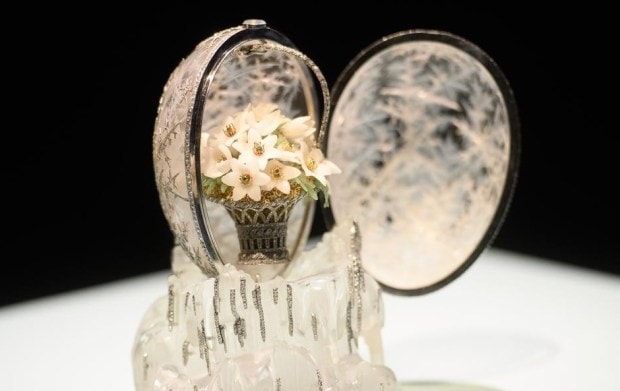
The Winter Faberge egg price
The Winter Faberge Egg. (Image: X)

Coronation Egg

Dating back to 1897, it contains a replica of the Russian imperial coach, complete with parts that move, wheels, a coach gate, and stairs. The coach is studded with dozens of pearls, diamonds, and cabochon sapphires. The outer shell of the egg is made with gold, variegated blue enamel, and pearls, with a lapis‑lazuli band wrapping around the middle. Currently on display at the St Petersburg Museum, it is part of Viktor Vekselberg’s collection.
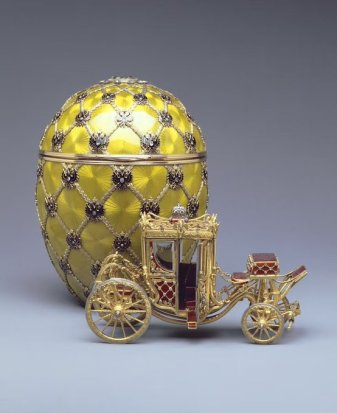
The Coronation Faberge Egg.
The Coronation Faberge Egg. (Image: X)

Rosebud Egg

Placed in the Kremlin Armoury Museum, this protected Faberge Egg opens to reveal a diamond-studded bouquet to reveal a tiny portrait of Tsar Nicholas II hidden under a crystal panel. Outside, the shell is made with a pink guilloché enamel and diamond-set band.
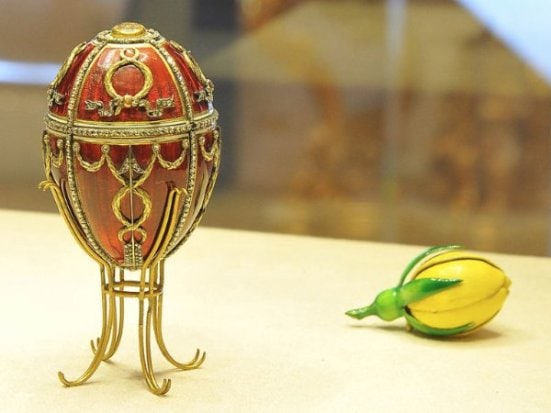
The Rosebud Faberge Egg
The Rosebud Faberge Egg. (Image: X)
Easter 2026 Special

World’s Most Iconic Faberge Eggs

Only 50 Faberge Eggs exist globally. Tap each egg to reveal what’s hidden inside.
Winter Egg
Coronation Egg
Rosebud Egg
Pearl Egg
~6,000
Total Diamonds
4,000+
On Shell
1,378
In Surprise
Shell design
Frost pattern, 4,000+ diamonds
Year made
1913
Auction record
$30.2 million at Christie’s
The Surprise Inside
A platinum wicker basket of eternal flowers
The egg opens to reveal a delicate platinum wicker basket containing white quartz anemones, nephrite jade leaves, and moss crafted from gold — all studded with a further 1,378 diamonds, bringing the total to nearly 6,000 stones.
Made 1897
Coronation Egg — The Moving Coach
Commissioned to mark the coronation of Tsar Nicholas II. The outer shell is wrought from gold and variegated blue enamel, with a lapis-lazuli band and pearls. On display at the St Petersburg Museum as part of Viktor Vekselberg’s collection.
1
Miniature imperial coach hidden inside
A fully functional replica of the Russian imperial carriage, complete with moving wheels, an opening gate, and fold-down stairs.
2
Studded with three gem types
The coach itself is set with dozens of pearls, diamonds, and cabochon sapphires — a gem trifecta in miniature.
3
Moving parts — a feat of micro-engineering
Every working element of a real coach is reproduced at scale: rotating wheels, a hinged door, and deployable steps.
Kremlin Armoury Museum
Rosebud Egg — The Hidden Portrait
The shell is crafted in vivid pink guilloché enamel, encircled by a diamond-set band. Now held permanently at the Kremlin Armoury Museum in Moscow.
1
A diamond-studded bouquet opens first
The egg’s primary surprise is a jewelled floral arrangement, richly set with diamonds — itself a complete treasure in miniature.
2
A second secret beneath the bouquet
Concealed under a crystal panel within the bouquet lies a tiny portrait of Tsar Nicholas II — a double surprise within a single egg.
3
Shell: pink guilloché enamel
The exterior features a vivid pink guilloché enamel finish, a labour-intensive technique where translucent enamel is laid over an engraved metal base.
3,300+
Diamonds
139+
Pearls on Shell
12.17
Carat Pearl Inside
Pearl origin
Arabian Gulf (natural)
Interior lining
Mother-of-pearl
Era
21st Century commission
The Surprise Inside
A 12.17-carat natural grey pearl from the Arabian Gulf
The most gem-dense egg in the collection — over 3,300 diamonds and 139 pearls on the shell alone. Inside rests a single 12.17-carat natural grey pearl nestled in a mother-of-pearl interior. Commissioned in the 21st century in the original Imperial tradition.
Express InfoGenIE | Financial Express

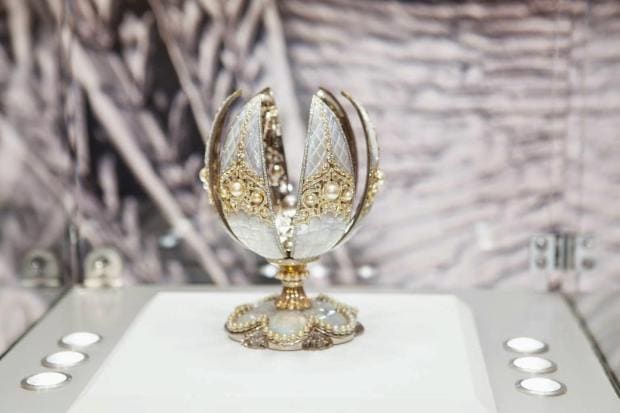
Pearl Egg

The Pearl Faberge Egg
The Pearl Faberge Egg. (Image: X)

The Pear Egg has an estimated of more than 3300 diamonds and more than 139 pearls. While it does not have a moving part, it reveals a 12.17 carat natural grey pearl from the Arabian Gulf, set in a mother-of-pearl interior. A much more modern egg, the Pearl Egg was commissioned in the 21st century in the Imperial tradition and is one of the most gem-dense from the collection.