



The Union government on Tuesday moved to operationalise 33% reservation for women in the Lok Sabha and State Assemblies. Three Bills were uploaded for MPs ahead of the upcoming Parliament session. But beyond the headline promise, the proposals open up a much larger political question of how India redraws representation itself.
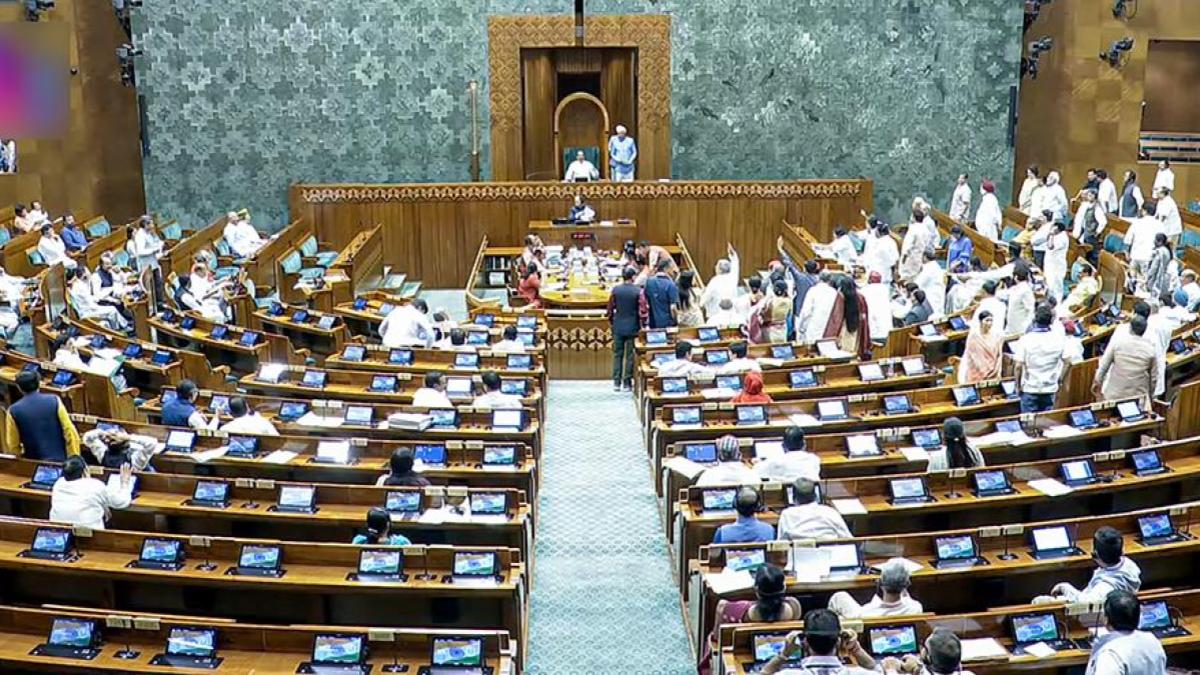
At the heart of the package is the Constitution (One Hundred and Thirty-First Amendment) Bill, 2026. It proposes a sharp expansion of the Lok Sabha. The current cap of 550 members will be raised to 850 seats, including 815 from States and 35 from Union Territories.
This is not just a numerical change. A larger House means smaller constituencies and potentially closer voter-representative links. It also allows the government to implement women’s reservation without drastically cutting into existing political turf.
The reservation itself remains at 33% of seats, continuing the framework set by the Constitution (One Hundred and Sixth Amendment) Act, 2023. However, its rollout has been delayed so far due to its linkage with delimitation after a fresh Census.
Who gains seats — and who worries
The expansion model increases seats across states. But the gains are uneven in absolute terms. The logic is political as much as mathematical. By expanding the total number of seats, the government attempts to avoid a zero-sum game where one region loses while another gains:
| Region | State/UT | Current Seats | Projected Seats |
| Hindi Belt | Uttar Pradesh | 80 | 120 |
| Bihar | 40 | 60 | |
| Madhya Pradesh | 29 | 43–44 | |
| Rajasthan | 25 | 37–38 | |
| Western & Central | Maharashtra | 48 | 72 |
| Gujarat | 26 | 39 | |
| Chhattisgarh | 11 | 16–17 | |
| Eastern States | West Bengal | 42 | 63 |
| Odisha | 21 | 31–32 | |
| Jharkhand | 14 | 21 | |
| Southern States | Tamil Nadu | 39 | 58–59 |
| Karnataka | 28 | 42 | |
| Andhra Pradesh | 25 | 37–38 | |
| Telangana | 17 | 25–26 | |
| Kerala | 20 | 30 | |
| North & Smaller States | Punjab | 13 | 19–20 |
| Haryana | 10 | 15 | |
| Delhi | 7 | 10–11 | |
| Uttarakhand | 5 | 7–8 | |
| Himachal Pradesh | 4 | 6 | |
| Northeast & UTs | Assam | 14 | 21 |
| Other NE States | Varies |
Why the government is moving now
The key shift lies in the Census question. The 2023 law tied women’s reservation to delimitation based on the first Census conducted after its passage. That effectively pushed implementation into the future.
The government now argues that the delayed 2021 Census will take too long to complete. As a workaround, the new Bills propose delimitation based on the “latest available Census”, which effectively means the 2011 Census.
This move fast-tracks the process. The earliest the quota could now be implemented is the 2029 Lok Sabha election.
Delimitation flashpoint
Delimitation has been one of India’s most sensitive political issues for decades. It determines how parliamentary seats are distributed among states based on population. Southern states have long opposed a strict population-based formula. Their argument is simple: they successfully controlled population growth, and should not be penalised with fewer seats.
This concern led to constitutional freezes on delimitation in 1976 and 2001. The current freeze lasts until after the first Census post-2026. The new Bills propose to remove explicit Census-linked timelines, giving the government flexibility to proceed sooner.
But here lies the political tension.
North-South balance
Union Home Minister Amit Shah has publicly assured that southern states will not lose representation. Yet, the Bills do not spell out how this will be ensured.
Projections suggest that without expanding the total number of seats, southern states’ share could drop from around 24% to 19%, while northern states could rise significantly. This perceived “demographic penalty” has triggered strong reactions from regional parties.
The expansion to 850 seats is meant to soften this blow. But the formula for balancing representation remains unclear.