



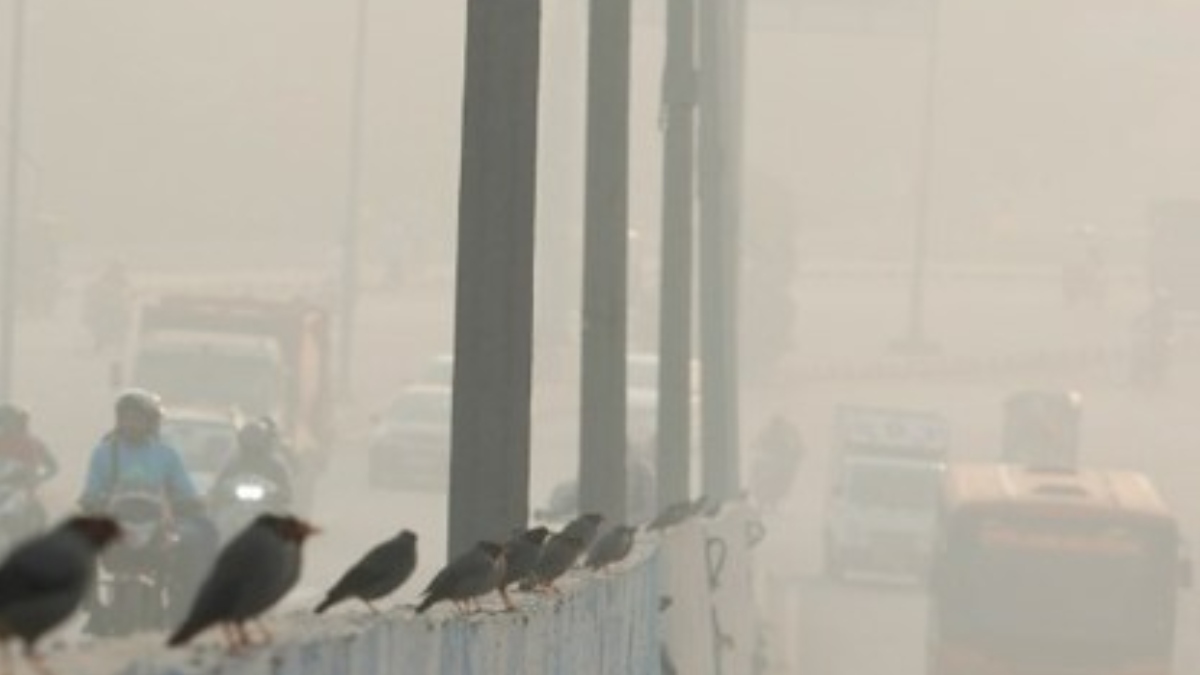
As winter approaches, a thin veil of smog has enveloped the national capital, with Delhi’s air quality index continuing to fall within the “very poor” category.
At 7 am on Monday, Delhi’s Air Quality Index (AQI) surpassed 300 in multiple areas across the city, as reported by the Central Pollution Control Board (CPCB).
Delhi AQI today
New Moti Bagh recorded an AQI of 400, while RK Puram and Dwarka Sector 8 both registered 393, and ITO recorded 349 – all indicating “very poor” air quality levels with significant health risks.
In Vivek Vihar, the AQI reached 421, and in Ashok Vihar, it was 409, pushing these locations into the “severe” category. According to AQI classifications, a reading of 200-300 is “poor,” 301-400 is “very poor,” 401-450 is “severe,” and above 450 is “severe plus.”
Anand Vihar in Delhi, home to an interstate bus terminal, remains heavily impacted by pollution, with an AQI of 433, placing it in the “severe” category.
Delhi Chief Minister Atishi highlighted the air quality crisis in Anand Vihar, noting that the area is severely affected by pollution. She attributed the poor air quality largely to buses arriving from Uttar Pradesh and emphasised the need for discussions with the UP government. Environment Minister Gopal Rai echoed this concern, stating that emissions from these buses are “doubling the pollution” in Delhi.
“The pollution level in Delhi is in the ‘poor’ category. But the pollution level in Anand Vihar has been at a very high level.Anand Vihar is Delhi’s bus terminal and the Kaushambi bus terminal is right opposite to it. Diesel buses are coming here in huge numbers from Uttar Pradesh,” Rai said.
(With ANI inputs)