



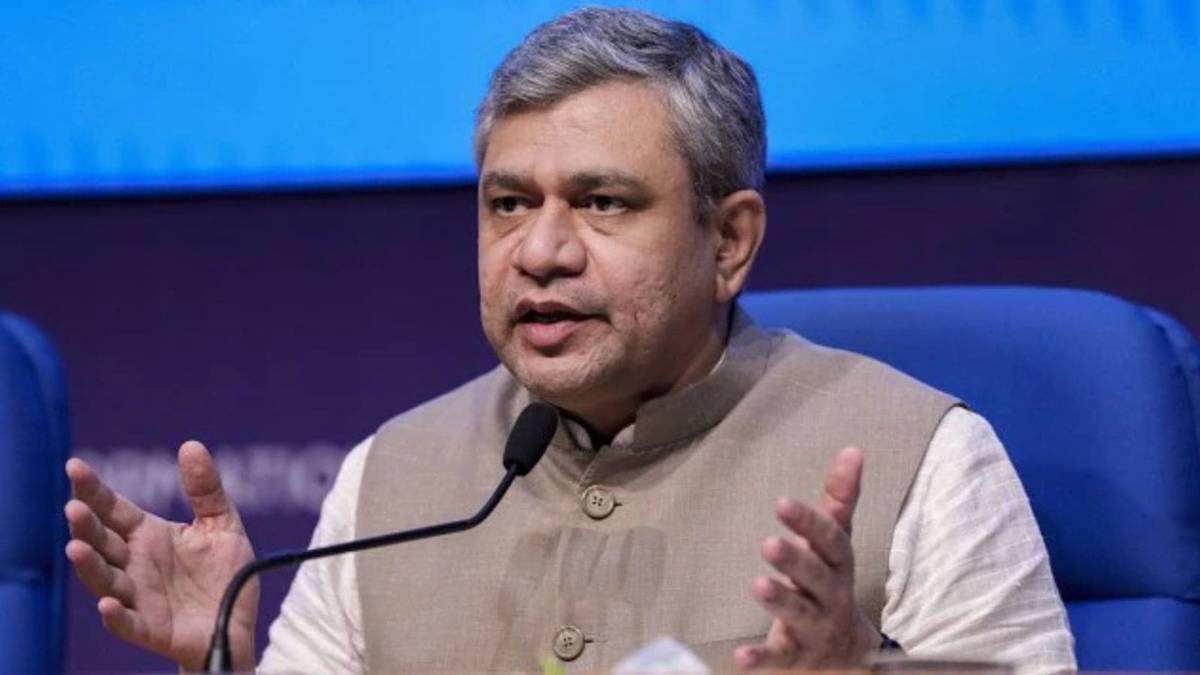
In a sweeping overhaul of India’s freight ecosystem, Railway Minister Ashwini Vaishnaw on Tuesday unveiled a slew of reforms aimed at making the network cleaner, faster and more industry-friendly.
From tackling dust pollution to opening up wagon design to private players, the changes touch nearly every corner of freight operations.
Here’s a closer look at what’s changing and why it matters.
Fly Ash to move in closed containers, reducing pollution
One of the key changes is the introduction of container-based transportation for fly ash. Currently, fly ash is mainly transported in open wagons, which leads to dust pollution during movement, storage, and unloading.
India produces nearly 340 million metric tonnes of fly ash every year, but only around 13 million metric tonnes, or about 4 per cent, is currently moved by rail. With the new system, closed containers will help control pollution and make handling easier.
The containers can also be loaded and unloaded more efficiently with equipment such as reach stacker cranes, making the entire process smoother.
Container rail sector gets easier rules
To expand container-based freight movement, the Railways has simplified rules for container train operators. A single all-India licence will now allow operators to run container trains across the railway network. The registration fee has been fixed at ₹25 crore for all routes, and operators completing 20 years of successful operations will not have to pay any fee for licence renewal or extension.
Fertiliser movement gets a more flexible system
The Railways has also changed the way fertiliser freight is calculated. The earlier system of 50 freight slabs has been replaced with a simpler per kilometre per tonne structure. The new system will follow a three-stage model with fixed rates, tapering rates and fixed rates again.
A major improvement is that fertilisers can now be transported in containers. This will allow easier storage, reduce handling problems and help distributors receive supplies according to demand without waiting for an entire rake to be unloaded.
Building a skilled workforce for railway expansion
As railway infrastructure projects continue to grow, the ministry has introduced a skill certification framework for workers involved in construction activities.
Workers in trades such as welding, plumbing, masonry and concrete testing will be trained and certified to improve the quality and safety of railway projects.
Railway Minister Ashwini Vaishnaw said the framework can be implemented across railway projects within 24 months, creating a stronger skilled workforce for future expansion.
Stricter rules for railway contractors
The Railways has also tightened contractor rules to improve project execution. Contractors will now need to provide 10 per cent performance security before starting work instead of having the amount deducted from running bills.
Companies with pending litigation exceeding 50 per cent of their net worth will not be eligible to bid for railway contracts. The introduction of professional indemnity insurance and all-risk insurance is also expected to improve accountability and reduce project risks.
Rail Bhoomi Portal to bring land acquisition online
Land acquisition has often been a major factor affecting the timeline of railway projects. To address this, the Railways has launched the Rail Bhoomi portal to digitise the entire process.
Developed by CRIS, the platform will replace manual paperwork with online processing and connect with railway systems such as IRPSM, IPAS and HRMS.
The ministry expects the portal to reduce land acquisition timelines by 30 to 40 per cent, depending on state procedures.
Industries can now design their own freight wagons
In another major change, industries will now be able to develop freight wagon designs based on their specific transportation needs. The proposed designs will be examined by the Research Designs and Standards Organisation (RDSO). After prototype testing, safety checks and approval, these wagons can be introduced into railway operations.
Oil companies get more freedom for petroleum transport
The Railways has also opened up the petroleum, oil and lubricant (POL) transportation sector. Earlier, Indian Railways owned all tank wagons used for transporting petroleum products, with separate rakes required for different products. This created challenges in logistics planning.
Under the new policy, oil companies and leasing agencies can procure their own tank wagons. They can also introduce new wagon designs for specialised transportation needs.
Foodgrains and pulses to get container-based transport
The Railways has also allowed foodgrains, flour and pulses to be transported through containers, bringing more flexibility to agricultural logistics. Container movement will help prevent contamination, improve storage options and allow goods to be kept at the premises of sellers or buyers before distribution.
The freight system for these products has also been simplified by replacing the earlier slab-based structure with a per-tonne-based system.