



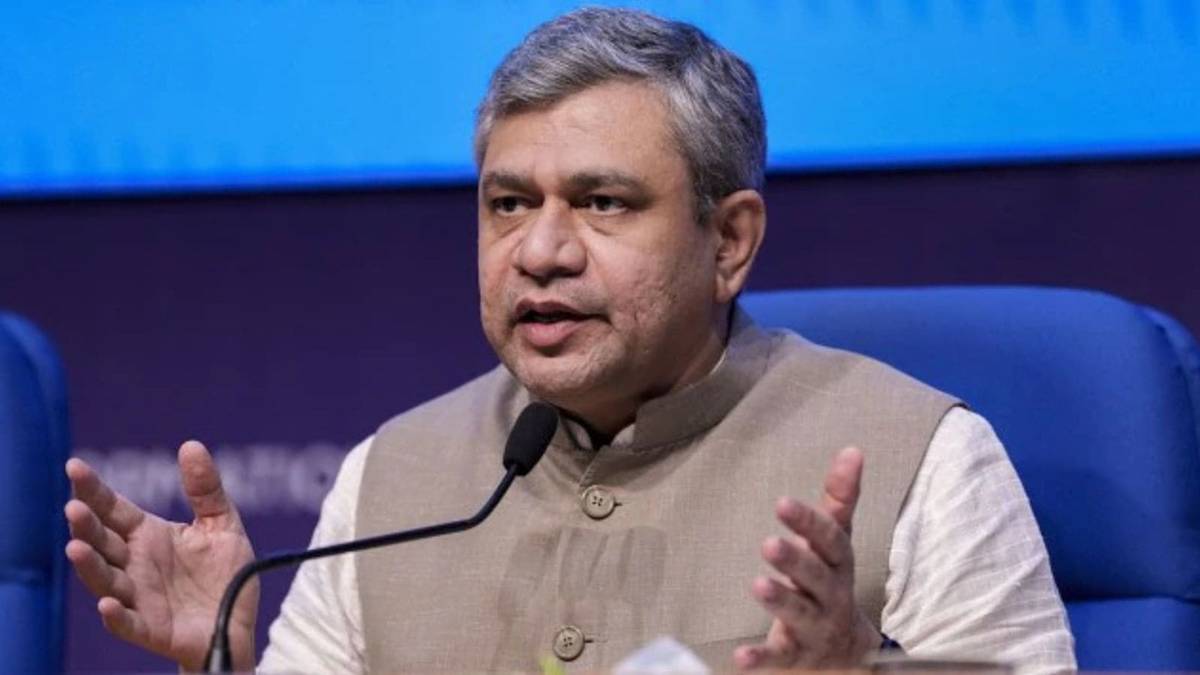
Railways Minister Ashwini Vaishnaw on Tuesday introduced a series of structural reforms aimed at reducing logistics costs, improving supply chains, encouraging private investment and promoting cleaner freight transportation.
At the centre of the reform package announced by the minister is a digital land acquisition portal – Rail Bhoomi – that streamlines land acquisition for rail projects. Developed by the Centre for Railway Information Systems (CRIS), the portal replaces the largely manual, paper-based land acquisition process with a web-based platform that digitises every major stage of acquisition.
Vaishnaw said that a detailed assessment of the problems in land acquisition was carried out over four months and based on that, the ministry has created a new process so that land acquisition becomes faster, farmers do not face problems and litigation is minimised.
The minister said that the portal is integrating with different railway applications – such as IRPSM, IPAS and HRMS – to enable seamless exchange of information across departments. “The entire process has been integrated so that tendering, land handover and project implementation are managed in a systematic manner,” he said.
The other major thrust of the reforms is a push to expand containerisation beyond traditional cargo. As part of the strategy, the railways has introduced specialised containers for fly ash, fertilisers, foodgrains, flour and pulses.
In the case of fly ash, the ministry has designed sealed containers that will replace open wagons that generate dust during loading and transportation. India generates around 340 million tonnes of fly ash annually, but only about 13 million tonnes, or about 4%, is transported by rail.
“How do we convert this environmental hazard into a positive economic activity? That is the thinking behind this reform,” Vaishnaw said, adding that the new logistics model would support greater use of fly ash in cement, roads and construction.
To support the shift towards container traffic, the ministry has also replaced the existing four-category licensing system for container train operators (CTO) with a unified all-India licence carrying a one-time registration fee of Rs 25 crore and no renewal charges after the initial 20-year period. “More and more people should come into the container business. The more container traffic comes to railways, the lower will be the country’s logistics cost and pollution load,” Vaishnaw said.
The also announced a fresh set of construction reforms aimed at improving project execution. The new measures mandate 10% performance security upfront, bar contractors with pending litigation exceeding 50% of their net worth from railway tenders, introduce comprehensive insurance cover, and establish a clearly defined, sequential land handover mechanism to minimise disputes and expedite project execution.
Among his eight-point reform agenda, Vaishnaw unveiled a new wagon design approval policy allowing private industry to develop specialised freight wagons for commodities such as steel, petroleum, chemicals and milk. These reforms are part of the railways’ target to implement 52 reforms in 52 weeks to build a future-ready transportation system.