



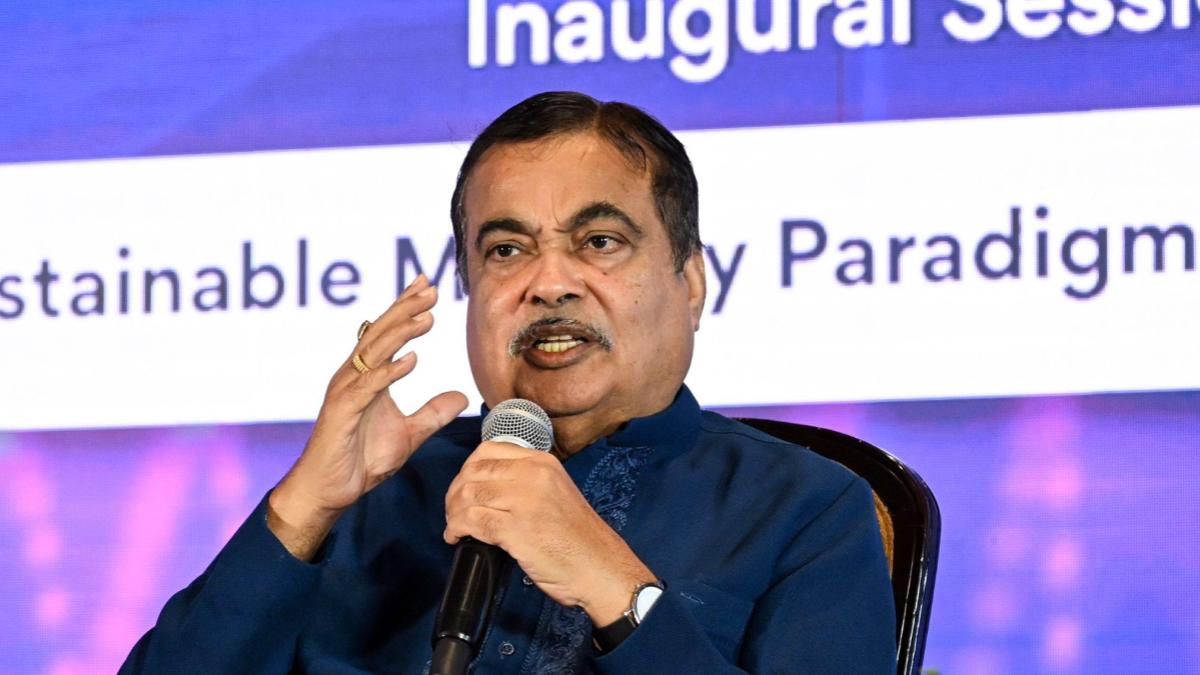
Union minister Nitin Gadkari mounted his strongest defense yet of India’s ethanol blending programme. The minister framed the latest oil-supply scare due to West Asia tensions as proof that the country’s ethanol blending programme is not an environmental indulgence but a security necessity.
“India must reduce its dependence on imported fuels. The recent West Asia crisis has shown how vulnerable energy imports can make us. Atmanirbhar Bharat in the energy sector is the ultimate goal,” Gadkari told CNN-News18.
Food versus fuel
The most persistent charge against ethanol is that it pulls crops off the plate and into the fuel tank. Gadkari dismissed this by calling it a narrow understanding of biofuels. “Urban, centralised thinkers make such arguments, saying that ethanol is just alcohol. But ethanol can be produced from a wide range of sources. It can even be made from rotting fruits and vegetables,” he said.
He added that ethanol production need not rely solely on food crops and can draw on agricultural waste and other organic material that would otherwise go unused. “If we become self-sufficient in energy, it will greatly benefit our energy security, and pollution will come down significantly,” he said.
‘E20 is safe, misinformation is being spread’
Addressing concerns over E20 petrol and reports of vehicle issues linked to ethanol-blended fuel, Gadkari told CNN-News18 that the government’s roadmap for alternative fuels has always been transparent and that criticism is often based on misinformation rather than facts. “The policy and roadmap for transitioning to alternative biofuels have been discussed transparently and communicated at every stage,” he said.
The minister rejected claims that mechanical faults in vehicles can be routinely blamed on ethanol-blended fuel. “Like any machine, automobiles can develop faults. No technology is 100 per cent perfect. If a vehicle develops an issue, owners should have it inspected by the dealer and use insurance where applicable. Not every mechanical problem can be attributed to ethanol blending,” he said.
Reiterating the Centre’s position, Gadkari said both existing and new vehicles can use E20 fuel safely. “Misinformation is being spread to create confusion, while some criticism is politically motivated rather than based on facts,” he said, according to CNN-News18.
Farm dividend
In the interview, Gadkari also cited the government’s push to promote ethanol production from maize as evidence that the policy has benefited farmers. “We decided to promote the production of ethanol from maize and the Cabinet approved the decision,” he said.
According to the minister, maize prices rose sharply after the policy was rolled out, from around Rs 1,200 per quintal against an MSP of Rs 1,800, to roughly Rs 2,800 per quintal. He said the ethanol economy has the potential to improve farm incomes while reducing India’s dependence on imported crude oil.
Fuel imports, hydrogen and electric vehicles
That import bill is where the numbers turn stark. India has spent close to Rs 22 lakh crore on fossil fuel imports since 2004, Gadkari said. He said that this money could stay within the economy. He also linked cleaner fuels with better public health outcomes. “Nearly 40 per cent of India’s air pollution is linked to the transport sector. My mission is to reduce this pollution,” he said.
Gadkari also made clear that ethanol is not the only bet the government is placing. “I also strongly promote hydrogen as a fuel and advocate the use of electric vehicles,” he said. In the CNN-News18 interview Gadkari said these parallel bets are all aimed at the 2070 carbon-neutrality target.