



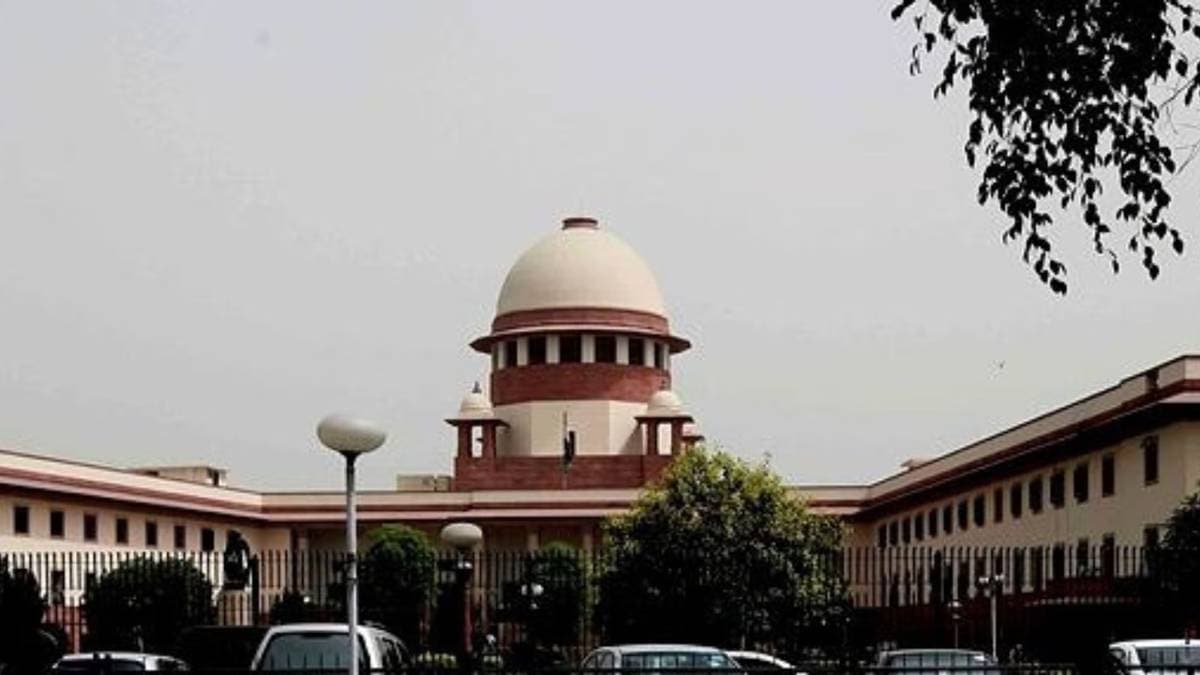
In a move that could define the constitutional boundaries between technological assistance and judicial decision-making, the Supreme Court has proposed an AI regulatory framework to prohibit the use of AI in areas like adjudication, bail and sentencing while promoting its adoption for court administration and efficiency.
The draft Regulations for Use of Artificial Intelligence (AI) in Courts, 2026, released by the Supreme Court’s AI Committee for public consultation, is one of the first such regulatory decisions that creates a formal governance architecture for AI deployment across the judiciary, while considering that technology does not become a substitute for judicial reasoning.
Human primacy, has been preserved as the core principle. What this means is that AI systems should remain strictly subservient to human judgment and judicial authority, where the power to determine questions of law, fact and justice rest exclusively with judges. What this signifies is that all adjudicatory functions must involve a “Human-in-the-Loop” (HITL) approach.
Accordingly, the regulations prohibit courts from using AI systems for adjudication, sentencing, risk scoring, assessment of flight risk, prediction of recidivism, determination of bail eligibility, witness credibility evaluation or behavioural profiling of litigants and accused persons. No judicial outcome, judgment, order or finding of fact or law can be reached solely through algorithmic decision-making or AI-generated analysis, the draft states.
“It shall not be permissible to invoke the outputs of an AI System, the opaqueness of a Black Box system, or the occurrence of hallucination, as a ground for avoiding accountability for a palpably incorrect, illegal, or harmful decision,” the draft added.
Administrative Acceleration
However, the regulations also aspire to direct courts to actively seek opportunities to deploy AI systems provided they improve access to justice, reduce delays and enhance administrative efficiency. The areas identified for AI deployment include case management, defect identification in filings, cause-list preparation, hearing scheduling, docket prioritisation, automated transcription, translation of judgments and pleadings, legal research, document summarisation, record management, chatbot-based litigant assistance, accessibility tools for persons with disabilities, anonymisation of court records and judicial performance analytics.
Under the proposed 35 page draft, the court shall have the authority to request disclosure of the specific AI system used, the nature and extent of AI assistance received and the steps taken to verify the accuracy of AI-generated content.
“The disclosure requirement is a welcome step. But the practical challenge lies in defining the threshold of disclosure. A risk-based approach would be preferable, where disclosure is triggered when AI materially contributes to legal reasoning, factual analysis, evidence generation, or drafting of substantive arguments,” Dhruv Kaushal, Partner at King Stubb & Kasiva, Advocates and Attorneys said.
Multilayered Oversight
To oversee AI deployment in courts, a permanent Apex Body is to be established at the Supreme Court which would be tasked with regulating, promoting and governing AI adoption across the judiciary. The proposed body would include Supreme Court judges, High Court chief justices and judges, a representative from the Ministry of Electronics and Information Technology (MeitY), experts in cybersecurity and finance, technology-law specialists, advocates and academic experts.
For oversight, courts would be required to maintain an AI Register recording approved systems, service providers, audit findings and incidents. AI Secretariats would maintain dedicated AI Incident Databases to document malfunctions, bias, security breaches and other AI-related failures.
Stakeholders would however have to ensure a smooth compliance.
“The framework is comprehensive, but also fairly layered. Multiple committees, approvals and audit requirements improve accountability, but could also slow deployment and experimentation if implementation becomes process heavy,” Huzefa Tavawalla, Partner (head – digital disruption), Cyril Amarchand Mangaldas said.
AI systems would also be required to comply with the Digital Personal Data Protection Act, 2023, while anonymisation and data minimisation principles would apply to training, testing and deployment activities.
Experts say that the emphasis on data localisation, explainability and judicial oversight may also favour India-specific solutions tailored to local legal and linguistic requirements.
“The framework could give a strong push to indigenous legal AI solutions because it creates a formal market for court-approved, India-specific tools,” Ankit Sahni, Partner, Ajay Sahni & Associates said.
The Supreme Court has invited comments and suggestions from stakeholders and the public on the draft regulations until June 20, after which the framework is expected to undergo further refinement before finalisation.