



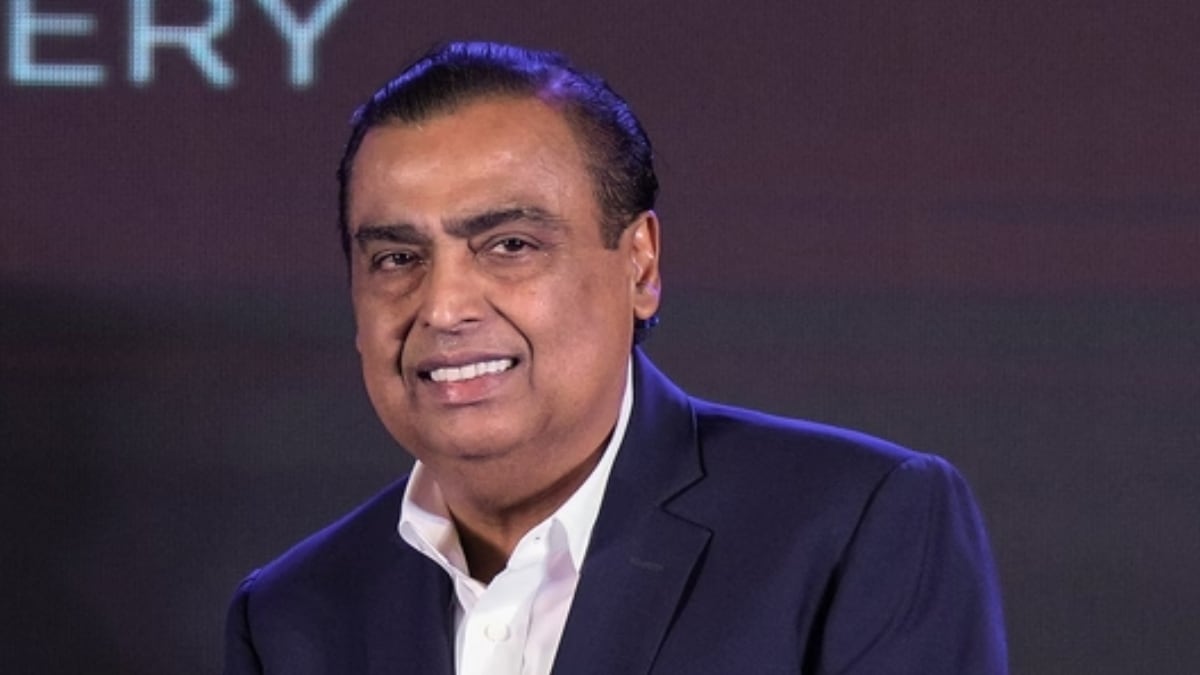
If India has to move to $30 trillion economy, it will need hundred new Reliance (Industries) from its start‑up ecosystem alone, said Mukesh Ambani, Chairman, Reliance Industries, pointing to the next two or three decades as a period where growth will not just be sustained but accelerated. “To my mind, the India opportunity is genuinely a new era,” added Ambani. He stated that in a world where nations would die for 10% year‑on‑year growth, India is achieving it on a large base—and is poised to continue doing so. For him, India is a tree now bearing abundant fruit—visible, sustainable, and attracting global attention.
The world today is a $110 trillion economy, with India contributing about $4 to $4.5 trillion. With AI‑driven productivity, Ambani believes the global economy could expand to $300 trillion in the next 30 years. India has the chance to claim its rightful share—potentially $30–35 trillion of new value. “That means there is $30 trillion of new market value to be created,” said Ambani. For young Indians starting today, this is the canvas on which they will build. In that context, even a hundred Reliance’s (industries) may not be enough.
He feels that this growth will translate directly into rising incomes for young Indians. But income alone is not enough, and India must retain its traditional savings mindset while shifting those savings into productive, compounding investments. “Money in a bank account lying in simple interest is not compounding. Money in the stock market is compounding,” said Ambani. The challenge is that access to investment products remains complex, unaffordable, or simply unavailable for many. That is where industry must step in—just as Jio democratised telecom—to make investing simple, transparent, and universal.
India’s regulatory and institutional frameworks
He said hundreds of millions of Indians should not merely observe wealth creation, they must participate in it. India’s regulatory and institutional frameworks are now strong enough to support this shift, and technology is the great enabler. Even with all this progress, Ambani feels, “there are still many unsolved problems—and even after three decades there will be many unsolved problems.” That is precisely why the start‑up opportunity is so vast.
Larry Fink, Chairman & CEO, BlackRock too, sees this as the Era of India. He believes India can grow 8–10% annually for the next decade, powered by technology, intellectual capital, and a society that embraces change faster than most developed nations. The leapfrog moment began in 2012 with the smartphone revolution, followed by 5G and the digitisation of the rupee. These shifts democratised commerce, education, and financial access, placing India ahead of many advanced economies. “Even the United States is falling behind,” Fink added.
Fink believes artificial intelligence not as a speculative bubble but as one of the most consequential technological shifts of our time—one that nations cannot afford to ignore. He said, “The real risk is not over‑investing in AI, but under‑investing, because hesitation would allow China to dominate the next wave of global innovation.” He sees AI as a force that will reshape every industry, from drug discovery to energy, supply chains, financial services, and national productivity.
While he acknowledges that AI will disrupt jobs and create winners and losers in the short term, he is convinced that in the long run it will be democratising—broadening economic success rather than narrowing it. “AI is not optional, it is foundational to competitiveness, prosperity, and the ability of countries and companies to thrive in the decades ahead.”
Massive structural challenges
In context to India, Ambani said it’s a multigenerational opportunity and India can solve massive structural challenges in education, healthcare, security and taxation only by embracing AI, calling it a “once in tens of centuries opportunity” that can help the country leap from a few thousand dollars per‑capita income to double‑digit levels in the coming decades. Ambani said, “We shouldn’t get scared of AI. It’s exactly like when the industrial revolution came. Humanity moved forward, we moved, productivity moved forward. We moved from 0.3% growth for many centuries to 3% growth overall.”
Fink, meanwhile, downplays short‑term noise around interest rates and inflation, stating that “Markets are an honest reflection of global economies over the long run.” He feels deficits are the real long‑term risk but insists that growth is the only sustainable solution. Fink added, “It’s better to be an optimist and wrong than a pessimist who’s right.”